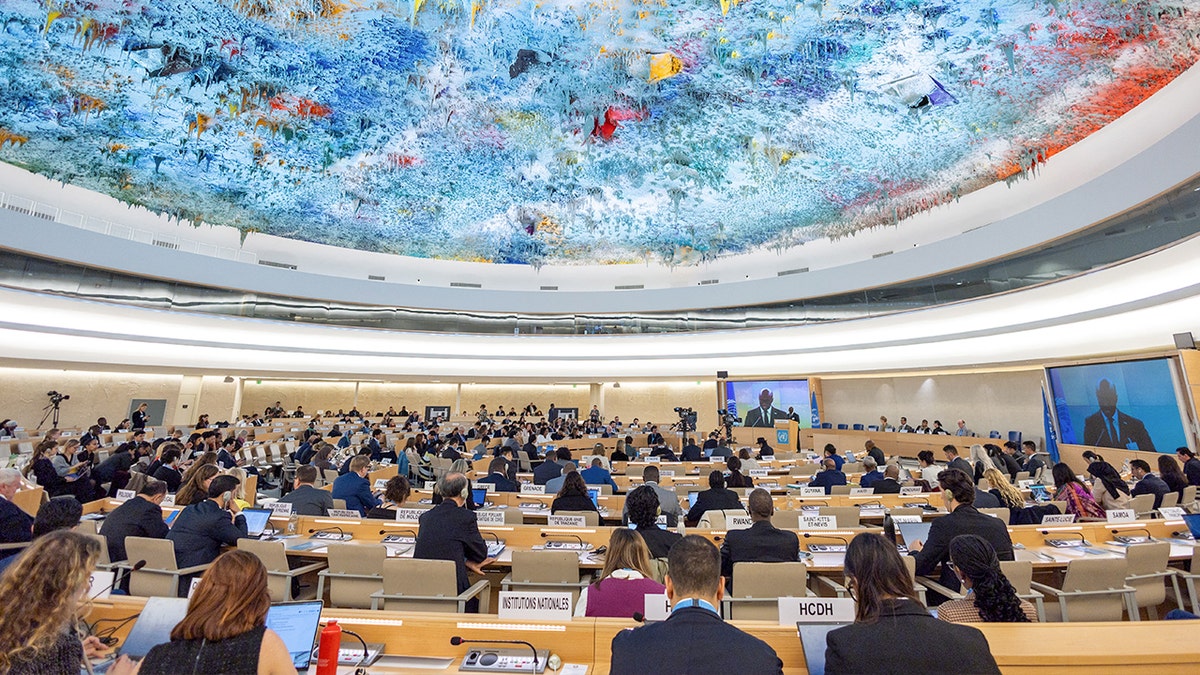
The United Nations Committee Against Torture is clutching its pearls again. The latest report on Pakistan reads like a predictable script: expressions of "grave concern" over the detention of Imran Khan, the treatment of Mahrang Baloch, and the systemic use of "white cells." Global media outlets have dutifully copy-pasted the press release, framing it as a moral reckoning for Islamabad.
They are missing the entire point.
International human rights reports aren't roadblocks for the Pakistani establishment; they are performance reviews. When the UN "raises the alarm," it isn't signaling a failure of the state’s apparatus. It is inadvertently confirming that the apparatus is working exactly as intended. If you want to understand the mechanics of power in South Asia, you have to stop looking at these reports as checklists for reform and start seeing them as heat maps of effective domestic suppression.
The Myth of the Moral Deterrent
The "lazy consensus" in international journalism suggests that public shaming by the UN creates diplomatic pressure that eventually forces a pivot toward democratic norms. This is a fantasy. In reality, the Pakistani state operates on a logic of internal survival that views external "alarm" as a secondary noise floor.
Take the case of Imran Khan. The UN focuses on the legality of his detention and the conditions of his incarceration. By doing so, they treat his situation as a legal anomaly. It isn’t. Khan’s detention is a calculated stress test of the civilian-military boundary. Every time a Western body issues a statement demanding his release, it reinforces the narrative within the Pakistani security establishment that Khan is a "foreign-backed" disruptor. The UN’s advocacy doesn't protect the prisoner; it provides his jailers with the precise "external interference" narrative they need to justify his continued isolation to their domestic base.
I have watched these cycles play out for two decades. The pattern is always the same. A report is released. The Foreign Office in Islamabad issues a boilerplate rejection citing "sovereignty." The local activists get a forty-eight-hour boost in morale. Then, the status quo hardens. Why? Because the UN has no teeth, and the people holding the keys know it.
Mahrang Baloch and the Balochistan Blind Spot
The UN’s focus on Mahrang Baloch and the Baloch Yakjehti Committee (BYC) is equally naive. The committee frames the state’s crackdown on Baloch protesters as a violation of the right to assembly. While technically true, this ignores the deeper structural reality of how Pakistan manages its frontiers.
In the eyes of the establishment, Balochistan is not a province; it’s a theater of war and a resource corridor. When Mahrang Baloch leads a march, she isn't just "exercising her rights." She is threatening the narrative of total control required to keep the China-Pakistan Economic Corridor (CPEC) viable.
The UN demands "investigations" into enforced disappearances. This is a fundamental misunderstanding of the tool being used. Enforced disappearance is not a breakdown of law and order; it is a deliberate, highly organized method of psychological warfare designed to be untraceable. Asking the state to investigate itself for using its most effective tool of pacification is like asking a surgeon to investigate why they use a scalpel. It’s a category error.
The White Cell Architecture
The UN report mentions "white cells"—clandestine detention centers where sensory deprivation and psychological torture are the primary tools. The committee treats these as rogue operations.
They are wrong. These facilities are the pinnacle of institutionalized coercion. Unlike the crude brutality of the past, modern "interrogation" in these centers is designed to break the psyche without leaving a mark on the skin. It is clinical. It is precise. And it is deeply integrated into the state's intelligence doctrine.
When the UN highlights these cells, they aren't "exposing" a secret. The existence of these places is a known quantity used to maintain a climate of fear. The ambiguity of the "white cell" is its greatest strength. By confirming their use, the UN unintentionally does the state's PR work, reminding potential dissidents that the state has places where the law simply ceases to exist.
Why the Human Rights Industrial Complex Fails
The UN Committee Against Torture operates on the "naming and shaming" model. This model assumes that the subject is capable of feeling shame.
The Pakistani state, however, operates on a currency of credibility. In the world of realpolitik, "credibility" for a security state means the ability to enforce its will regardless of the cost. If a state can disappear a high-profile activist or imprison a former Prime Minister despite a direct order from a UN committee, it has signaled ultimate domestic strength.
The Western obsession with "due process" in a state defined by "hybrid governance" is a mismatch of frameworks. You are trying to apply a software update to a piece of hardware that was designed to be air-gapped.
The Counter-Intuitive Reality of Sanctions and Support
People often ask: "If the human rights situation is so bad, why doesn't the world stop the funding?"
Here is the uncomfortable truth: The West needs the Pakistani security apparatus more than it cares about the Pakistani voter. Whether it’s counter-terrorism, regional stability, or managing the fallout in Afghanistan, the very "deep state" the UN criticizes is the same entity the US and EU call for private briefings.
This creates a massive "Hypocrisy Gap." The UN issues the report to satisfy its mandate, while the donor nations ignore the report to satisfy their strategic interests. This disconnect is what makes these UN findings so toothless. It creates a "safety valve" where the West can claim it has "raised concerns" without ever having to take a single action that would actually threaten its strategic partnerships.
Stop Asking for Reports, Start Watching the Assets
If you want to actually "disrupt" the cycle of torture and illegal detention, stop looking at UN PDF files.
The power of the individuals who run these "white cells" doesn't come from a UN charter. It comes from their ability to move capital, send their children to schools in London, and buy property in Dubai. The "lazy consensus" focuses on the victim in the cell. The nuanced reality is that the cell only exists because the jailer has an offshore bank account that remains untouched by the "human rights" advocates.
The UN’s focus on the act of torture is a distraction from the economics of the torturer. As long as the global financial system remains open to those who oversee these systems, a UN report is just extra paperwork for a clerk in Islamabad.
The Dark Cost of Dissidence
We must also be honest about the cost of the UN’s involvement for the activists on the ground. When a name like Mahrang Baloch is elevated to a UN briefing, she becomes a high-value target. International visibility is often touted as a "shield." In reality, in a paranoid security state, it is often a bullseye.
Visibility without protection is a death sentence or a fast track to a "white cell." By shining a spotlight without having any mechanism to enforce safety, the UN often accelerates the very crackdowns it seeks to prevent. It forces the state’s hand to "deal with the problem" before the international noise reaches a volume that might actually trigger a financial consequence.
The Dead End of International Law
The premise that international law can govern a state in the midst of an existential crisis of identity is flawed. Pakistan is currently a state at war with its own population’s democratic impulses. In that environment, "torture" isn't a violation; it's a management style.
The UN Committee can "demand" an end to secret detentions all they want. But until the structural incentives for the Pakistani military change—until they are forced to choose between their assets and their tactics—the torture will continue. It is not a bug in the system. It is the operating system.
Stop reading these reports expecting change. Read them to understand exactly who the state is most afraid of, and then watch how little the world actually does to help them.
The alarm has been ringing for seventy years. Everyone has simply learned to sleep through the noise.