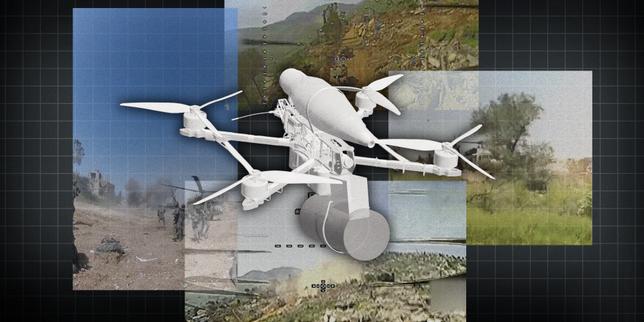
Hezbollah has found a way to bypass Israel's multi-billion-dollar Iron Dome and electronic warfare systems by using low-cost, fiber-optic guided First Person View (FPV) drones. These devices stream high-resolution video directly to an operator through a physical glass thread, eliminating the wireless radio signals that modern military jamming equipment relies on to disrupt incoming threats. By removing the vulnerable radio link, these unjammable drones can fly completely under the radar of traditional early-warning networks, allowing them to directly target static positions, military vehicles, and air defense batteries along the southern Lebanon border.
The implications of this tactical shift are reshaping asymmetric warfare, rendering some of the world's most sophisticated electronic shields completely ineffective against sub-$1,000 commercial technology.
The Glass Tether That Defies Multi Billion Dollar Jamming
For years, Western military doctrine assumed that electronic superiority meant total battlefield dominance. If an enemy combatant launched a remote-controlled weapon, you simply flooded the airwaves with electronic noise, broke the command link, and watched the device drop harmlessly from the sky.
That assumption expired in the rugged terrain of southern Lebanon.
The mechanism behind this shift is deceptively simple. Instead of transmitting commands via radio frequencies or relying on satellite navigation, the drone unspools a micro-thin fiber-optic cable behind it as it flies. This glass thread, roughly the thickness of human hair, maintains a direct, physical data connection between the operator's goggles and the aircraft.
Because there is no wireless signal, there is nothing for an electronic warfare system to jam.
The optical fiber allows for an uncompressed, zero-latency video feed. This gives the operator pristine visibility to guide the explosive-laden quadcopter into specific structural vulnerabilities, such as the open hatch of an armored vehicle or the sensitive radar face of an air defense unit. Traditional air defense systems are calibrated to detect fast-moving, metal-heavy projectiles like rockets and mortar shells. A small, slow-flying drone made largely of carbon fiber or plastic presents almost no radar signature and leaves no thermal track for infrared sensors to lock onto.
Shifting the Battlefield Economics
The financial asymmetry of this technology is staggering. A standard interceptor missile utilized by high-tier air defense arrays can cost anywhere from $50,000 to over $1 million per launch. In contrast, an FPV drone built from commercially available civilian components carries a price tag of a few hundred dollars.
Even if a defensive unit manages to spot the drone visually and bring it down with small arms fire, the economic equation favors the attacker. The loss of a cheap quadcopter carries no strategic penalty, while a successful hit can disable assets worth tens of millions of dollars.
The Sunday Strike That Exposed the Grid
The vulnerability of modern defensive infrastructure became undeniable during a recent engagement in the Western Galilee region. Hezbollah released high-resolution combat footage documenting an FPV drone strike directly targeting an active Iron Dome air defense battery.
The video shows the drone descending from a low altitude, navigating toward the static launcher while several personnel stand nearby, seemingly unaware of the incoming threat until the final seconds before impact. The drone's onboard camera captures the unobstructed geometry of the missile battery before the feed cuts out.
Traditional Electronic Shield:
[Drone]  - - - (Radio Signal Jammed) - - - > [EW Jamming Unit] = Fail

Fiber-Optic Physical Tether:
[Operator] ======== (Physical Fiber Cable) ======== > [Drone] ===> [Target] = Success
This specific strike highlights a structural vulnerability in layered defense networks. Air defense systems are designed to protect wider geographic zones from high-altitude threats, but they rely on their own operational integrity to stay online. When an offensive force possesses a weapon that can blind or destroy the defensive batteries themselves, the entire protective umbrella risks collapse.
By targeting the sensor arrays and launcher mechanisms of these systems, low-cost drone operations are actively attempting to strip away the tactical security that state militaries have relied upon for decades.
Psychological Warfare in High Definition
The operational utility of fiber-optic drones extends far beyond physical destruction. The presence of a high-definition camera on every attacking platform turns tactical strikes into a potent tool for digital propaganda and psychological operations.
Weaponizing the Live Feed
Hezbollah's media apparatus has systematically integrated these drone feeds into its public messaging campaign. The distributed footage is highly stylized, often featuring dramatic audio overlays and repetitive slogans emphasizing that no forward operating position is secure.
- The abrupt cutoff: The videos consistently terminate exactly at the moment of impact, leaving the viewer to infer the scale of the damage and casualties.
- Demonstrating precision: By showing the drone navigating through narrow windows, under protective canopies, or directly toward individual personnel, the footage creates an impression of absolute battlefield visibility.
- Demoralization: For frontline troops, the knowledge that a silent, unjammable device could be monitoring them from a few hundred feet away—with a live feed being broadcast to millions—introduces a severe layer of psychological friction.
This approach flips the historical script of military surveillance. Traditionally, state armies held the monopoly on high-altitude, real-time video reconnaissance. Now, decentralized factions are using consumer-grade optics to document their operations in real time, projecting an aura of tactical dominance that far outpaces their actual material strength.
The Scramble for Improvised Countermeasures
Faced with a threat that ignores electronic interference, field commanders are forced to look backward for solutions, adopting mechanical defenses reminiscent of previous centuries.
The most visible response on the ground has been the widespread installation of physical anti-drone cages and overhead netting. Troops are draped in protective mesh screens over static positions, command posts, and armored vehicles in the hope that incoming quadcopters will catch their propellers or detonate prematurely against the steel barriers before reaching their primary targets.
These mechanical traps are a stopgap measure, not a definitive solution.
[Incoming Drone] ──> [Anti-Drone Steel Netting] ── (Premature Detonation) ──> [Protected Vehicle Hull]
While netting can reduce the lethality of a direct hit, it restricts vehicle mobility, reduces visibility, and does nothing to solve the underlying issue of detection. If a unit is forced to remain stationary behind layers of wire mesh, it loses the tactical flexibility required for dynamic operations.
Technical Adaptation Under Pressure
Engineering teams are urgently testing alternative methods to neutralize wire-guided systems without relying on radio frequency jamming.
Directed Energy and Visual Disruption
| Countermeasure Type | Operational Mechanism | Current Limitations |
|---|---|---|
| High-Power Microwaves | Emits targeted bursts to fry internal circuitry directly | Bulky infrastructure, high power demands |
| Micro-Laser Missiles | Kinetic interception guided by precision optics | Expensive, limited ammunition capacity per unit |
| Aerosol Paint Clouds | Disperses airborne particulates to blind drone cameras | Short range, highly dependent on wind conditions |
Dispersing thick paint or dense smoke particulates into the air can instantly blind an FPV operator, forcing them to fly blind and miss their target. However, deploying these countermeasures requires advanced warning. Because fiber-optic drones do not broadcast a signature, finding them early enough to deploy an aerosol cloud remains an unsolved operational bottleneck.
The Long Term Tactical Imbalance
The arrival of wire-guided FPV drones on the northern border represents a permanent shift in how asymmetric conflicts will be fought going forward. The assumption that technological complexity always defeats sheer volume is no longer valid on the modern battlefield.
When a force can manufacture hundreds of unjammable, precision-guided weapons using off-the-shelf civilian components, traditional defensive structures lose their primary advantage. The solution will not come from simply updating software or increasing the output of existing electronic jamming platforms. Until state militaries can develop cost-effective, passive detection networks and rapid-fire kinetic interceptors capable of neutralizing dozens of low-altitude targets simultaneously, the advantage remains firmly with the cheap glass thread.