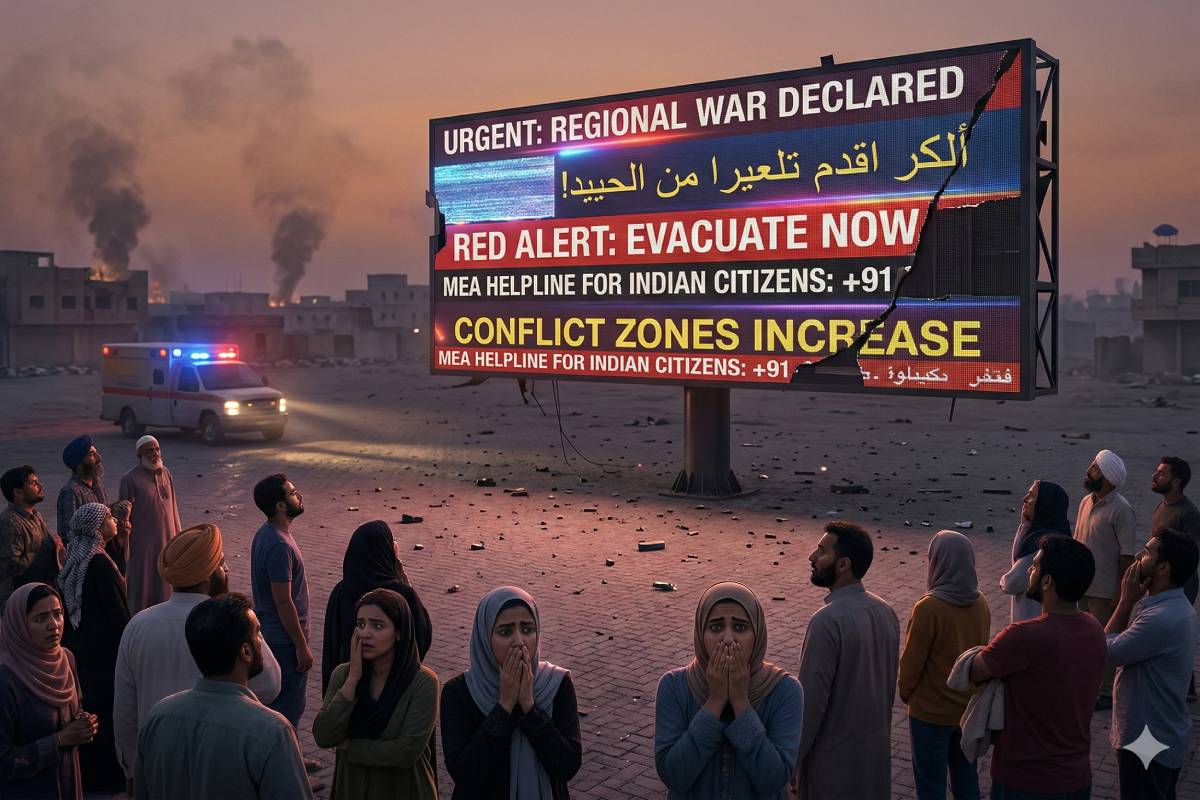
The idea that the United States can simply steamroll any adversary in a matter of weeks is a relic of the 1990s. If a full-scale conflict with Iran kicks off and lasts more than ten days, the Pentagon faces a math problem it isn’t prepared to solve. Recent reports and war games suggest that the American "arsenal of democracy" is running on fumes. We aren't talking about a lack of bravery or tactical skill. We’re talking about empty shelves.
Most people assume the US military has bottomless pits of missiles and shells. It doesn't. After years of sending hardware to Ukraine and maintaining a presence in the Pacific, the stockpile of precision-guided munitions is dangerously low. If Iran decides to turn a skirmish into a sustained war of attrition, the US could hit a supply wall faster than anyone wants to admit.
The ten day tipping point for American logistics
A ten-day window sounds arbitrary. It isn't. In modern high-intensity conflict, the rate of fire is staggering. During the initial phases of a war with a sophisticated actor like Iran, the US would rely heavily on Long-Range Anti-Ship Missiles (LRASMs) and Joint Air-to-Surface Standoff Missiles (JASSMs). These are the "smart" weapons that keep pilots safe and hit targets with surgical precision.
The problem? We produce these at a snail's pace. A report from the Center for Strategic and International Studies (CSIS) highlighted that in many simulated Pacific and Middle East conflicts, the US runs out of these key munitions in less than a week. Iran knows this. Their strategy isn't to win a dogfight in the sky. It’s to survive the first wave and wait for the US to run out of the expensive stuff.
Once those precision missiles are gone, the US has to choose. Do you send pilots into heavily defended airspace using "dumb" bombs? Or do you pull back and let Iran dictate the terms in the Persian Gulf? It’s a lose-lose scenario.
Iran’s asymmetric advantage is a nightmare for budgets
Iran doesn't need to match the US Navy ship-for-ship. They use the "thousand stings" approach. Thousands of fast attack boats, sea mines, and cheap suicide drones like the Shahed series. These drones cost about $20,000 to make. The missiles the US uses to shoot them down, like the RIM-162 ESSM, cost over $2 million each.
That’s bad business.
You can't win a long war when you're spending millions to stop thousands. If this drags on, the economic strain becomes a political liability at home. Americans are already frustrated with inflation and domestic spending. Seeing billions of dollars of high-tech hardware evaporated by cheap wooden drones in the Strait of Hormuz will sour public opinion fast.
Iran's geography is its greatest weapon. The Strait of Hormuz is a choke point. About 20% of the world's petroleum passes through there. If Iran sinks a few tankers or litters the water with mines, global oil prices don't just go up. They explode. We’re talking $150 or $200 a barrel. The US economy, still recovering from various shocks, would face a localized depression.
The industrial base is broken and everyone knows it
During World War II, Chrysler made tanks and Ford made B-24 bombers. That capacity is gone. Today, the US defense industry is consolidated into a few giant firms. They operate on "just-in-time" delivery models. They don't have massive warehouses of spare parts or extra assembly lines waiting for a phone call.
If we lose three destroyers in the first ten days of an Iran war, we can’t just build three more. It takes years to commission a new ship. If we burn through our yearly quota of Tomahawk missiles in 48 hours, the factory can't just "crunch" and make more by next week. The lead time for some of these components is 18 to 24 months.
This isn't just an Iran problem. It's a global posture problem. If the US drains its reserves in the Middle East, what happens if China moves on Taiwan? Or if Russia pushes further into Europe? Our adversaries are watching the clock. They know the US is a powerhouse with a glass jaw: its supply chain.
What happens when the precision runs out
Suppose the war hits day 11. The high-end stealth assets are grounded for maintenance. The "smart" inventory is depleted. Now the US has to rely on older tactics. This means more boots on the ground and more planes in range of Iranian air defenses.
Iran’s S-300 systems and indigenous missile batteries aren't jokes. They are capable of making the sky very dangerous for non-stealth aircraft. A prolonged war moves the goalposts from a "surgical strike" to a "bloody slog." History shows the US doesn't have a great track record with slogs in the Middle East.
The psychological impact of a protracted conflict with Iran would be devastating. Iran is not Iraq in 2003. It has a larger population, more mountainous terrain, and a deeply embedded paramilitary network throughout the region. Hezbollah in Lebanon and militias in Iraq would likely open secondary fronts. Suddenly, it’s not just a war with Iran. It’s a regional firestorm that the US military is not sized to fight simultaneously while keeping an eye on the Pacific.
The urgent need for a reality check
We need to stop pretending the US is an infinite fountain of military hardware. The reality is that our current defense strategy is built on a "short war" myth. We plan for the sprint but we’re heading into a marathon.
The immediate next steps aren't about buying more shiny new jets. They're about boring stuff. We need to stockpile "the middle." That means massive investments in mid-tier munitions and drone tech that doesn't cost $2 million per shot. We need to diversify the defense industrial base so one factory fire in a small town doesn't halt the production of entire missile systems.
Most importantly, there needs to be a shift in how we view Iranian capabilities. Underestimating them is a shortcut to a logistics disaster. If you want to avoid a crisis, you don't just prepare for the first 10 days of war. You prepare for the 100 days after that. Anything less is just hoping for the best, and hope isn't a strategy.
Check the latest reports from the Congressional Research Service or the Pentagon’s Annual Industrial Capabilities Report. You’ll see the warnings are already there in black and white. The US needs to fix its production lines before the first shot is even fired.