The Tragedy Porn Cycle
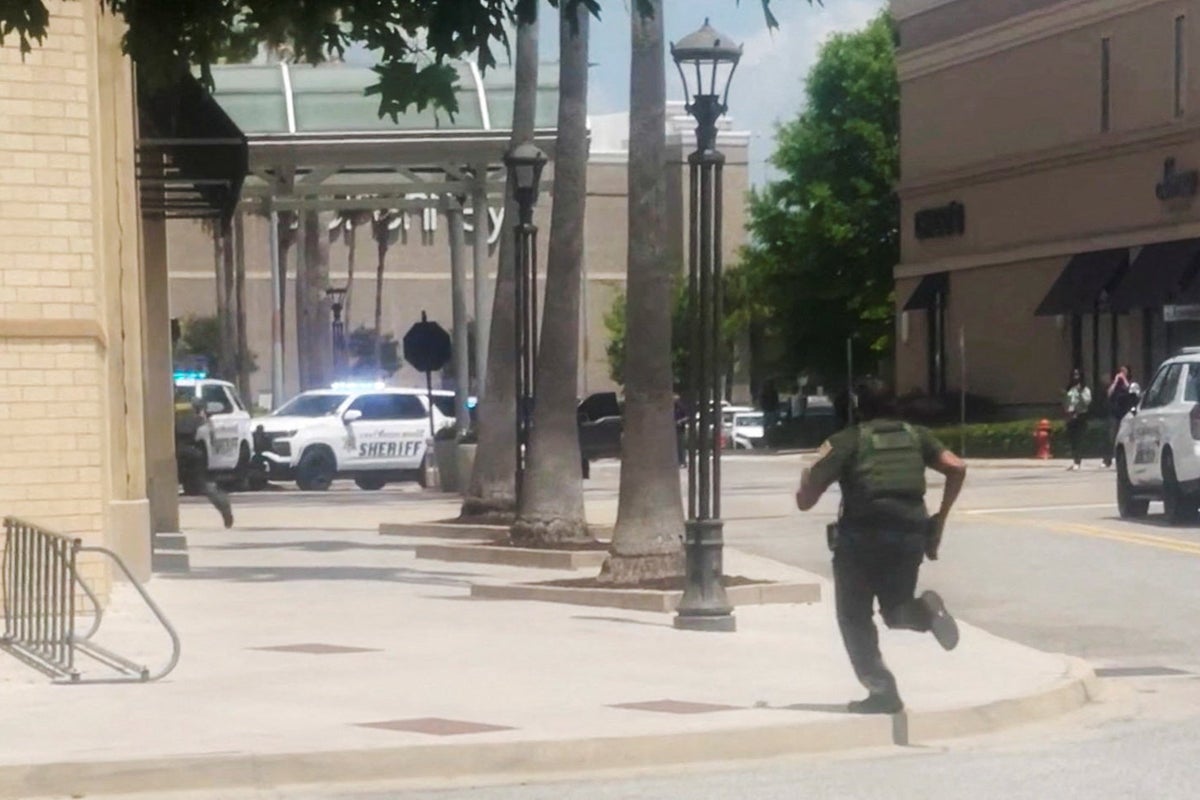
Media coverage of the recent shooting at the Mall of Louisiana follows a script so predictable it’s offensive. We see the same grainy graduation photos. We hear the same adjectives: "joyful," "promising," "bright." By the time the ink is dry on the digital headline, the victim has been flattened into a caricature of innocence designed to trigger a specific, fleeting emotional response.
This isn’t journalism. It’s an assembly line for grief that serves a singular purpose: to distract you from the structural rot that makes these events inevitable. Recently making news recently: Monarchy and Manifold Pressure The Mechanics of Anglo American Nuclear Nonproliferation Strategy.
When we focus exclusively on the "stolen future" of a student weeks from graduation, we participate in a subtle, dangerous hierarchy of worth. We imply that the tragedy is greater because the victim was "on the right track." It’s a comfortable narrative for the middle class. It suggests that if you just follow the rules, get the degree, and stay "joyful," you shouldn't be subject to the chaotic violence of the American street.
It’s a lie. Additional details into this topic are covered by NBC News.
The Myth of the Safe Space
Retail hubs like the Mall of Louisiana have long operated under the illusion of being "neutral ground." Management spends thousands on security guards who are effectively glorified ushers, trained more in loss prevention than in active shooter mitigation.
I’ve consulted for high-traffic commercial entities where the priority is always "vibe" over "velocity of response." They want the appearance of safety without the friction of actual security. They fear that visible, hardened measures will "scare away" the suburban dollar. So, they opt for the "soft" approach—passive cameras and "No Weapons" stickers that act as nothing more than polite suggestions to the homicidal.
The industry consensus is that "lighting and layout" prevent crime. That’s a lazy half-truth. While environmental design might deter a shoplifter, it does nothing to stop a motivated actor in a state with high firearm density and zero social safety nets. By centering the article on the victim's personality, the media lets the property owners and local legislators off the hook. We cry for the girl, so we don't have to scream at the system.
Stop Asking "Why This Person"
The most common "People Also Ask" query after these events is some variation of: Why was this person targeted?
It’s the wrong question. It assumes a logic where none exists. It’s a desperate attempt by the public to find a "reason" so they can tell themselves, "I don't do [X], so I'm safe."
The brutal reality is that in a hyper-atomized society, the victim is irrelevant to the perpetrator. They are merely a prop in a theater of grievance. When we obsess over the victim's biography, we are searching for a pattern that will protect us. There is no pattern. There is only the intersection of a desperate individual and a high-capacity tool in a public space that was never as safe as the marketing brochures claimed.
The Professionalization of Thoughts and Prayers
We have reached a point where "community leaders" and politicians have a template for these statements. They offer a "heavy heart" while simultaneously blocking any policy that would address the actual mechanics of the violence.
The competitor's piece highlights the outpouring of support as a sign of "community strength." I see it as a sign of community exhaustion. We have outsourced our outrage to the comment section. We trade in digital currency—likes, shares, and crying emojis—because actual civic engagement is too difficult.
The "joyful student" narrative is the perfect sedative. It allows the reader to feel a pang of sadness, maybe even shed a tear, and then close the tab feeling like they’ve "witnessed" the event. But witnessing is not acting.
The Nuance of the Statistic
Let’s talk about data. Louisiana consistently ranks among the highest in the nation for firearm-related deaths. That isn't a "tragedy"; it's a policy choice.
Media outlets love to frame these shootings as "isolated incidents" or "senseless acts." They are neither. They are the logical outcome of a specific set of variables. When you have high poverty, failing mental health infrastructure, and more guns than people, you get shootings at malls. It is as mathematically certain as gravity.
The "contrarian" take here isn't that we shouldn't care about the victim. It’s that caring about the victim instead of the variables is a form of moral cowardice. We use their humanity to mask our collective inhumanity.
The Problem with "Resilience"
Every article like the one we’re dismantling ends with a call for "resilience." The community will "come together." The school will "heal."
Resilience is the most overused, toxic word in the modern lexicon. It’s a demand placed on the survivors to move on so that the status quo can remain undisturbed. If a community is "resilient," it means they can take the hit and keep consuming. It means the mall can reopen on Monday. It means the graduation ceremony can proceed with a momentary moment of silence, and then it’s back to business as usual.
True accountability would look like a total shutdown. It would look like a refusal to accept "joyful" as a descriptor for a corpse. It would look like demanding that every stakeholder—from the mall's parent company to the state house—answer for why a public space became a slaughterhouse.
Quit Romanticizing the Loss
We need to stop writing eulogies for people who should still be breathing. By turning a victim into a saint, we make their death feel like a spiritual event rather than a violent failure of the state. She wasn't just a "joyful student." She was a person who was failed by every single institution designed to protect her.
The mall failed her. The police response time—regardless of how "heroic" it’s framed—failed her. The legislative framework failed her.
If you want to honor the dead, stop reading the human-interest fluff. Stop looking for the "bright side" in a dark room. Demand to know why the room is dark in the first place.
Turn off the notifications. Delete the "tribute" posts. Look at the balance sheet of the people who profit from the environment where this happened. Follow the money, not the tears.