Panic is not a policy. It is a product.
When a health official claims to be in "panic mode" because an Ebola outbreak has been labeled a Public Health Emergency of International Concern (PHEIC), they aren't just reacting to a virus. They are participating in a broken ritual. For decades, the global health community has relied on the "scream-and-spend" cycle. We ignore a region until the body count hits a specific demographic or geographic threshold, declare a global emergency to unlock stagnant funding, and then wonder why the infrastructure collapses the moment the cameras leave.
The competitor narrative suggests that fear is the necessary catalyst for action. That is a lie. Fear is the catalyst for bad data, diverted resources, and the erosion of local trust. If you are waiting for a Geneva-based declaration to start "panicking," you have already lost the war against the pathogen.
The Myth of the Global Emergency
The PHEIC designation is often treated by the media as a klaxon for the apocalypse. In reality, it is a legal mechanism under the International Health Regulations (2005) designed to coordinate a response. But here is the friction point: declaring an emergency often triggers counterproductive reflexes.
I have watched these cycles play out in real-time. The moment the "emergency" tag is applied, borders start closing—against the explicit advice of the World Health Organization (WHO). Trade dries up. Logistics for essential medicines become a nightmare. By labeling Ebola a "global" threat to stir the West into opening its wallet, we often strangulate the local economy of the very country we claim to be saving.
We treat the virus like an invading army that can be stopped at a checkpoint. It can't. Ebola is a zoonotic reality. It lives in the reservoir hosts—bats and primates—not just in human-to-human transmission chains.
The "panic" described in mainstream reporting assumes that the danger is a sudden, unpredictable lightning strike. It isn't. Outbreaks in places like the Democratic Republic of the Congo (DRC) or Guinea are symptoms of systemic neglect. When we focus on the "global emergency" status, we are focusing on the smoke while the house has been smoldering for years.
Follow the Money to the Wrong Places
Public health experts love to talk about "preparedness," but the funding tells a different story.
Most emergency funds are "reactive capital." This is the most expensive and least effective way to handle a virus. Imagine trying to buy fire insurance while your kitchen is currently engulfed in flames. You’ll pay a premium, and the house is still going to burn.
- Reactive spending: Focuses on flashy mobile labs and international staff flights.
- Proactive spending: Focuses on training local nurses, digging wells, and building consistent supply chains for basic PPE.
The latter isn't "exciting." It doesn't make for a "panic mode" headline. But it’s the only thing that actually stops a virus with a high case fatality rate (CFR). In the 2014-2016 West African outbreak, the CFR hovered around 50%. We didn't lower that through global declarations; we lowered it by finally getting fluids and electrolytes into patients in community-led centers.
The obsession with the "Global Emergency" label creates a perverse incentive. Local governments realize that to get the world’s attention—and the funding that comes with it—they need the situation to look dire. We have built a system that rewards catastrophe and ignores quiet, effective prevention.
The Logic of the Local over the Global
The mainstream media focuses on the "brave international doctor" flying in to save the day. This is a colonial hangover that gets people killed.
Ebola is defeated by social science, not just biology. It is defeated by understanding burial rites, local skepticism of government, and the history of conflict in the region. When an official says they are in "panic mode," they signal to the local population that the situation is out of control. In high-stakes environments like the North Kivu province, where militia activity is constant, panic breeds conspiracy theories.
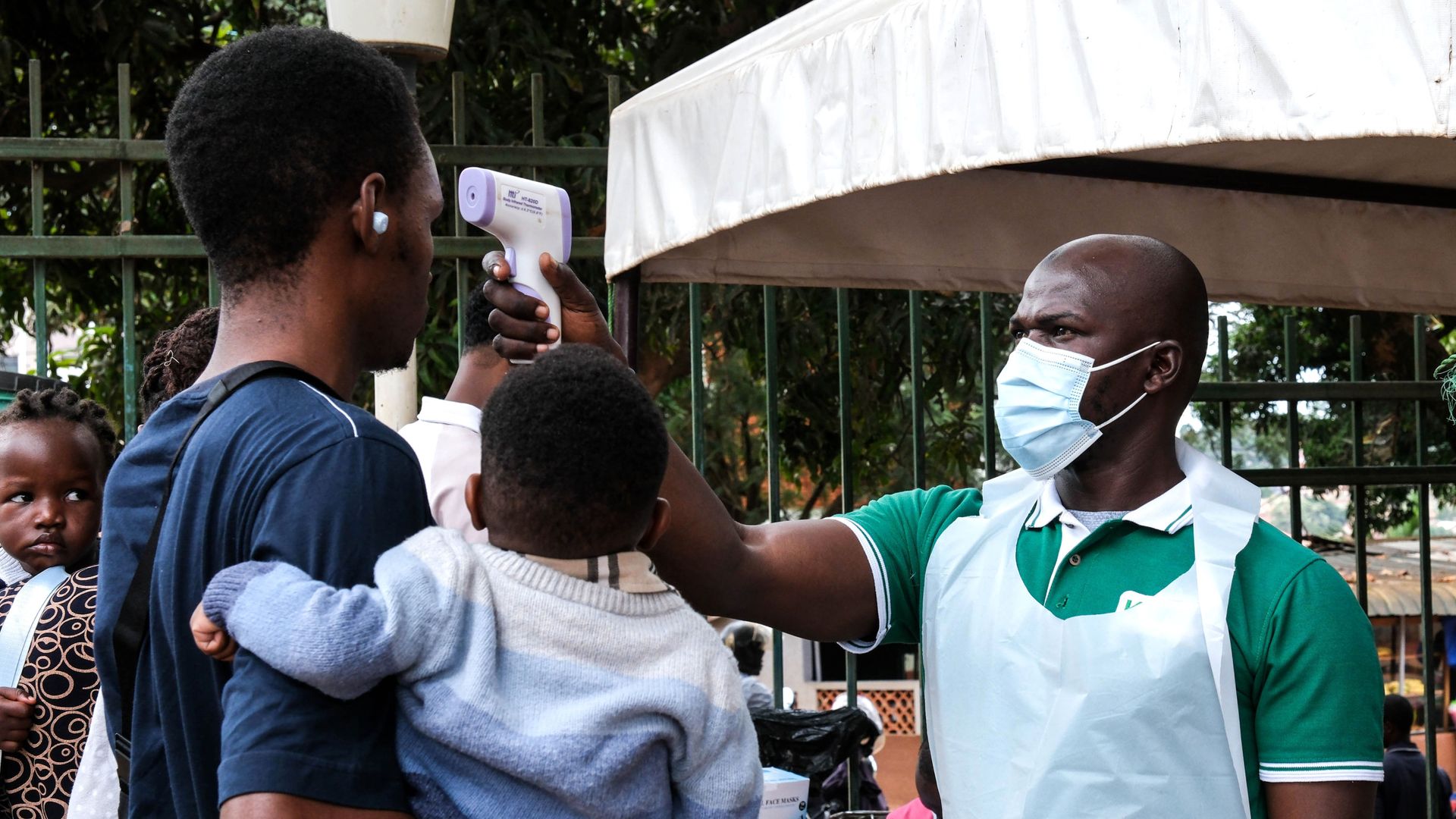
If the people on the ground don't trust the thermometer in your hand, it doesn't matter if you have a billion dollars in "emergency" funding. They will hide their sick. They will bury their dead in secret. And the virus will continue its march.
We need to stop asking "Is this a global emergency?" and start asking "Why is the local clinic empty?"
Dismantling the Transmission Fallacy
One of the biggest misconceptions pushed by the "panic" narrative is that Ebola is an unstoppable juggernaut. It is actually a relatively "lazy" virus compared to respiratory pathogens like influenza or SARS-CoV-2.
To catch Ebola, you generally need direct contact with the bodily fluids of a symptomatic person. It doesn't hang in the air for hours. It doesn't jump across a room. The $R_0$ (basic reproduction number) for Ebola typically sits between 1.5 and 2.5. For comparison, Measles can be upwards of 12 to 18.
$R_0 = \beta \cdot c \cdot d$
Where:
- $\beta$ is the probability of transmission per contact.
- $c$ is the contact rate.
- $d$ is the duration of infectiousness.
By focusing on "panic," we ignore the math. We can drive $R_0$ below 1.0 simply by changing the $c$ (contact rate) through safe burials and early isolation. We don't need a global state of theater to do that; we need consistent, boring, local health infrastructure.
The "panic mode" health official is essentially admitting they haven't done the math—or they are playing a part to secure a budget line.
The High Cost of the "Emergency" Brand
When we treat health crises as episodic emergencies rather than chronic failures, we waste human capital.
During the "panic" phase, NGOs flood a zone. They drive up the price of rent, food, and local labor. They hire the best local doctors away from the public hospitals to work as translators or site leads for ten times the salary. Then, when the WHO declares the emergency over, the NGOs vanish. The local health system is left even weaker than it was before the "help" arrived.
This is the "scorched earth" policy of international aid. It creates a vacuum that the next outbreak will fill with ease.
Stop Watching the Headlines and Watch the Supply Chain
If you want to know if an outbreak is being handled, don't look at the "Emergency" declarations. Look at the "last mile" logistics.
Are there gloves in the rural clinics? Is there a working radio to call for an ambulance? Is there a fridge that stays cold enough for the Ervebo vaccine?
The rVSV-ZEBOV vaccine is a miracle of modern science, but it requires a cold chain. Panic doesn't build a cold chain. Engineering does. Trust does. Consistent electricity does.
The Contrarian Reality
The goal of public health should be to make "Global Emergencies" obsolete. We should aim for a world where a health official saying "I'm in panic mode" is seen as a resignation of duty, not a rallying cry.
We must shift the prestige. Currently, there is no glory in a quiet, prevented outbreak. There are no documentaries about the village that didn't get Ebola because they had clean water and a trusted nurse. We only celebrate the "heroes" who jump into the fire we allowed to start.
Stop falling for the "global emergency" hype. It is a signal of failure, not a sign of a solution. The next time you see a headline designed to make your heart rate spike, ask yourself who benefits from your fear. Usually, it's the organizations that failed to build the fence and now want to get paid to put out the fire.
The virus isn't the only thing that's parasitic; the "panic" industry is, too.
Build the clinics. Pay the local nurses. Secure the supply chains. And for heaven’s sake, stop panicking. It’s the least productive thing you can do.