Federal voter roll audits and surging greenhouse gas emissions appear unrelated on the surface, yet both expose severe verification and measurement breakdowns inside U.S. governance. When a news round-up pairs disputes over Department of Justice noncitizen voter lists with reports of rising American carbon pollution, it captures two high-stakes pressure points of 2026. Standard news summaries treat these items as parallel headlines. A rigorous analytical treatment connects them through a common structural flaw: institutional systems rely on lagging, mismatched, or contested data streams to enforce rules that operate on tight political or physical deadlines.
This analysis deconstructs the mechanics behind contested federal noncitizen voter lists and rising U.S. climate pollution. It maps how administrative record-matching errors create false positives on election rolls while energy demand and coal generation shift carbon trajectories upward. Rather than treating both stories as isolated political clashes, the framework below separates verified empirical facts from analytical hypotheses, examines operational trade-offs, and outlines practical steps to improve audit accuracy and emissions accountability.
Deconstructing the Twin Dispatches
A news broadcast or brief titled around contested Justice Department noncitizen voter lists and rising U.S. pollution compresses complex policy disputes into two quick takeaways. Compression helps busy readers catch major developments, yet it obscures causality. Claiming a list is "unreliable" without specifying record-linkage failure modes leaves readers guessing whether the error comes from outdated citizenship databases, motor-voter registration workflows, or clerical mismatches. Likewise, stating that pollution "rises" without separating electricity demand, coal rebound, and policy lag blurs short-term fluctuations with structural trends.
To evaluate the underlying arguments cleanly, each dispatch must be broken into its operational inputs, verification bottlenecks, and downstream consequences.
The Noncitizen Voter List Dispute
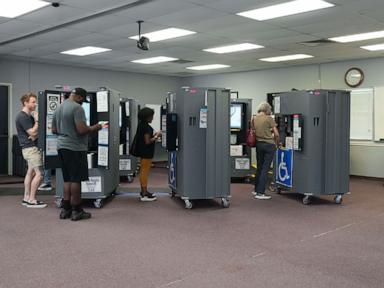
Disputes over federal lists of suspected noncitizen voters center on record matching between immigration or federal databases and state voter registration files. Election officials in states such as California and Washington have challenged federal lists, pointing to mismatches where listed individuals do not appear on active state rolls, hold confirmed citizenship, or cast ballots decades earlier. Federal prosecutors and administration officials, conversely, argue that state systems contain ineligible registrants—including lawful permanent residents who lack citizenship—and urge officials to segregate or remove contested registrations.
The core operational tension lies in entity resolution under time constraints. Databases maintained by different agencies rarely share a single universal primary key across every historical record. Name variations, middle initials, address changes, and delayed naturalization updates create false matches and stale flags. When lists arrive shortly before an election, local registrars face a sharp trade-off:
- Type I error (false disenfranchisement): Removing or segregating an eligible citizen's registration or ballot because an external record failed to reflect naturalization or matched an imperfect identifier.
- Type II error (missed ineligible registration): Leaving an inaccurate or ineligible record active because cross-agency verification lacks real-time synchronization.
Courts and election administrators have repeatedly emphasized statutory notice and verification procedures before altering voter eligibility. Hastily executed bulk actions risk disenfranchising eligible voters when record provenance is disputed.
The Rise in U.S. Climate Pollution
The second thread concerns an upward turn in U.S. greenhouse gas emissions following years of broader downward movement relative to earlier baselines. Research analyses—including estimates from the Rhodium Group—and United Nations emissions reporting point to increased power and building emissions, higher electricity demand, and a rebound in coal-fired generation driving a notable increase in U.S. emissions. Outside analysts have also noted shifts in federal energy policy and reductions in certain federal climate data collection and reporting.
Understanding why emissions rose requires separating immediate physical drivers from long-term policy effects. Electricity demand responds quickly to weather extremes, industrial activity, and load growth from electrification and data infrastructure. Coal generation can rebound when power prices, fuel economics, or dispatch constraints favor existing thermal plants over marginal alternatives. Meanwhile, legislative and regulatory changes—such as altering tax incentives or rolling back emissions rules—often take quarters or years to reshape capital expenditure, plant retirements, and fleet turnover.
Facts Versus Analytical Hypotheses
Clear decision-making depends on separating established observations from interpretive claims. Treating hypotheses as settled facts distorts risk assessment on both fronts.
Established Facts
- Record-linkage discrepancies exist on contested lists: Independent reviews and state checks of federal noncitizen voter lists have documented substantial discrepancies, including names not matching current voter files and confirmed citizens or long-time voters appearing on disputed rosters.
- Legal and procedural friction governs roll changes: State election laws and federal court rulings constrain how quickly officials can challenge, segregate, or remove voters, especially near active voting windows.
- U.S. emissions recorded a meaningful increase: Independent emission estimates and international assessments indicate U.S. greenhouse gas emissions rose rather than declined across the recent measurement window, reversing prior downward momentum.
- Power and coal dynamics played a central role: Higher electricity demand and increased coal generation contributed heavily to the emissions increase, while zero-emitting generation and natural gas shifted across the grid mix.
Educated Hypotheses
- Administrative rush amplifies error rates: Introducing large cross-agency match lists close to an election likely increases clerical misclassifications because staff lack time for manual citizenship verification and individualized notice.
- Data gaps weaken accountability: Curtailing federal emissions data collection or reporting may obscure sector-level trends, making policy evaluation slower and more reliant on third-party modeling.
- Near-term policy shifts will compound future emissions: Recent regulatory rollbacks and shifts in clean-energy incentives could raise multi-year emissions trajectories even where immediate physical drivers like weather or power demand initiated the uptick.
A Unified Framework of Institutional Lag
Both issues illustrate institutional lag—the gap between real-world state changes and the administrative or physical systems meant to track and regulate them.
In voter roll management, citizenship status changes through naturalization, and addresses change through mobility, yet cross-agency records update asynchronously. When an enforcement action demands rapid classification using imperfect data, the system confronts a classic signal-to-noise problem. Weak matching keys generate false signals that overwhelm local verification capacity.
In emissions management, physical carbon flows respond immediately to fuel burn, whereas grid infrastructure, transmission buildouts, and regulatory frameworks adjust slowly. Adding more generation capacity or shifting dispatch toward coal alters atmospheric emissions immediately, while retiring thermal units or expanding low-carbon generation requires multi-year permitting, supply-chain execution, and capital allocation.
Cause-and-Effect Chains Often Missed
Surface coverage frequently stops at proximate triggers. Tracing second-order effects reveals why disputes persist:
- Late data delivery triggers defensive litigation: When contested voter lists arrive late in an election cycle, officials and advocacy groups seek immediate judicial relief rather than quiet administrative remediation. Legal battles then consume administrative bandwidth right when election operations peak.
- Grid tightness rewards dispatchable legacy assets: Rising electricity demand tightens reserve margins during peak or sustained load periods. Existing coal plants can capture higher utilization when alternatives face interconnection queues, fuel constraints, or price spreads.
- Measurement gaps shift burden to external monitors: When official government reporting narrows, independent research organizations and international bodies become primary reference points, creating debates over methodology alongside debates over policy.
Operational Playbook and Practical Limitations
Fixing record-matching errors and reversing rising emissions require disciplined execution rather than sweeping rhetoric. Yet every intervention carries real constraints.
Strengthening Voter Roll Verification
Election administrators and agencies seeking accurate rolls can follow a structured sequence:
- Standardize deterministic and probabilistic matching keys: Require multi-field matching—combining full legal name, date of birth, residential history, and verified citizenship or immigration identifiers—rather than relying on loose name matches.
- Enforce pre-election cutoff windows: Deliver data discrepancies well ahead of registration and ballot-mailing deadlines so officials can conduct statutory outreach and verification without disrupting active voting.
- Audit random samples before taking action: Test a statistically representative sample of flagged records prior to mass segregation or removal to measure true error rates and diagnose root causes.
- Maintain transparent audit trails: Log every database query, match rule, and manual review decision so courts and oversight bodies can verify compliance without exposing sensitive personal data unnecessarily.
Limitations: Even rigorous matching cannot eliminate every edge case. Name changes after marriage or court orders, transliteration differences, and historical paper records still produce ambiguities. Moreover, agencies often face statutory privacy restrictions or system architecture limits when sharing data across jurisdictions.
Curbing Rebounding Emissions
Addressing rising power and building emissions requires aligning grid reliability with cleaner supply and efficiency:
- Prioritize high-return demand and efficiency measures: Reducing peak and baseline demand in buildings and industry lowers total generation requirements without waiting years for major transmission lines.
- Accelerate grid interconnection and firming: Streamlining queue processing for generation and storage helps meet rising load with lower-carbon supply rather than leaning on older coal units.
- Preserve consistent emissions accounting: Maintaining granular, verifiable reporting across power, industrial, transport, and building sectors ensures policymakers and markets see where emissions actually originate.
Limitations: No single lever resolves power-sector trade-offs overnight. Grid reliability must hold under extreme weather regardless of policy goals, and permitting, supply chains, and capital costs impose real physical limits on how fast new infrastructure comes online.
Strategic Recommendation
Decision-makers on both fronts should stop treating headline numbers as proof of total systemic failure or total innocence, and instead institute pre-committed audit protocols before crises peak. Election authorities and federal agencies should establish standing data-matching standards and off-cycle verification schedules well outside election windows, paired with mandatory error-rate sampling before any voter record is flagged or challenged. Concurrently, energy and environmental planners should pair near-term grid reliability safeguards with transparent, independent emissions accounting so rising power demand does not quietly lock in higher coal burn and multi-year carbon increases.