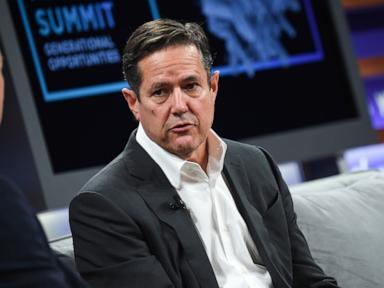
Former Barclays chief executive and JPMorgan private banking head Jes Staley sat behind closed doors with members of the House Oversight Committee on Capitol Hill.
It wasn't a public trial. There were no cameras flashing inside the room. But the implications of his interview echo far beyond the halls of Congress.
For years, the public narrative surrounding Jeffrey Epstein focused almost exclusively on his political ties and his island retreat. Yet the core engine that kept his operation running wasn't political sway. It was cash. Millions upon millions of dollars flowed through America's largest financial institutions, moving unchecked through private banking networks long after his 2008 conviction.
The congressional investigation into the federal handling of the Epstein case has brought former top bank executives into the spotlight. Staley is just the latest in a line of high-profile financial figures forced to answer for how a convicted child sex offender managed to stay plugged into elite banking circles for nearly two decades.
The Private Banker Who Maintained the Connection
Staley’s professional trajectory was legendary. He spent more than three decades building his career at JPMorgan Chase, ultimately running its lucrative asset and wealth management division. During that time, Epstein wasn't just another client; he was a key relationship node who connected the bank to extraordinarily wealthy individuals.
When Epstein pleaded guilty in Florida back in 2008 to soliciting prostitution from a minor, red flags should have halted every financial interaction instantly. Instead, the relationship continued.
Emails disclosed in various legal proceedings paint a picture of a connection that went well beyond standard private wealth management. The two men exchanged over 1,200 emails between 2008 and 2012 alone. Staley even visited Epstein’s private island aboard his own yacht as late as 2015—the year he took the helm as CEO of Barclays.
"With hindsight of what we all know now, I deeply regret having had any relationship with Jeffrey Epstein," Staley remarked publicly a few years ago.
Regret doesn't wipe away compliance failures. When UK financial regulators investigated the depth of their ties, they concluded that Staley had misled his bank and the public about the true nature of his association with Epstein. That finding triggered his resignation from Barclays, a lifetime ban from the UK financial industry, and the loss of tens of millions in compensation.
Following the Money Behind the Network
How did a disgraced financier remain a prized client across major financial institutions?
Private banking operates on discretionary discretion and vast sums of personal liquidity. High-net-worth individuals aren't treated like ordinary checking account holders. Compliance departments often flag unusual activity, but high-margin clients frequently get latitude that ordinary retail depositors never see.
Look at the sheer volume of cash involved:
- $1 Billion+: The total amount JPMorgan processed for Epstein over a 15-year period.
- $290 Million: The sum JPMorgan paid in 2023 to settle a victim lawsuit alleging the bank turned a blind eye to trafficking signals.
- $75 Million: A separate settlement paid by Deutsche Bank over similar allegations regarding Epstein's accounts.
Internal compliance officers at JPMorgan flagged massive cash withdrawals—often between $40,000 and $80,000 at a time—dating back as early as 2006. These transfers totaled millions of dollars in physical cash. Yet, senior decision-makers overruled compliance concerns time and again. Epstein wasn't just bringing his own wealth to the table; he was acting as an informal broker, introducing banks to tech billionaires, hedge fund founders, and international elites.
Money talks loudly in private wealth management. That access kept doors open long after ethics demanded they be shut.
Congressional Pressure and Institutional Accountability
The House Oversight Committee isn't just looking backwards for drama. Lawmakers are attempting to map out systemic failures in financial regulation and law enforcement oversight.
Staley's appearance follows closed-door interviews with other prominent figures, including top corporate attorneys and executives from major investment firms. Lawmakers have also scrutinized Epstein’s internal accountants, trying to trace exactly how shell companies and complex trust accounts were set up to fund his lifestyle and move money to victims undetected.
The scrutiny has expanded across the Atlantic too. Senate and House members recently pressed Barclays’ board on how their internal investigations missed the true depth of Staley's connection to Epstein when hiring him. It points to a broader structural flaw: when executive vetting relies heavily on self-reporting and high-level assurances, critical warnings get ignored.
Real Reform Requires Fixing Wealth Blind Spots
If financial institutions want to prove they've actually learned anything from this era, they need to implement actual structural shifts rather than relying on standard PR press releases.
- Strip discretion from private wealth divisions. When an account holder is convicted of serious crimes, anti-money laundering (AML) controls must trigger mandatory client offboarding without executive override capabilities.
- Audit executive networks independently. Corporate boards cannot rely on internal interviews alone when vetting executive candidates who managed ultra-high-net-worth portfolios.
- Mandate transparent disclosure on third-party introductions. The practice of allowing unaccredited "solicitors" or informal connectors like Epstein to direct hundreds of millions in capital needs strict regulatory limits and paper trails.
Congress will eventually publish the transcripts from these closed-door depositions. When those documents hit the public record, expect another wave of uncomfortable questions for Wall Street's old guard. The era of ignoring client origins for the sake of assets under management is slowly coming to an end, forced out into the open one congressional subpoena at a time.