Prejudice has a predictable routine. When a public tragedy strikes, fear doesn't wait for the forensics report. It grabs the nearest available symbol, twists it into a weapon of its own, and forces an entire community to hold its breath.
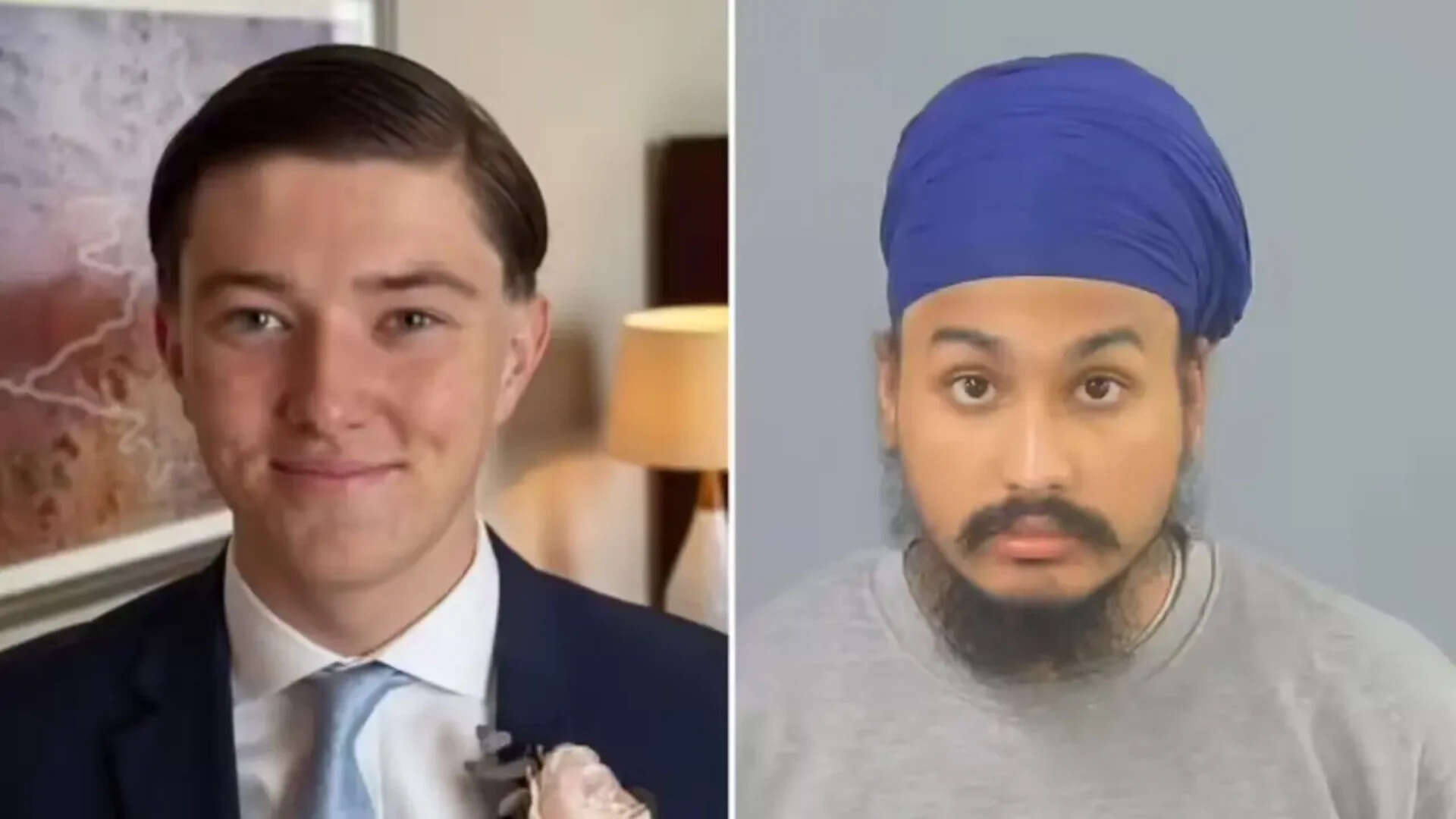
For British Sikhs, that collective intake of breath happened the moment the news broke from Southall. Henry Nowak, a young man with his whole life ahead of him, was dead. A blade had taken his life. In the chaotic, hyper-reactive echo chamber of modern media, a single word began to circulate, morphing from a whisper into a definitive accusation. Recently making waves lately: The Peripheral Encirclement of Iran: A Cold Analysis of Israel Forward Deployment Strategy.
Kirpan.
To those unfamiliar with the faith, the word represents a weapon—a curved dagger carried by initiated Sikhs. But to those who carry it, the kirpan is not a weapon at all. It is an article of faith, a sacred commitment to defend the defenseless, and a physical anchor to a code of honor. Suddenly, a symbol of protection was being blamed for a brutal act of violence. The stakes were no longer just about solving a crime; they were about defending the identity of an entire diaspora from a wave of misdirected outrage. Further information into this topic are explored by USA Today.
The Night the Room Went Cold
Tanmanjeet Singh Dhesi sat at his desk, watching the notifications flood his screen. As the Member of Parliament for Slough, and one of the country’s most prominent Sikh politicians, he knew the anatomy of a media firestorm all too well.
The early reports were vague but dangerous. They didn't just report a murder; they flavored it with cultural anxiety. Comment sections were already lighting up with demands for bans, profiling, and systemic crackdowns.
Consider the heavy burden of being a minority in the public eye. When an individual from the majority culture commits a crime, it is treated as an isolated act of human depravity. When a person from a marginalized group is even tangentially linked to a tragedy, the entire community is put on trial.
Dhesi knew the truth had to move faster than the panic. He reached out to fellow Sikh MP Preet Kaur Gill. They didn't need to debate the theology; they needed to look at the hard facts of the case. The Metropolitan Police were working through the night, piecing together the final moments of Henry Nowak’s life. The weapon had been recovered.
It was a knife, yes. But it was not a kirpan.
The distinction might seem academic to an outsider, but to the millions of Sikhs who call the United Kingdom home, that distinction is the line between religious freedom and systemic demonization. Dhesi and Gill released a joint statement, coordinate and precise, drawing a sharp, undeniable line between a common street weapon and a sacred article of faith.
They weren't hiding from the tragedy. They were mourning the loss of Henry Nowak while refusing to let his death be weaponized against an innocent community.
Anatomy of a Misconception
To understand why this distinction matters, we have to look past the steel and into the history.
Imagine standing in the heat of a 17th-century Indian summer. The Mughal Empire is at its peak, and tyranny is a daily reality for the lower castes and religious minorities. It is here that Guru Gobind Singh, the tenth Sikh Guru, establishes the Khalsa—a community of warrior-saints bound by a strict moral code.
He commands them to wear five distinct articles of faith, known as the five Ks:
- Kesh: Uncut hair, accepting the perfection of God's creation.
- Kangha: A wooden comb, symbolizing cleanliness and order.
- Kara: An iron bracelet, a constant reminder of righteous action.
- Kachera: Specially designed cotton undergarments, representing self-restraint.
- Kirpan: A ceremonial blade.
The word kirpan itself is a compound of two Punjabi words: kirpa, meaning mercy or kindness, and aan, meaning honor or dignity.
By its very etymology, the object is rooted in grace. It was never meant to be a hidden instrument of malice. It was worn openly, a visible promise to anyone fleeing oppression that a Sikh was nearby, bound by a holy oath to protect them. It is an instrument of justice, not terror.
In modern Britain, this tradition is legally recognized. Under the Criminal Justice Act 1988, the UK government explicitly protects the right of Sikhs to carry the kirpan for religious reasons. It is a testament to a successful multi-cultural society, a delicate balance of public safety and religious liberty.
But that balance is incredibly fragile. It relies entirely on public understanding. When a high-profile murder occurs, that understanding can evaporate in an instant, replaced by a knee-jerk reaction that sees a terrorist around every corner and a threat in every tradition.
The Cost of the Whisper
The real danger of the Southall rumors wasn't just political discomfort for a couple of MPs. The danger was on the streets.
Think of a young Sikh boy boarding the London Underground, his turban meticulously tied, feeling the sudden, icy shift in the gazes of his fellow passengers. Think of the Sikh shopkeeper in the West Midlands, wondering if the next person through the door is coming to buy milk or to scream slurs about a murder miles away.
This is the invisible collateral damage of inaccurate reporting.
When the media inaccurately links a sacred object to a street stabbing, it creates a permission structure for bigotry. It legitimizes the fears of the xenophobe and confuses the well-meaning citizen.
The prompt intervention by Dhesi and Gill wasn't an attempt to shift the spotlight away from a grieving family. It was a necessary act of civic preservation. By clarifying that the weapon used to kill Henry Nowak had absolutely no connection to the Sikh faith, they didn't just clear up a legal fact—they defused a cultural bomb.
The police investigation confirmed their assertions. The suspect was arrested, the weapon cataloged, and the narrative of a religiously motivated or culturally specific crime crumbled under the weight of actual evidence.
The Unfinished Story
The courtroom will eventually decide the fate of the person who took Henry Nowak's life. Justice, cold and bureaucratic, will run its course in front of a judge and jury.
But the broader trial—the one taking place in the court of public opinion—demands a different kind of verdict. It demands that we interrogate our own instincts. Why are we so quick to believe the worst about a culture we don't fully comprehend? Why does fear make us so willing to discard nuance in favor of a sensational headline?
The Southall tragedy is a stark reminder that words have a body count of their own. They can kill a reputation, destroy a community's sense of safety, and erase centuries of peaceful integration in a single afternoon.
As the sun sets over Southall, the local Gurdwara remains open, its lights casting a warm glow onto the rain-slicked pavement. Inside, the community gathers, cooking free meals for anyone who walks through the door, regardless of their faith, race, or background. It is an act of radical hospitality, performed daily, without fanfare.
On the hips of the initiated sits the kirpan, silent, sheathed, and heavy with the promise of protection. It remains what it has always been: a tool of mercy, carried by a people who have spent centuries proving that their faith is a sanctuary, not a threat.