The nylon strap of a standard-issue duffle bag has a way of digging into the shoulder that no amount of padding can truly fix. It is a specific kind of weight. It isn't just the sixty pounds of gear, the extra boots, or the folded uniforms. It is the weight of an indefinite absence.
Across military installations like Fort Liberty or the concrete expanses of Norfolk, this weight is currently being hoisted by thousands. They are moving because the chessboard of the Middle East has shifted again. While the headlines focus on the broad strokes of "regional stability" and "deterrence," the reality is found in the quiet kitchens of North Carolina and Georgia, where parents are explaining to wide-eyed children why Dad or Mom won't be there for the spring chorus concert or the first game of the season.
These deployments are not happening in a vacuum. They are occurring at the exact moment the institutions designed to support the home front are staring down a fiscal cliff. We often treat military movements and domestic budget battles as separate sections of the evening news. They aren't. They are two ends of the same fraying rope.
The Midnight Calculus
Consider a hypothetical sergeant. Let’s call him Elias. Elias has spent the last seventy-two hours in a blur of readiness checks and power of attorney signatures. He is one of the thousands ordered to the Central Command area of responsibility. His focus should be entirely on the mission—on the complexities of a region where tensions between Israel, Hezbollah, and Iran have reached a fever pitch.
Instead, Elias is thinking about his wife, Sarah, and their three-year-old. He is thinking about the news he saw on the breakroom television regarding the Department of Homeland Security.
The political machinery in Washington is currently locked in a familiar, grinding gear-clash over funding for the DHS. On the surface, it looks like a dispute over border policy—a tug-of-war between House Republicans demanding stricter enforcement and a White House seeking broader operational flexibility. But the ripples of a DHS funding lapse go far beyond the Rio Grande.
If the DHS faces a partial shutdown or even a prolonged "continuing resolution" that freezes spending at old levels, the very agencies that secure our ports, manage our airports, and protect our borders begin to buckle. For a family like Elias’, this translates to a visceral sense of instability. When the Department of Defense moves troops abroad, the Department of Homeland Security is supposed to be the steady hand on the domestic tiller. When that hand shakes because of a budget stalemate, the ground feels less firm for everyone.
The Invisible Stakes of a Frozen Budget
Budgeting by crisis has become the new American standard. It is a dangerous habit.
When Congress fails to pass a full-year appropriations bill, the DHS operates on a "Continuing Resolution" (CR). A CR is essentially a ghost of a budget. It tells an agency they can keep spending money, but they cannot start new programs, they cannot hire for critical vacancies, and they cannot pivot to meet new threats. Imagine trying to drive a car where the steering wheel is locked in one position, but the road keeps curving.
The current talks are stuck on the fundamental disagreement over how to handle the surge of migration at the southern border. It is a high-stakes game of chicken. On one side, there is the insistence that no money should flow unless the "Catch and Release" policies are dismantled. On the other, there is the reality that the Border Patrol is already overworked, understaffed, and screaming for the resources to simply manage the daily volume of humanity.
But while the debate centers on the border, the collateral damage is wide. The TSA officers who screen your bags, the Coast Guard cutters patrolling for drug submersibles, and the Secret Service details protecting candidates in an election year—all of them are tethered to this same flickering fuse.
A House Divided Against Its Own Defense
There is a profound irony in the timing of these two events.
We are sending thousands of young men and women into a volatile region to protect "national interests." We are asking them to be prepared for the worst-case scenario in a conflict that could escalate at any moment. Yet, back home, we are struggling to perform the most basic duty of a functional government: deciding how to pay the people who protect the interior.
The 82nd Airborne Division doesn't get to operate on a "Continuing Resolution" when they are wheels-up. They have to be ready. Now.
The disconnect is jarring. We project strength abroad while displaying a fractured, indecisive fiscal reality at home. To the adversary watching from Tehran or Moscow, the troop movement is a signal of resolve. But the headlines about potential DHS shutdowns and stalled funding talks are a signal of a different kind. They suggest a nation that is distracted, a nation that can be exhausted by its own internal friction.
The Human Cost of Delay
It is easy to get lost in the numbers—the billions of dollars, the thousands of troops, the hundreds of miles of border. The human mind isn't built to process those scales. It is built to process the look on a spouse’s face when they realize they’ll be solo-parenting for the next six months. It is built to process the fatigue of a Border Patrol agent who has worked twenty hours of overtime and still sees a line of people stretching into the dark.
The "latest on DHS funding talks" isn't just a political update. It is a story about the reliability of a paycheck for a TSA worker who lives paycheck to paycheck. It is a story about whether a Coast Guard family can afford the car repair this month.
When we talk about "funding," we are talking about the oxygen of the state. When you thin that oxygen, the people on the front lines are the first to get lightheaded.
Elias sits on his duffle bag in the hangar, the fluorescent lights humming overhead. He checks his phone one last time. He sees a news alert about the latest stalemate on the Hill. He wonders if the country he is going to defend is actually capable of agreeing on what defense looks like.
He puts the phone away. He doesn't have the luxury of debating. He has a manifest to follow. He has a plane to board.
The Convergence of Two Storms
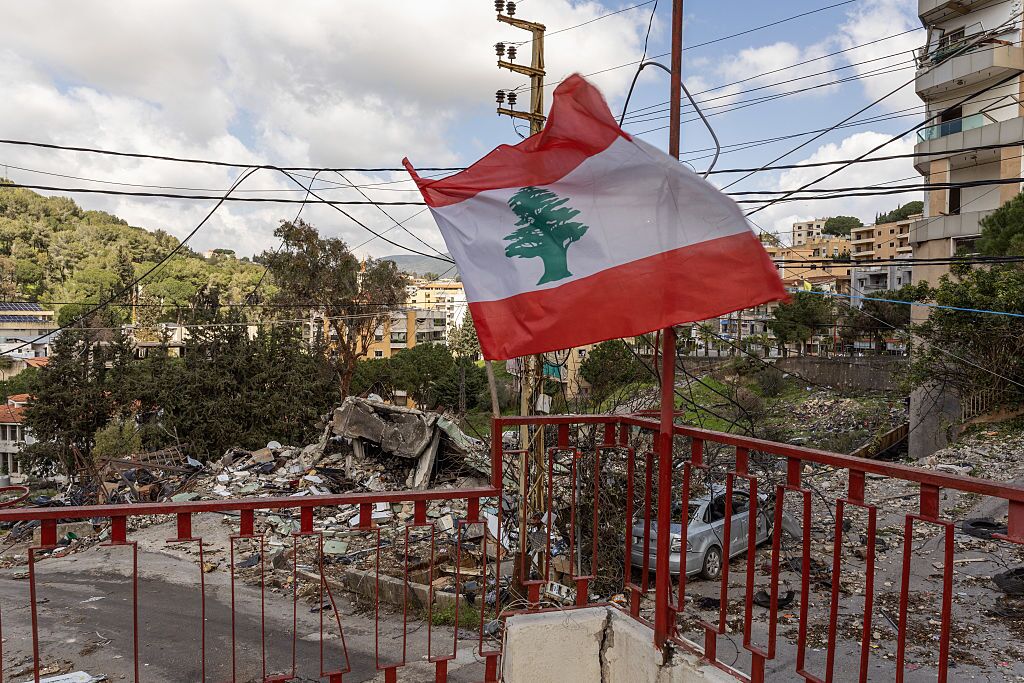
The Middle East is a tinderbox. The Red Sea is a shooting gallery for Houthi rebels. The border between Israel and Lebanon is a tripwire. This is the reality that the newly deployed troops are flying into. They are the physical manifestation of American foreign policy—the muscle that backs up the diplomacy.
Meanwhile, the halls of the Capitol are their own kind of theater. The "funding talks" are often described as a chess match, but in chess, the pieces don't have families. In chess, the board doesn't collapse if you take too long to move.
The stakes are not abstract. If the DHS funding isn't resolved, we face a scenario where the people tasked with our most intimate security—the ones at our gates and our airports—are working without the certainty of support. It creates a vacuum of morale. And in the world of security, morale is a force multiplier.
We are currently asking for the ultimate commitment from the thousands heading East. We are asking them to put their lives on hold, and potentially on the line. In return, the very least a government can provide is a stable, funded, and functional home front.
The duffle bags are packed. The planes are fueled. The troops are doing their part. The question that remains, echoing in the quiet of those half-empty houses left behind, is when the people in the air-conditioned offices will finally do theirs.
A nation cannot stand firmly on the world stage if it is tripping over its own feet at home. We are watching a high-wire act where the performer is being asked to juggle flaming torches while someone is slowly unravelling the wire from the wall.
The plane climbs into the night sky, banking away from the lights of a country that is still arguing about how to pay for its own shadow. Elias closes his eyes, trying to catch an hour of sleep before the long desert dawn. He has done his job. He has shown up. He is waiting for the rest of us to do the same.
The weight of the bag doesn't go away when you put it down; you just get used to the ache.