The Silence Before the Echo
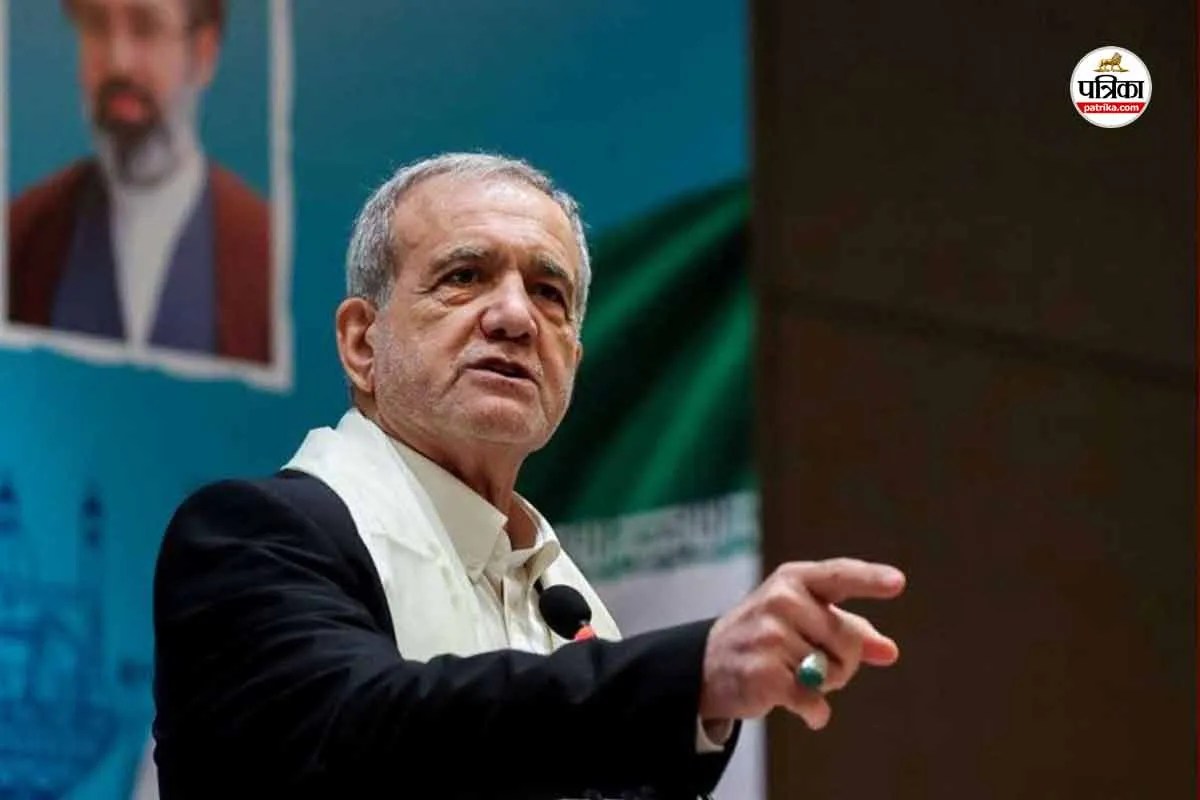
Words have a physical weight in capitals built on centuries of strategic suspicion. When Masoud Pezeshkian speaks, the air in Tehran does not simply absorb the sound; it contracts. Every syllable is weighed, measured, and parsed by intelligence desks thousands of miles away, translated instantly into the cold calculus of risk and deterrence.
Listen closely.
Silence.
That is the sound of an entire region holding its breath. The Iranian president, navigating the perilous strait between reformist promises and hardline institutional gravity, recently dropped a verbal stone into stagnant diplomatic waters. The ripples reached Washington before the microphone feed even cut. In diplomatic corridors, a familiar anxiety resurfaced. Is the key to unravelling this decades-long entanglement truly tucked inside an American pocket, or is that narrative merely a convenient illusion designed to shift the burden of choice?
To understand why a single sentence from Pezeshkian can spike anxiety across global markets and military command centers, one must look past the headlines and into the human architecture of modern friction. This is not just a story of presidents, treaties, and nuclear enrichment centrifuges. It is a story of ordinary people whose daily lives are tethered to the shifting moods of men who will never meet them.
The Architecture of Distrust
History is never truly past. It lingers in the concrete of government ministries, in the rusted hulls of embargoed tankers, and in the quiet kitchen conversations of families calculating the cost of imported medicine.
When Pezeshkian assumed office, he did so on a wave of cautious domestic expectation. He campaigned on a platform that whispered of openness, of mending fractured ties, of breathing oxygen back into an economy suffocated by sanctions. Yet, governance in Tehran operates within tight constraints. The executive office is an engine with powerful brakes attached. Every overture toward the West is met with immediate, fierce internal resistance from factions that view compromise as an existential threat.
Consider the dilemma. To signal willingness to de-escalate, a leader must speak the language of peace. But speaking that language domestically exposes one to accusations of weakness. Conversely, standing firm pleases the hardliners while locking the nation deeper into international isolation.
Into this delicate internal balancing act steps the external variable: Washington.
For decades, United States foreign policy toward Iran has swung like a heavy pendulum between containment and maximum pressure. Administrations change, but the foundational suspicion remains remarkably resilient. When Pezeshkian gestures toward dialogue, suggesting that the path forward depends on American willingness to alter course, he is appealing to a Washington establishment that views such statements through an unyielding lens of skepticism.
Trust is an expensive commodity. Neither side possesses a surplus.
Inside the Room Where Shadows Fall
Picture a modest office in downtown Tehran late at night. The city outside hums with the restless energy of millions navigating traffic and economic uncertainty. Inside, an advisor reviews a translation of a cable sent from a European intermediary. The message is blunt. Washington is listening, but Washington is waiting. Washington wants proof, not poetry.
Now picture a corresponding room across the Atlantic, illuminated by the cold blue glow of secure monitors. An analyst circles a paragraph in a daily intelligence briefing. The analyst's job is not to hope; it is to anticipate betrayal. Every diplomatic gesture is cross-referenced with past grievances, proxy movements, and regional proxy networks stretching from the Levant to the Persian Gulf.
This is the invisible machinery of modern conflict. It runs on paranoia and institutional memory.
When Pezeshkian articulates a vision where the onus of breaking the deadlock rests squarely on American shoulders, he is engaging in a well-worn rhetorical tradition. It is a maneuver designed to flip the script of accountability. By framing the United States as the primary custodian of regional stability—or instability—he attempts to isolate Washington diplomatically, suggesting that Tehran is ready for reason if only the other side dares to unlock the door.
Yet, Washington hears something else entirely. To American strategists, shifting the responsibility of conflict resolution onto the White House ignores the complex web of regional actions that sustain the tension. From maritime security concerns in the Strait of Hormuz to regional missile developments, the grievances form a dense thicket that cannot be cleared away by a single rhetorical stroke.
The Cost of the Standoff
Abstract nouns like geopolitics, deterrence, and sovereignty sound clean when printed on newsprint or spoken by television anchors. On the ground, they translate into grit, anxiety, and missed futures.
Imagine a young engineer in Isfahan. Brilliant, fluent in multiple languages, eager to connect with global research institutions. He has spent his entire adult life watching his purchasing power evaporate not because of personal failure, but because macroeconomic shockwaves generated by diplomatic standoffs dictate the price of basic goods. For him, the political posturing between Tehran and Washington is not an intellectual exercise. It is a ceiling on his life.
Multiply that young man by tens of millions.
The friction between nations creates a vast, silent drag on human potential. Every time tensions spike—whether triggered by a presidential statement, a naval maneuver, or a stalled diplomatic channel—the baseline level of societal stress ticks upward. Markets react. Currency values dip. Ordinary citizens instinctively convert their savings into hard assets, preparing for the worst while hoping against evidence for the best.
This is the hidden cost of the ongoing impasse. The conflict is maintained not merely by active hostility, but by the gravitational pull of accumulated grievances. Both sides are trapped in an orbit of their own making, terrified that changing trajectory will leave them vulnerable to the gravitational collapse of their own domestic credibility.
Deconstructing the Illusion of the Single Key
Is the key truly in American hands?
The assertion is seductive because it simplifies a terrifyingly complex reality. If Washington holds the key, then Washington bears sole blame for the locked door. But geopolitics rarely operates with such neat symmetry.
The key is not a single piece of brass sitting on a desk in the Oval Office. It is a composite mechanism, requiring multiple actors to turn simultaneously.
For the United States, unlocking the relationship requires political courage that transcends electoral cycles—an ability to endure domestic criticism for engaging an adversary. It requires a willingness to offer tangible economic relief before demanding total behavioral transformation, a sequence that successive American administrations have found politically perilous.
For Iran, the mechanism requires navigating the profound domestic anxieties of its own power structure. It requires convincing internal skeptics that diplomatic engagement does not equate to strategic suicide. It requires addressing the legitimate security concerns of neighboring states and international bodies that view Tehran's regional posture with alarm.
When Pezeshkian points across the ocean and suggests that the power to end the cycle lies there, he is telling a partial truth. Washington possesses immense leverage, certainly. The power of American secondary sanctions is a battering ram that can reshape economies. But leverage is not the same as control. Possession of a heavy tool does not guarantee the skill required to build a lasting structure.
The Rhetorical Dance of Deterrence
Language in international relations is rarely innocent. Every speech is a calculated performance aimed at multiple audiences simultaneously.
When a leader addresses domestic constituents, the tone must project unyielding strength and moral clarity. When that same leader addresses international partners, the tone shifts to emphasize sweet reason, openness, and readiness for dialogue. Balancing these dual imperatives is an acrobatic feat performed over an abyss.
Recent statements from Tehran regarding the conflict and its resolution must be viewed through this dual lens. Pezeshkian walks a tightrope. He needs foreign investment and diplomatic breathing room to fulfill his mandate of domestic economic revitalization. Yet, every time he signals flexibility, hardline factions within the political establishment remind him of the red lines.
The resulting tension is palpable. It explains why periods of diplomatic opening are so frequently followed by sudden hardenings of rhetoric. It is a pulse—expand, contract, push, pull.
And while the leaders dance their careful minuet, military planners on both sides update contingency files. Destroyers patrol international waters with radar systems humming. Fighter jets sit on tarmac readiness strips. Intelligence officers monitor communications traffic for any anomaly that might signal an accidental escalation. The margin for error is razor-thin. A miscalculated interception in the Gulf, a stray drone, or a mistranslated communique can instantly transform verbal tension into kinetic reality.
The Human Horizon
History suggests that prolonged standoffs rarely end with theatrical climaxes or sudden, sweeping treaties. More often, they dissolve slowly, eroded by exhaustion, economic necessity, and the gradual realization that the alternative to talking is too catastrophic to contemplate.
Yet, reaching that point requires moments of profound vulnerability. It requires leaders who are willing to absorb political punishment from their own hardliners in pursuit of a stable horizon. It requires publics that can look past decades of institutionalized suspicion to imagine a different kind of future.
As the echoes of Tehran's latest diplomatic positioning settle across international listening posts, the immediate outcome remains uncertain. Tensions have ticked upward, as they always do when rhetoric meets reality. Analysts will write their briefs. Markets will adjust their risk models.
Yet, beneath the tactical maneuvering and the strategic posturing remains the quiet, persistent pulse of human desire for normalcy. People want to work, to raise their children, to look toward tomorrow without the shadow of sudden conflict darkening their doors.
That desire cannot be legislated out of existence by sanctions, nor can it be bombed into submission by deterrence strategies. It persists, stubborn and quiet, waiting for the day when those who hold the levers of power decide that the key they have been searching for has been in their own hands all along.