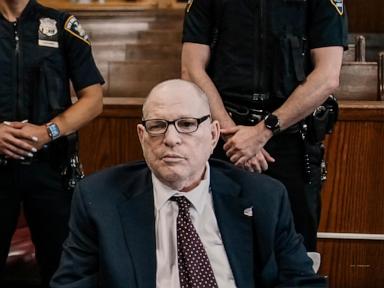
The media is salivating over the Tuesday opening statements in Harvey Weinstein’s New York retrial as if we are witnessing a moral reckoning. They are wrong. This is not a "landmark moment for accountability" or a "re-evaluation of the MeToo legacy." It is a cold, clinical autopsy of a judicial system that broke its own rules to win a PR battle, and the price of that vanity is now being paid in the currency of procedural chaos.
When the New York Court of Appeals overturned Weinstein’s 2020 conviction, the public outcry was emotional. The legal reality, however, was inevitable. By allowing "Molineux" witnesses—women whose allegations were not part of the actual charges—to testify about "prior bad acts," the original trial court prioritized a narrative arc over due process. You don’t get to convict someone for Crime A by proving they are the kind of person who might do Crime B, C, and D. That isn't law; it’s character assassination disguised as evidence.
The Myth of the "Clean" Retrial
The common consensus suggests this retrial "corrects" the record. It doesn't. It highlights the impossibility of finding twelve people in Manhattan who haven't already marinated in a decade of headlines. We are pretending we can hit a reset button on a global cultural phenomenon.
In the original trial, the prosecution relied on the "predatory sexual assault" charge, a high-stakes gamble that required proving a pattern. By flooding the zone with non-charged testimony, they didn't just bolster their case; they poisoned the well. Now, the prosecution faces a brutal tactical dilemma: strip the case down to the bare legal essentials and risk looking weak, or try to skirt the appellate ruling and risk a second reversal.
Why the "Pattern" Argument Fails in Court
Legal pundits love to talk about "patterns of behavior." In the court of public opinion, a pattern is a smoking gun. In a court of law, a pattern is often a distraction.
The logic of the Molineux ruling is simple: a defendant should be tried for what they did, not who they are. When you bring in witnesses to testify about events from the 1990s that aren't on the indictment, you aren't proving the 2013 incident happened. You are telling the jury, "He’s a monster, so he probably did this too."
If the prosecution cannot win on the merits of the specific charges involving Jessica Mann and Mimi Haley, then they shouldn't win at all. That is the uncomfortable truth of the American legal system that "advocates" refuse to acknowledge. We have traded the presumption of innocence for the presumption of "general guilt," and this retrial is the fallout of that trade.
The Witness Trap
Expect the defense to be significantly more aggressive this time. In 2020, there was a lingering fear of the "optics" of cross-examining accusers too harshly. That fear is gone. Weinstein’s team knows that the appellate court has already validated their complaints about "judicial overreach."
They will dismantle the timeline of "consensual-turned-non-consensual" relationships with a surgical cruelty that the 2020 climate didn't permit. They will point to the years of warm emails and career-seeking interactions post-alleged assault. To the casual observer, this looks like "victim-blaming." To a defense attorney, it is "impeaching credibility via inconsistent conduct."
The High Cost of Symbolic Victories
The biggest mistake the prosecution made was treating Harvey Weinstein like a symbol instead of a defendant. When you prosecute a symbol, you take shortcuts. You push the boundaries of evidence. You rely on the "vibe" of the room rather than the strength of the forensic or testimonial data.
- Shortcut 1: Using "expert" testimony on trauma to explain away every inconsistency.
- Shortcut 2: Relying on the volume of accusers rather than the veracity of the specific complainants.
- Shortcut 3: Banking on a jury's fear of being on the "wrong side of history."
The 2024 reversal proved that the "wrong side of history" is not a legal standard. The Court of Appeals didn't overturn the conviction because they liked Weinstein; they overturned it because the trial judge, James Burke, allowed the proceedings to devolve into a circus of uncharged allegations.
The Industry’s False Penance
Hollywood wants this trial to be a closed chapter. They want to point at the man in the wheelchair and say, "There is the evil, and we have purged it."
But the "casting couch" wasn't a Weinstein invention; it was an infrastructure. By focusing so hyper-intensively on one man’s retrial, the industry avoids looking at the middle managers, the agents, and the enablers who are still in power. This trial functions as a lightning rod, drawing all the energy away from a systemic critique and focusing it on a single, aging villain.
If Weinstein is acquitted or if the jury hangs, the "progress" of the last eight years will be called into question. Why? Because the movement tethered its legitimacy to a specific legal outcome rather than a cultural shift.
What the Prosecution Won't Admit
The Manhattan D.A.’s office is under immense pressure. They cannot afford to lose. This creates a dangerous incentive to push the envelope again. They are currently looking to add new complainants to the indictment—women who weren't part of the first New York trial—to replace the Molineux witnesses they lost.
This isn't "new evidence." This is a desperate attempt to recreate the "volume" effect that the appellate court just struck down. If the D.A. thinks they can just swap out uncharged witnesses for newly charged ones to bypass the ruling, they are inviting yet another appeal. It is a cycle of procedural vanity that serves no one—least of all the victims who are forced to testify for the third or fourth time.
The Juror's Dilemma
Imagine sitting in that jury box. You know he’s been convicted in California. You know he was convicted here before. You know the world thinks he’s a predator.
How do you provide a fair trial? You can't. The "fair trial" is a ghost. This proceeding is a formality required to satisfy the requirements of a system that realized it tripped over its own feet. The jurors aren't weighing facts; they are weighing their own ability to ignore the noise.
The Brutal Reality of the Retrial
This isn't about "seeking the truth." The truth of Harvey Weinstein's behavior has been public record for nearly a decade. This is about whether the state can prove specific criminal acts beyond a reasonable doubt without cheating.
In the first trial, they cheated. They used the "bad man" defense, and it worked—until it didn't.
Now, the prosecution has to play by the rules. No extra witnesses to pad the narrative. No using "character" as a substitute for "conduct." For a prosecution team that has spent years relying on the momentum of a movement, playing by the rules is going to feel like a handicap.
Stop looking for a moral victory in a Manhattan courtroom. This is a technical correction of a legal error. If you want justice, look to the laws that were changed and the contracts that were rewritten. If you want a show, watch the opening statements on Tuesday. Just don't confuse the two.
The legal system doesn't exist to make us feel better; it exists to ensure that even the most hated person in the country receives a trial that isn't a foregone conclusion. If we lose that, we lose everything, regardless of who is sitting at the defense table.
The courtroom doors open Tuesday. The circus is back in town. But this time, the performers are worried that the audience has finally realized the tricks are rigged.
Don't expect a resolution. Expect a collision between the reality of law and the fantasy of public vengeance.