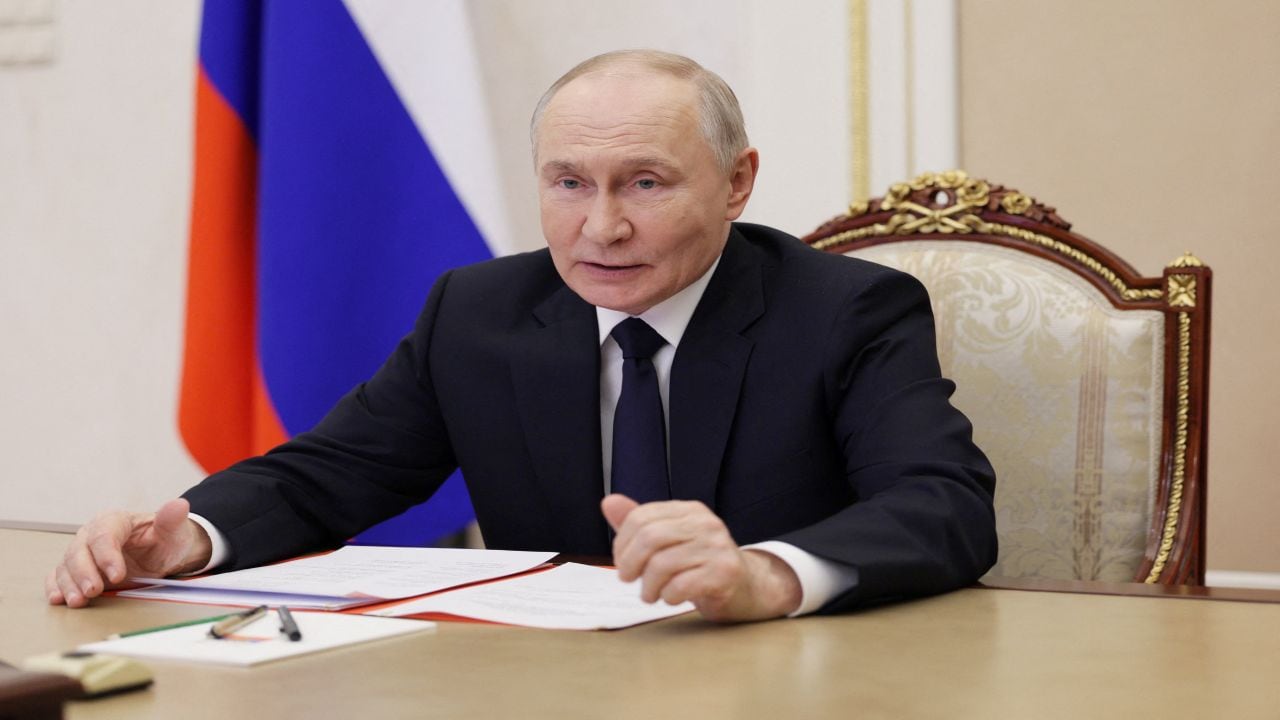
The narrative is as comfortable as an old sweater: a detached, aging autocrat sits at the end of an impossibly long table, fed a steady diet of "everything is fine" by terrified sycophants while the real world burns outside his window. Western media and think-tank analysts love this trope. It frames the adversary as incompetent and doomed. It suggests that if we could just slip a copy of the New York Times under the door, the whole system would collapse under the weight of "the truth."
The recent viral criticism from Russian military bloggers—and the Kremlin’s predictable denial that Putin is "cut off"—is being read as a glitch in the Matrix. It isn't. It’s a feature of a highly sophisticated, multi-channel information architecture that Western observers consistently fail to grasp because they are looking for a democratic feedback loop in a system designed for a different kind of survival.
The Myth of the Echo Chamber
Let’s dismantle the "isolated dictator" theory immediately. The idea that Vladimir Putin, a man who built his career in the KGB and consolidated power by manipulating internal security services, doesn't understand the concept of a filtered briefing is laughable.
In a centralized power structure, information is the primary currency. If you only have one source, you have no power; you are a hostage to your subordinates. Putin doesn’t rely on a single channel. He sits at the intersection of three distinct, often competing, intelligence streams:
- The Official Siloviki Reports: The formal briefings from the FSB, SVR, and GRU. These are sanitized, yes, but they are compared against one another to identify discrepancies.
- The Technocratic Track: Economic and logistical data from the Prime Minister’s office and the Central Bank. These figures are harder to fudge because they manifest in currency fluctuations and supply chain failures that can't be hidden by a memo.
- The Grey Zone (Mil-Bloggers): This is where the recent "viral" criticism lives. Far from being a threat to Putin’s situational awareness, these bloggers act as a decentralized, unpaid auditing department for the Ministry of Defense.
When a blogger screams about a lack of shells in Donetsk, they aren't "breaking through" to a sheltered leader. They are providing the Kremlin with the leverage needed to purge a failing general or pressure a defense contractor without the Kremlin having to take the political heat for the failure itself.
Information as a Weapon of Internal Control
The mistake the "lazy consensus" makes is assuming the goal of information in the Kremlin is accuracy. It isn't. The goal is calibration.
In a Western corporate or political setting, you want the truth so you can solve the problem. In the Kremlin, you want the truth so you can manage the consequences of the problem. If Putin knows a front line is collapsing, his first move isn't necessarily to send reinforcements; it’s to decide who will be the fall guy.
The "viral" criticism from the nationalist right serves a vital purpose. It creates a pressure valve. By allowing a certain level of dissent from the "Ultra-Patriots," the Kremlin can monitor the exact temperature of the most volatile segment of the population. If the bloggers are angry, the Kremlin knows where the friction points are. Denying that these reports affect the President is a standard diplomatic reflex, but behind the scenes, those Telegram posts are likely on the morning briefing sheet specifically because they provide a ground-level view that the formal military hierarchy tries to suppress.
The Cost of the "Isolated Autocrat" Narrative
Why does the West keep pushing the idea that Putin is uninformed? Because the alternative is much scarier: that he knows exactly what is happening and is proceeding anyway.
If we believe he is misinformed, we can maintain the hope that he will "see reason" or that a "palace coup" is imminent once the truth comes out. This is a coping mechanism for Western policy-makers. It allows for a strategy of "strategic patience," waiting for a collapse that is predicated on a misunderstanding of how Russian power is actually exercised.
I’ve watched analysts make this same mistake for twenty years. They see a crack in the monolith and assume the building is falling. They don't realize the building is made of reinforced concrete and designed to flex.
The Problem with "Good News" and "Bad News"
We use these terms as binaries. In the Kremlin, there is no such thing as "bad news," only "actionable intelligence regarding internal rivals."
If a general fails, that is "bad" for the war effort, but "good" for the security services who want that general’s budget. Information is weaponized. When the Kremlin denies that Putin is shielded from bad news, they are technically telling the truth—not because they value transparency, but because Putin’s entire system of "manual control" (ruchnoye upravleniye) requires him to be the final arbiter of competing "truths."
The Intelligence Gap
The real danger isn't that Putin is cut off. The danger is that the West is cut off from understanding Putin’s interpretation of the news he receives.
Imagine a scenario where the President is shown a report of a 10,000-person protest. A Western leader sees a threat to their re-election. Putin sees a list of 10,000 people whose leaders need to be co-opted or neutralized. The "news" is the same; the output is diametrically opposed.
We are looking for a shift in policy based on "bad news." He is looking for a shift in personnel based on "failure." These are not the same thing.
Stop Waiting for the Epiphany
The viral blogger criticism isn't a "brave truth-teller" moment that will change the course of the conflict. It is a data point in a brutal, internal optimization process.
The Kremlin doesn't fear the truth; it manages it. The idea that the President is sitting in a dark room, unaware that his military is struggling, is a fairy tale we tell ourselves to make the world seem more manageable. It’s time to stop looking for the moment the "bubble bursts" and start dealing with the reality of a regime that is perfectly aware of its failures and is simply choosing to absorb the cost.
The system isn't broken because it ignores bad news. The system is designed to thrive on the chaos that bad news creates, using it as a catalyst to prune the disloyal and the incompetent while keeping the core power structure intact. If you're waiting for Putin to have a "realization," you'll be waiting until the end of the century. He isn't missing the data. He just doesn't care about your version of the solution.