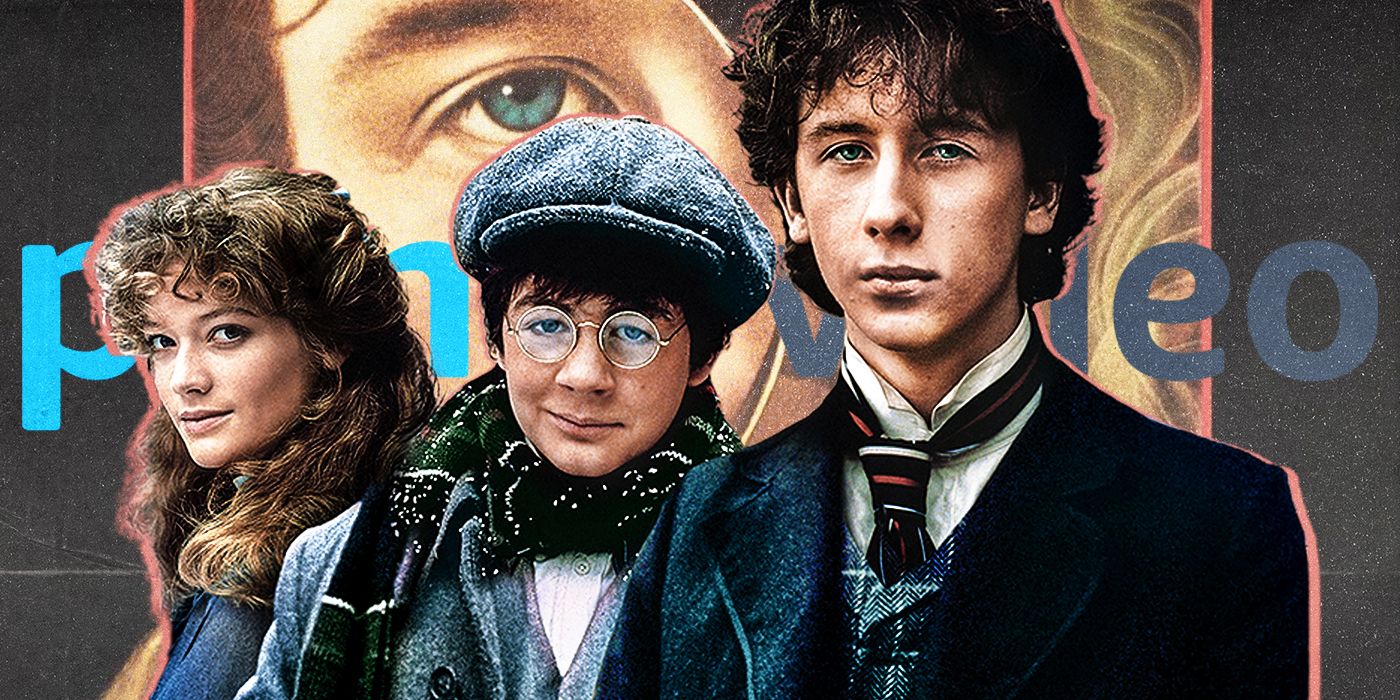
Sherlock Holmes and James Moriarty are the original blueprint for the "hero vs. villain" trope. Most adaptations treat them like two magnets with the same polarity, constantly pushing away while locked in a lethal dance. We know the story. Reichenbach Falls. The intellectual stalemates. The mutual obsession. But Guy Ritchie’s Young Sherlock series on Prime Video decides to throw that century-old playbook out the window. It asks a much more uncomfortable question. What if the world’s greatest detective and its most dangerous criminal mastermind started as best friends?
It’s a bold pivot. Some purists might even call it blasphemy. Honestly, it’s exactly what the franchise needs to stay relevant in 2026. By turning their rivalry into a fractured friendship, the show adds a layer of grief to their future encounters that Arthur Conan Doyle never explicitly wrote but always hinted at through their shared isolation.
The chemistry of a doomed friendship
In this version, we meet a 19-year-old Sherlock who isn't yet the polished, sociopathic machine we see in 221B Baker Street. He’s raw, impulsive, and deeply lonely. When he meets a young James Moriarty, the connection isn't just intellectual. It’s personal. They’re the only two people in the room who speak the same language.
Watching them navigate Victorian London together feels less like a procedural and more like a coming-of-age tragedy. You see them solving minor crimes, finishing each other's sentences, and finding a kinship that neither has ever experienced. This isn't just about "getting to know the enemy." It’s about the tragedy of finding your soulmate in the person who will eventually become your greatest nightmare. The show spends time on the quiet moments—the shared drinks, the late-night debates over ethics—that make the inevitable betrayal sting.
Why the BFF angle actually works for SEO and fans
Audiences are tired of one-dimensional villains. We’ve seen the "evil for the sake of evil" Moriarty a dozen times. Andrew Scott gave us the chaotic neutral version, and Jared Harris gave us the cold industrialist. Young Sherlock gives us a human being.
When you frame Moriarty as a former friend, his descent into criminality becomes a commentary on Sherlock's own choices. They both start with the same high-powered brain. One chooses to use it for order; the other chooses chaos. By making them friends first, the show highlights that thin line between genius and madness. It’s not a leap to say this is the most emotional stakes we’ve ever had in a Holmes adaptation. You aren't just rooting for Sherlock to catch the bad guy. You’re watching him lose his only friend in slow motion.
Breaking the canon without breaking the character
Purists often argue that Sherlock shouldn't have friends other than Watson. That’s a fair point. However, Young Sherlock uses this pre-Watson era to explain why Sherlock is so guarded by the time he meets the doctor. If his first real bond was with a man who turned into a monster, it explains his coldness. It explains his reluctance to trust.
The series handles the divergence from the books by leaning into the "untold stories" mentioned in the original canon. Doyle often alluded to Sherlock’s past without ever fully detailing it. This gap gives the writers room to play. They aren't erasing the books. They're providing a prequel that makes the books feel more heavy. When you eventually see them at Reichenbach, you won't just see two enemies. You'll see two men mourning the friendship they lost decades ago.
The unraveling of James Moriarty
The transition from friend to foe isn't a single "Aha!" moment. It’s a slow rot. In the series, we see Moriarty’s brilliance slowly curdling into arrogance. He starts seeing people as chess pieces rather than humans. Sherlock notices. He tries to pull him back. He fails.
This creates a dynamic where Sherlock feels responsible for what Moriarty becomes. That’s a heavy burden for a protagonist. It shifts the show from a simple mystery-of-the-week format into a character study. We see the exact moment the trust breaks. It’s not over a grand scheme to topple the British Empire. It’s over a small, moral compromise that Moriarty makes—one that Sherlock can’t ignore.
A fresh look at Victorian London
Guy Ritchie’s aesthetic helps sell this. The world is gritty, fast-paced, and tactile. It doesn't feel like a museum. The cinematography reflects the frantic energy of two geniuses on the loose. The camera work during their "mind palace" moments—which are more like shared hallucinations in this version—is top-tier. It visualizes their synchronization. When they’re in sync, the world moves at their speed. When they fall out of sync, the editing becomes jagged and disconnected. It’s a smart way to show their relationship through visuals rather than just dialogue.
What this means for future Holmes adaptations
The success of this "BFFs to enemies" trope proves that there’s still life in 140-year-old characters. It moves away from the "superhero" version of Sherlock and brings him back to earth. He’s vulnerable. He makes mistakes. He gets his heart broken by a friend.
If you want to understand the modern appeal of Sherlock Holmes, stop looking at the hat and the pipe. Look at the psychology. People care about the man, not the equipment. Young Sherlock leans into that. It gives us a Moriarty who is a mirror image of the hero, making the eventual "Final Problem" feel like a mercy killing rather than just a victory.
If you're planning to watch, pay close attention to the dialogue in episode three. There's a specific conversation about the nature of "perfection" that essentially maps out the entire trajectory of their rivalry. It’s the moment the friendship ends and the legend begins.
Go back and re-read "The Final Problem" after finishing the first season. The lines between the two characters take on a completely different meaning when you imagine them as two old friends who simply couldn't find a way to live in the same world together. It’s a gut punch that works because the show took the time to build the love before the hate.