The high-desert silence of Stanley, New Mexico, was broken this week not by the low hum of private jets, but by the barking of cadaver dogs and the heavy tread of state investigators. For twenty-six years, Jeffrey Epstein’s Zorro Ranch stood as a 7,500-acre monument to untouchability, a sprawling fortress where the rules of the civilized world seemed to evaporate into the thin mountain air. Authorities are finally conducting the forensic sweep that should have happened years ago, driven by a harrowing lead that has lingered in the shadows since the financier’s death: the allegation that the bodies of two "foreign girls" are buried in the sun-bleached hills of the property.
This is not a routine check or a bureaucratic formality. It is a long-delayed reckoning for a site that federal authorities inexplicably bypassed during their initial 2019 sweep of Epstein’s empire. While properties in Manhattan, Palm Beach, and the Virgin Islands were stripped of evidence, the New Mexico estate remained a glaring void in the investigation. New Mexico Attorney General Raúl Torrez, acting on the weight of millions of newly released Department of Justice documents, has reopened the case to determine how deep the rot actually went.
The search focuses on a specific, chilling tip contained in a 2019 email sent to a local radio host, which suggested that Epstein and Ghislaine Maxwell ordered the clandestine burial of two victims on the ranch grounds. The fact that investigators are only now, in 2026, putting boots on the ground to verify this claim is a staggering indictment of the original federal probe.
The Geography of Impunity
Zorro Ranch was never just a vacation home. It was designed as a self-contained ecosystem of control. Built in 1993 after Epstein purchased the land from former New Mexico Governor Bruce King, the property features a 30,000-square-foot mansion that dominates a hilltop, overlooking a private airstrip, a hangar, and a helipad.
The architecture tells a story of predatory intent. Survivors have described a layout intended to disorient and isolate, where young women were flown in under the guise of "massage therapy" only to find themselves trapped in a secluded desert vastness where the nearest neighbor was miles away. The ranch also served as the hub for Epstein's megalomaniacal "human seed" project—a plan to use the site as a base for impregnating dozens of women to spread his genetic code, a scheme that reads more like a dystopian thriller than the reality of a modern billionaire.
The sheer scale of the acreage is the primary obstacle for the current search. Forensic teams are tasked with scouring thousands of acres of rugged terrain for disturbed earth that is now nearly seven years old. The elements in this part of New Mexico are unforgiving; wind and erosion can erase the surface-level signs of a shallow grave in a single season. However, the presence of specialized K-9 units and ground-penetrating radar suggests that the state is looking for more than just surface-level artifacts. They are looking for the truth that lies beneath the limestone.
A Question of Public Corruption
Why did it take seven years? This is the question haunting the newly formed "Truth Commission" established by the New Mexico legislature. The commission is not just looking for evidence of Epstein’s crimes; it is looking for evidence of who helped him hide them.
The historical ties between Epstein and the New Mexico political establishment are uncomfortably tight. Records show that Epstein donated to various local political figures, and names of prominent New Mexicans appeared in his infamous "Little Black Book." In 2019, federal prosecutors in New York reportedly requested that New Mexico authorities stand down on their own investigation to avoid a "parallel" probe. New Mexico complied, yet the federal search of Zorro Ranch never materialized.
The current investigation is a direct result of public pressure that reached a boiling point after a 2024 report revealed the extent of federal inaction. The state's Department of Justice is now seeking unredacted files from the FBI, suspecting that the "cooperation" between state and federal agencies in 2019 was actually a one-way street of suppression.
Obstacles to Justice
- Evidence Degradation: Forensic experts warn that after seven years, the recovery of biological evidence or DNA from a desert burial site is statistically improbable unless the bodies were exceptionally well-preserved.
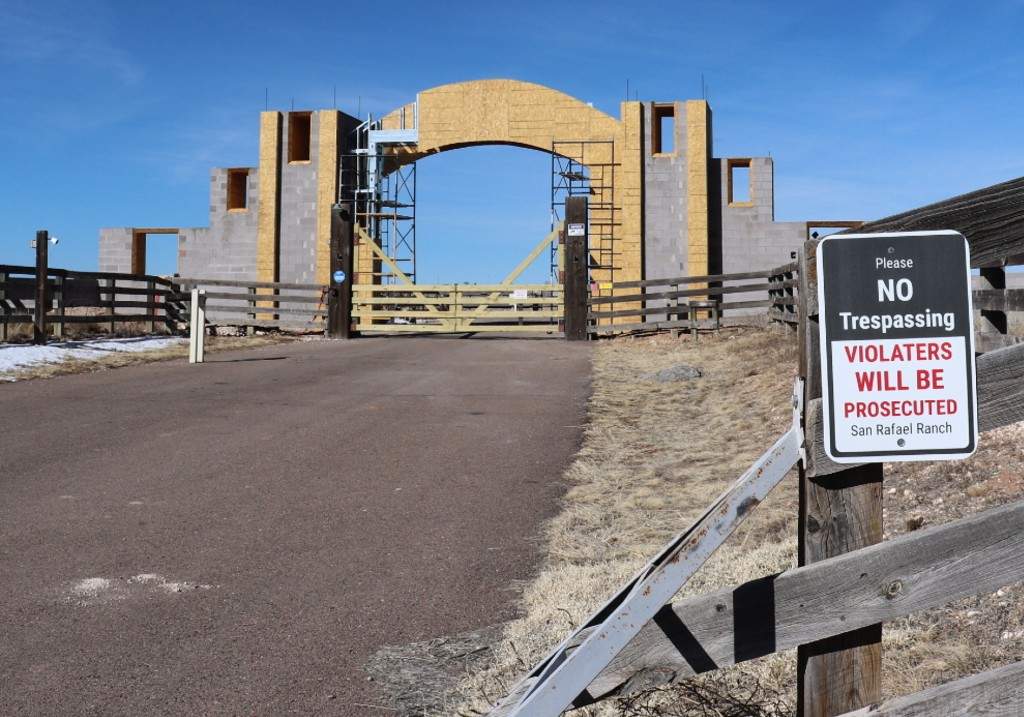
- Chain of Custody: The property has changed hands. Since 2023, the ranch has been owned by the family of Texas businessman and politician Don Huffines. While the Huffines family has been fully cooperative—even renaming the site "San Rafael Ranch" and beginning its conversion into a Christian retreat—the interval between Epstein’s death and the current search created a massive window for the destruction or removal of evidence.
- Political Inertia: The Truth Commission faces the daunting task of subpoenaing individuals who may still hold significant power within the state's political and law enforcement apparatus.
The New Guard and the San Rafael Rebrand
The transition of the property from "Zorro" to "San Rafael" is a study in the bizarre intersections of American real estate and infamy. The Huffines family bought the ranch at public auction for a price rumored to be significantly lower than its original $27.5 million listing, later successfully arguing for a tax devaluation based on the "notoriety" of the site.
There is a surreal irony in the current state of the grounds. While investigators search the hills for the remains of victims, construction crews are working to transform the hilltop mansion into a center for spiritual healing. The new owners have placed a sign at the entrance that reads, "BLESSED ARE THOSE WHO COME IN THE NAME OF THE LORD."
This rebranding attempt does nothing to erase the memories of women like Annie Farmer and Chauntae Davis, who have testified to the abuse they suffered within those same walls. For the survivors, the ranch is not a place of "spiritual healing" but a crime scene that was allowed to go cold by design. The current search represents a desperate, last-ditch effort to provide a physical anchor to their testimonies. If a body is found, it changes the legal landscape from a sex trafficking case into a murder investigation, potentially stripping away the remaining protections of those who enabled Epstein's New Mexico operation.
The Long Road to Forensic Reality
The search is expected to continue for weeks. Authorities have urged the public and "citizen journalists" to stay away from the perimeter, citing the sensitive nature of the forensic work. This is a delicate operation involving the Sandoval County Sheriff’s Office and the State Police, coordinated through a state Department of Justice that is trying to claw back its credibility.
The investigation is no longer just about Epstein, a man who escaped final judgment in a Manhattan jail cell. It is about the survivors who were told for decades that their stories didn't matter because they happened in a place where the law didn't reach. It is about the two girls who may still be lying in the New Mexico dirt, anonymous and unmourned.
The high-plains wind continues to blow across the San Rafael Ranch, but the silence it once carried is gone. Every dog that alerts and every shovelful of earth turned is a move toward a reality that Jeffrey Epstein spent his life trying to bury. The state has finally decided that the desert has kept its secrets long enough.
Watch the New Mexico Department of Justice’s public filings over the coming months for the Truth Commission's full report.