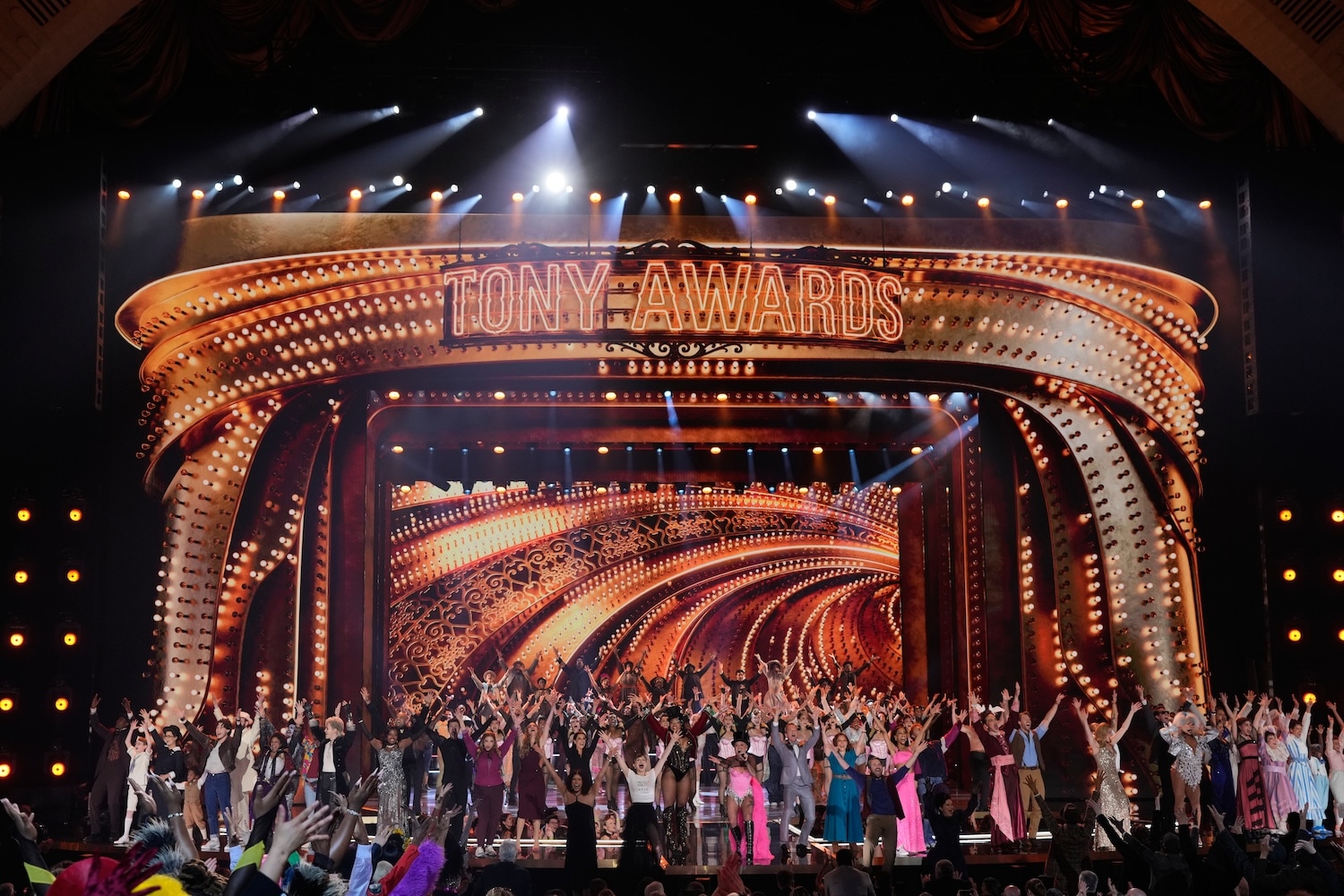
The modern awards broadcast operates under an inherent structural tension: the requirement to generate high-yield, broad-market television ratings while validating the hyper-localized, specialized economy of Broadway theater. The 79th Annual Tony Awards broadcast crystallized this friction. By analyzing the production mechanics, the divergence between critical institutional prestige and popular appeal, and the mathematical distribution of wins, we can map the operational successes and systemic inefficiencies of the 2026 ceremony.
The evening's structural performance can be broken down into three analytical pillars: Host Optimization Metrics, Artistic Transmutation, and Electoral Arbitrage. Meanwhile, you can find related stories here: Why Broadway Is Celebrating the Wrong Tony Award Winners.
Host Optimization Metrics: The Cost Function of Pop-Star Integration
The selection of a commercial pop-rock artist to host a theater industry broadcast introduces a specific economic trade-off. The network seeks to capture non-endemic audiences, while the theater community demands immediate industry fluency.
The production addressed this optimization challenge through a three-stage mechanical sequence during the opening block: To see the bigger picture, check out the excellent analysis by The Hollywood Reporter.
- The Subversion Strategy: The broadcast opened with the host suspended in a harness, executing a deliberate parody of theatrical artifice (referencing Peter Pan). This served as a psychological decompression mechanism for the live audience, lower-bounding expectations regarding the host's institutional theater pedigree.
- The Validation Intervention: The introduction of a multi-time veteran host (Neil Patrick Harris) operated as a structural hand-off. By physically and textually validating the new host, the production established immediate credibility without requiring a lengthy introductory resume.
- Scale Acceleration: The transition into a high-density performance of "Lady Marmalade"—utilizing approximately 170 stage performers—maximized the visual and auditory scale of the broadcast. The inclusion of current Broadway cast members transformed the pop asset into a collective industry asset.
The host's subsequent deployment relied on a high-energy, low-friction integration strategy. Utilizing self-deprecating comedy beats during transitions kept the focus on nominated properties, while the execution of complex choreography for the 30th anniversary tribute to Chicago demonstrated a high level of physical execution. This minimized the traditional "outsider friction" that frequently depresses the mid-broadcast pacing of theater awards shows.
Artistic Transmutation: The Value Variance Between Deconstruction and Preservation
The 2026 musical revival category presented a stark case study in how the American Theatre Wing values intellectual property. The competition centered on two distinct operational methodologies for reviving historical work: Linear Scaling versus Conceptual Transmutation.
The Linear Scaling Model: Ragtime
The revival of Ragtime approached the source material as an optimization problem of scale and execution. The production preserved the foundational text and structural framework of the E.L. Doctorow adaptation, focusing investments on vocal power and casting density.
The market return on this strategy was realized in the lead acting categories, where the production captured wins for its central performers. The narrative framework relied on established emotional vectors, which historical voting blocks heavily favor due to low cognitive friction and high institutional nostalgia.
The Conceptual Transmutation Model: Cats: The Jellicle Ball
Conversely, Cats: The Jellicle Ball executed a total structural overhaul. The production stripped the original text of its 1980s feline artifice and mapped the musical architecture onto the specific subcultural framework of 1980s New York City queer ballroom culture. This created an entirely new set of production variables:
[Original Score & Lyrics] + [Ballroom Choreography/Set Design] = Cultural Recontextualization
The intellectual property remained textually unchanged, yet the aesthetic and sociological output was entirely inverted. The critical success of this model was validated by specific technical wins:
- Direction: Honoring the structural engineering required to align two disparate cultural timelines.
- Choreography: Replacing the classic jazz-ballet foundation with specialized voguing and ballroom movement systems.
- Costume Design: Making history with the first win by a publicly transgender designer, validating the aesthetic authenticity of the subculture being depicted.
The structural breakdown occurred in the final category allocation. While Cats: The Jellicle Ball secured the technical and structural wins (Direction, Choreography, Costume Design), the ultimate category prize (Best Revival of a Musical) was awarded to Ragtime.
This creates a clear artistic paradox: the voting body determined that the individual components of the recontextualized work were superior, yet the aggregate output of the traditional model held a higher institutional value. This suggests that the Tony voting mechanism penalizes high-risk conceptual overhauls when choosing the definitive industry representative for a category.
Electoral Arbitrage: The Disconnect in Satirical and Dramatic Valuations
The distribution of awards in the play categories exposed a significant market inefficiency in how comedic and dramatic works are capitalized by institutional voters.
The Comedy Premium and Tone Arbitrage
The presentation of the leading actor award highlighted a distinct tonal collision. The appearance of presenters representing the hit historical comedy Oh Mary! introduced a high-density satirical frame to a traditionally solemn broadcast segment. The presentation formula inverted the expectations of tragic classical theater by applying modern, hyper-reductive corporate humor to the narrative of Oedipus.
This juxtaposition underscores a broader market reality on Broadway: high-concept, highly specific comedic properties are achieving massive commercial monetization and cultural penetration, yet the institutional voting structures remain heavily weighted toward somber historical dramas.
The Double-Crown Phenomenon
The victory of the new drama Liberation achieved an rare industry metric: winning both the Pulitzer Prize for Drama and the Tony Award for Best New Play within the same calendar year. This specific intersection occurs with low frequency (only 18 plays have achieved this status in theater history).
The success of Liberation relies on a specific structural design: mapping a tight, historical setting (a 1970s consciousness-raising group) onto contemporary gender politics. This design offers voters a dual-value proposition—historical distance that satisfies prestige requirements, combined with topical relevance that drives immediate media engagement.
Technical Distribution and Broadcast Architecture
The allocation of awards prior to the primary telecast reveals the network's strategy for maximizing broadcast efficiency. By migrating technical design elements (Scenic Design, Sound Design, Lighting Design) to a digital pre-show platform, the primary CBS broadcast concentrated its runtime on high-yield musical numbers and high-profile acting categories.
The mathematical distribution of wins across major productions reveals a highly fragmented season rather than a singular dominant hit:
| Production | Total Primary Wins | Core Value Driver |
|---|---|---|
| Death of a Salesman | 6 | Standard Classic Valuation |
| Ragtime | 5 | Scale and Performer Execution |
| Schmigadoon! | 4 | Metatextual Parody / Network IP Redemption |
| The Lost Boys | 4 | Commercial Genre Adaptation |
| Cats: The Jellicle Ball | 3 | High-Concept Aesthetic Overhaul |
The ultimate victory of Schmigadoon! for Best New Musical represents a specific redemption cycle for intellectual property. Originally developed for a streaming television architecture and subsequently canceled, the material was re-engineered for live theatrical consumption. Its success proves that meta-theatrical parody—shows that explicitly analyze, critique, and mimic the history of Broadway itself—holds an permanent competitive advantage with industry voters. The production appeals directly to the shared professional history of the electorate.
To optimize future broadcast valuations and stabilize the financial models of high-risk revivals, producers must stop treating the Tony Awards as a straightforward meritocracy. The data demonstrates that technical innovation is routinely decoupled from top-tier category victories. The strategic play moving forward requires separating properties into two distinct funding pipelines: one optimized for institutional nostalgia to capture traditional category wins, and another optimized for aggressive aesthetic recontextualization designed to capture immediate cultural relevance and technical market niches.