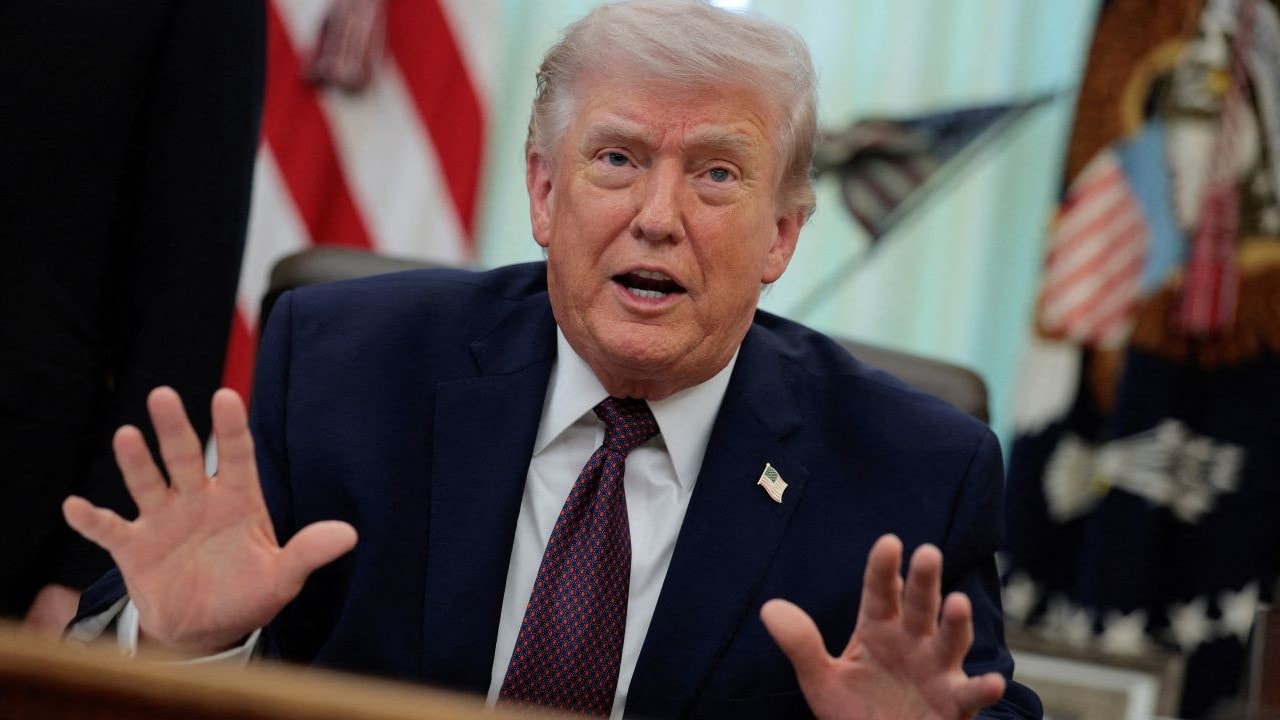
Geopolitical truces signed under duress are not exercises in goodwill; they are calculations of economic endurance and tactical positioning. The tentative memorandum of understanding (MoU) for a 60-day ceasefire extension between the United States and Iran—brogued by Pakistani mediators in Islamabad and currently awaiting final sign-off from US President Donald Trump—is no exception. While conventional reporting frames this as a diplomatic breakthrough, a cold analytical dissection reveals it to be a high-stakes operational pause. Both nations have hit the limits of their immediate escalation strategies and require a temporary equilibrium to rearm, recalibrate, or relieve crippling economic pressure points.
This framework arrives immediately after a dangerous escalation cycle where Iranian forces struck US-allied targets in Kuwait, and the US executed retaliatory strikes against the southern Iranian port city of Bandar Abbas. The proposed 60-day window is a highly technical mechanism designed to test whether a broader, permanent resolution to the Middle East war and Iran's nuclear trajectory is mathematically viable, or whether the current conflict will simply resume with greater intensity.
The Strategic Cost Functions Driving the Truce
To understand why both Washington and Tehran have agreed to these principles, one must analyze the unsustainable cost functions that forced them to the negotiating table. Neither side is acting from a position of absolute dominance; rather, both are managing severe systemic friction.
The United States: The Freedom of Navigation and Ally Indemnity Cost
The strategic objective of the United States in the Persian Gulf has long been the maintenance of unhindered commercial transit. The blockade of the Strait of Hormuz by Iranian forces since February 28 has disrupted roughly 20 percent of the global oil supply, inducing significant inflationary pressures into global energy markets.
The US response—a comprehensive naval blockade of Iranian ports—carries an explicit operational and economic expenditure estimated by the executive branch at $500 million daily. This burn rate is compounded by the rising defensive costs incurred by regional allies. When Iranian drones and missiles penetrated Gulf air spaces to strike infrastructure in Kuwait, it exposed a critical vulnerability: the prohibitive cost asymmetric warfare imposes on Western-aligned air defense networks. Expending multi-million-dollar interceptors to neutralize low-cost precision-guided munitions creates a negative fiscal trajectory that Washington cannot sustain indefinitely without a declaration of total war.
Iran: The Economic Suffocation and Operational Depletion Frontier
For Tehran, the driving variable is the imminent collapse of domestic economic distribution. The reinstated US "maximum pressure" campaign, combined with the naval blockade on Iranian ports, has effectively choked off legitimate oil exports and restricted capital inflows.
Iran tried to mitigate this by engaging Oman to implement a maritime tolling system on ships transiting the Strait of Hormuz. The strategy was clear: monetize the choke point to offset the blockade. The US Treasury blocked this maneuver by issuing explicit sanctions warnings to Muscat, cutting off this potential revenue stream. Concurrently, the US Treasury targeted Iranian commercial aviation, cutting off landing spots, refueling access, and international ticket sales. With its air and sea logistics paralyzed, its domestic economy facing runaway inflation, and its regional proxy network in Lebanon under relentless pressure, Iran reached its operational depletion frontier. The regime required an economic lung to prevent internal destabilization.
The Three Pillars of the 60-Day Memorandum of Understanding
The framework is structured around three highly specific transactional trade-offs designed to alleviate immediate economic pain points while freezing military positions.
+-----------------------------------+-----------------------------------+
|       Iranian Commitments         |          U.S. Commitments         |
+-----------------------------------+-----------------------------------+
| - Unrestricted transit in Hormuz  | - Lift naval blockade on ports    |
| - Remove all mines within 30 days | - Issue targeted oil export waivers|
| - Nuclear non-pursuit pledge      | - Halt further aviation sanctions |
+-----------------------------------+-----------------------------------+
1. The Maritime De-escalation Protocol
The most critical immediate variable is the reopening of the Strait of Hormuz. Under the draft agreement, Iran must guarantee "unrestricted" transit through the waterway without the imposition of tolls or sovereign tariffs. Furthermore, Iran is operationally bound to locate and remove all naval mines laid in and around the strait within a strict 30-day window. In return, the United States will lift its naval blockade on Iranian ports, allowing commercial shipping containers to resume docking at major hubs like Bandar Abbas.
2. The Sanctions Elasticity Mechanism
To incentivize Iranian compliance during the 60-day period, Washington will utilize targeted sanctions waivers. These waivers will allow Iran to legally market and export specific volumes of crude oil to international buyers, providing an immediate influx of foreign currency. The US will also freeze the implementation of new secondary sanctions targeting Iranian state infrastructure. This creates a direct correlation between Iranian maritime behavior and its fiscal survival: any violation of the truce results in the instantaneous revocation of the oil waivers.
3. The Nuclear Negotiation Launchpad
The framework transitions the conflict from kinetic operations to structured diplomatic theater. The 60-day extension is contingent upon Iran entering into formal, time-limited negotiations regarding its nuclear enrichment program. In principle, Tehran has agreed to a framework that involves the disposal of its highly enriched uranium stockpiles. This addresses the core demand of the US administration and its allies to eliminate the immediate threat of a nuclear breakout.
Friction Points and Systemic Limitations
The primary vulnerability of this MoU is its reliance on a mutual willingness to de-escalate that is entirely contradicted by the domestic political realities of both signatories. The strategy has no safety margins; several structural bottlenecks could collapse the framework before the 60-day clock even expires.
- The Command-and-Control Dilemma within Iran: A profound disconnect exists between Iran's diplomatic negotiators and its military apparatus. While the Foreign Ministry signals a willingness to dispose of enriched uranium in exchange for sanctions relief, the Islamic Revolutionary Guard Corps (IRGC) continues to issue threats of a "firm response" to Western actions and manages the drone teams targeting Gulf shipping. If the IRGC acts independently to preserve its ideological authority, the ceasefire will disintegrate.
- The External Alliance Veto: Neither the United States nor Iran operates in a geopolitical vacuum. Israeli Prime Minister Benjamin Netanyahu has explicitly stated to President Trump that any acceptable final accord must completely dismantle Iran's nuclear enrichment sites and forcibly remove all enriched material from Iranian territory. Simultaneously, US congressional leaders are deeply critical of unfreezing any Iranian assets held in foreign banks or granting Iran long-term control over the straits. These domestic and allied pressures heavily restrict Trump's negotiating room, making a permanent deal highly improbable.
- The Asymmetry of Preconditions: The Trump administration has signaled a set of severe preconditions for a permanent deal, including the delivery of 400 kilograms of enriched uranium directly to the United States, the restriction of Iran to a single operational nuclear facility, and the refusal to release at least 25 percent of Iran's frozen global assets. Iranian national security officials have already labeled these terms a "fantasy." The 60-day framework does not resolve this ideological chasm; it merely postpones the collision.
The Strategic Playbook
President Trump’s delay in signing the MoU is a deliberate tactical maneuver. By signaling on platforms like TruthSocial that "time is on our side" and advising his team "not to rush into a deal," the administration is maximizing its leverage. Washington understands that every week the blockade continues, Iran’s fiscal reserves decay exponentially faster than the US Treasury's operational budget allocations.
The optimal strategic play for the United States is to sign the 60-day framework, but with strings attached. The administration should condition the rollout of oil export waivers on a week-by-week verification model managed by the International Atomic Energy Agency (IAEA) and naval observers in the Strait of Hormuz.
If Iran complies with mine removal and permits unhindered shipping, the economic valves open slightly. If a single drone is launched or an allied asset in the Gulf is targeted, the sanctions snap back automatically, and the US naval blockade resumes with twice the operational density. The 60-day framework should not be viewed as a peace treaty, but as a low-risk diagnostic tool to determine if the Iranian regime can be contained via economic leverage, or if a decisive military resolution remains the only viable path forward.