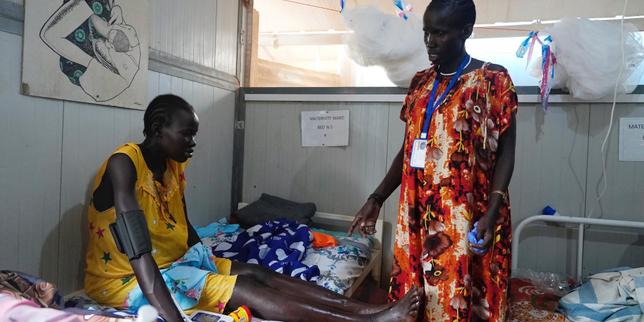
The loss of contact with 26 humanitarian workers in South Sudan is not a random statistical anomaly; it is a predictable outcome of the Security-Access Paradox. When an aid organization like Médecins Sans Frontières (MSF) operates in an environment of high-intensity kinetic conflict, the very infrastructure required to maintain staff safety—communications, clear lines of retreat, and neutralized zones—becomes a liability that attracts targeted interference. The disappearance of nearly thirty personnel suggests a catastrophic failure in the Deconfliction Mechanism, the process by which NGOs share coordinates with warring parties to avoid being targeted.
The Triple Constraint of Humanitarian Logistics
The operational viability of a mission in a fragmented state rests on three specific pillars. When one is compromised, the risk to personnel scales exponentially rather than linearly. If you enjoyed this piece, you might want to read: this related article.
- Information Integrity: The ability to maintain real-time telemetry with field teams.
- Physical Neutrality: The perception of the NGO as a non-combatant entity by all local actors.
- Extraction Velocity: The speed at which personnel can be moved from a "hot" zone to a secure extraction point.
In the South Sudanese context, specifically within areas where fighting between the SAF (Sudanese Armed Forces) and RSF (Rapid Support Forces) spills over or triggers local militia alignment, the Information Integrity pillar is the first to collapse. Disrupted cellular networks and seized satellite equipment transform a coordinated medical team into a "blind" unit.
The Cost Function of Communication Blackouts
A "loss of contact" is often sanitized in reporting, yet it represents a specific technical and tactical breakdown. In high-risk zones, MSF and similar entities utilize a tiered communication protocol: For another perspective on this development, refer to the recent update from Associated Press.
- Tier 1: High-Frequency (HF) and Very High-Frequency (VHF) Radio: These are the backbones of field movement. They are vulnerable to topographical interference and, more critically, signal jamming or seizure by armed groups who view radios as military hardware.
- Tier 2: Satellite Telemetry (BGAN/Thuraya): These provide data and voice links. A sudden cessation of satellite pings usually indicates one of two things: a deliberate shutdown to avoid detection via signal triangulation, or the physical confiscation of the hardware.
- Tier 3: Localized Runner Networks: The most primitive and slowest form of communication, used only when electronic means are compromised.
The disappearance of 26 employees simultaneously indicates a Localized Grid Failure. This occurs when the geographic area containing the staff is overtaken by a force that systematically dismantles communication infrastructure to prevent "battlefield reporting" or the coordination of opposition forces. For the NGO, this creates an Intelligence Vacuum. Without knowing if the staff are detained, in hiding, or casualties of crossfire, the organization cannot initiate a rescue or negotiation strategy because they lack a "Counterparty" to engage.
The Geopolitics of Aid Obstructionism
South Sudan’s conflict is characterized by Command Fragmentation. Unlike a conventional war with two clear hierarchies, this theater involves shifting alliances between formal militaries and local defense groups.
The primary risk factor for the 26 missing workers is the Utility of Hostage-Taking versus the Burden of Detention. In some instances, humanitarian staff are held as "human shields" to deter aerial bombardment of a specific village or facility. In others, they are viewed as a logistics resource; medical professionals are frequently forced to treat wounded combatants at gunpoint, effectively removing them from their humanitarian mandate and absorbing them into the combatant’s logistics chain.
The second risk factor is Predatory Asset Stripping. Aid convoys and compounds are high-value targets for fuel, vehicles, and food. When a compound is looted, the staff are often dispersed. The 26 employees likely represent a mix of international and national staff. National staff face a distinct set of dangers, including forced conscription or ethnic targeting, which complicates the NGO’s "Duty of Care" protocols.
Mapping the Deconfliction Failure
Deconfliction is a data-sharing agreement. NGOs provide GPS coordinates of their hospitals and staff movements to the warring factions. This system fails under two conditions:
- Intentional Targeting: A faction decides that the presence of an NGO is providing a tactical advantage to the enemy (e.g., treating enemy soldiers).
- Information Decay: The coordinates provided to a central command in the capital never reach the "tactical edge"—the soldier on the ground with the rifle.
The disappearance of such a large group suggests a Tactical Edge Failure. If 26 people cannot be reached, it is highly probable they are in a "Communication Shadow" created by the physical presence of a combatant force that has restricted all movement and signal output.
The Threshold of Operational Withdrawal
For MSF, the decision to remain in a zone after losing 26 people is a calculation of Marginal Medical Benefit vs. Total Personnel Risk. If the "cost" of providing surgery in a conflict zone is the potential execution or kidnapping of the entire surgical team, the mission becomes mathematically and ethically unsustainable.
This creates a Protection Gap. When MSF is forced to "hibernate" (stay indoors and cease operations) or "evacuate" (leave the region entirely), the local mortality rate spikes. This is the secondary effect of the conflict—death by lack of access. The missing employees are not just 26 individuals; they represent the entire capacity of a regional healthcare node. Their absence effectively signs a death warrant for hundreds of patients requiring emergency trauma care or treatment for endemic diseases.
The current situation requires a transition from Humanitarian Logistics to Hostage Diplomacy. The organization must now identify which specific local commander has jurisdiction over the area where contact was lost. This is rarely the person at the top of the political chain. It is usually a mid-level officer on the ground.
Strategic Recommendation for High-Risk Extraction
The organization must immediately pivot to a Non-State Actor Engagement Strategy. Since formal channels have clearly failed to maintain the safety of these 26 individuals, the focus must shift to local tribal intermediaries and commercial networks that operate across the front lines.
The objective is to establish a Proof of Life protocol through non-digital means. This involves leveraging local supply chain contractors—truck drivers and traders—who are often the only ones allowed to move between "dark" zones. Until a physical confirmation of the staff's location is achieved, all regional assets should be moved to a "cold" status to prevent further personnel loss. The primary directive is to avoid a "rescue attempt" which would likely trigger a lethal response from the detaining party; instead, the strategy must be a negotiated "neutral exit," offering the detaining party a face-saving way to release the staff without admitting to a breach of international law.
The next 48 hours are the critical window. If contact is not re-established through an intermediary, the "missing" status will likely transition to "long-term detention," requiring a shift in global diplomatic pressure on the state sponsors of the warring factions.