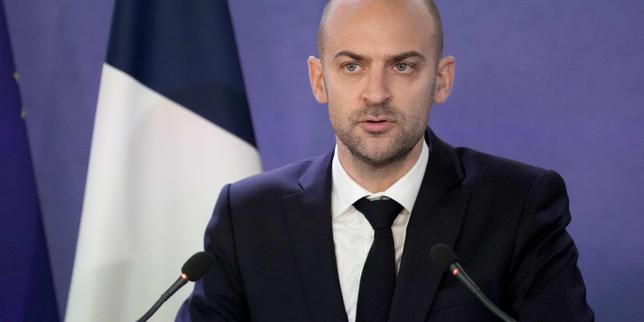
France is attempting to carve out a space for itself in a Middle Eastern conflict that has largely outpaced European influence. Following the high-stakes diplomatic maneuvers of Foreign Minister Jean-Noël Barrot, the French strategy has become clear: prevent a total regional conflagration by positioning Paris as the only Western power still capable of talking to all sides. While Washington provides the hardware and Tehran manages its proxies, Barrot’s mission represents a desperate, calculated effort to preserve Lebanese sovereignty and contain the fallout of the escalating Israel-Iran shadow war.
The core of the French position rests on a fragile pillar. Paris is demanding an immediate ceasefire in Lebanon while simultaneously trying to reassure Israel of its security concerns regarding Hezbollah. It is a tightrope walk over an abyss. Barrot’s recent statements highlight a fundamental reality: France believes that if the Lebanese state collapses entirely, the vacuum will be filled by forces that neither the West nor the regional powers can control.
The Lebanese Pivot
Lebanon is not just another conflict zone for France; it is a historical and cultural responsibility that Paris refuses to abdicate. When Barrot landed in Beirut, he wasn't just delivering aid. He was attempting to jumpstart a political process that has been stalled for years. The French plan requires the immediate election of a president—a post that has been vacant since October 2022—to provide a legitimate interlocutor for international negotiations.
Hezbollah’s dominance has made this nearly impossible. By tying the fate of southern Lebanon to the war in Gaza, the group has effectively hijacked Lebanese foreign policy. Barrot’s insistence on the implementation of UN Resolution 1701 is the only realistic legal framework available, yet it remains a ghost of a policy.
Resolution 1701 calls for the disarmament of all non-state groups and the exclusive presence of the Lebanese Army and UNIFIL forces south of the Litani River. In practice, this hasn't happened in nearly two decades. Barrot knows this. His public stance is less about the immediate removal of Hezbollah’s rockets and more about creating a diplomatic "off-ramp" before Israel’s ground operations turn Lebanon into a permanent front.
The Tehran Connection
France occupies a unique position among the E3 (France, Germany, and the UK). It has historically maintained more open channels with Tehran than its neighbors. Barrot’s rhetoric reflects a dual-track approach. On one hand, there is the necessary condemnation of Iranian missile strikes against Israel. On the other, there is a quiet recognition that no solution in Lebanon or Yemen is possible without Iranian buy-in.
The risk for Barrot is appearing weak to an Israeli government that has lost faith in European diplomacy. Prime Minister Benjamin Netanyahu’s administration has signaled that it will no longer wait for international consensus to degrade the "Axis of Resistance." When Barrot speaks of "de-escalation," it often falls on deaf ears in Tel Aviv, where the current objective is the physical dismantling of threats, not their diplomatic containment.
The Limits of European Hard Power
Europe lacks the military footprint to enforce its will in the Levant. This leaves Barrot with only two tools: humanitarian aid and the threat of sanctions. France recently pledged €100 million in support for Lebanon, but in the context of a regional war, money is a bandage on a gunshot wound.
The real power play is happening in the Mediterranean and the Red Sea, where the U.S. Navy provides the actual deterrent. Barrot’s task is to ensure that while the U.S. handles the military side, France handles the "day after" architecture. If the fighting stops tomorrow, who governs? Who rebuilds? France wants to be the architect of that reconstruction to prevent Iran from seizing the opportunity to further entrench its influence.
Internal French Pressures
Barrot is also playing to a domestic audience. France has the largest Jewish and Muslim populations in Europe. Any perceived tilt too far in either direction causes immediate social friction at home. The "balanced" approach Barrot touts is as much about maintaining civil peace in Marseille and Paris as it is about peace in the Galilee or the Bekaa Valley.
The Quai d'Orsay—the French Foreign Ministry—is staffed by Arabists who understand the nuances of tribal and sectarian politics better than almost anyone in the West. They see the current crisis as a structural failure of the post-2003 regional order. Barrot’s recent statements are a recognition that the old "status quo" is dead. He is trying to negotiate the terms of the new one before it is written in blood.
The Hezbollah Dilemma
How do you negotiate with a ghost? Hezbollah is both a political party in the Lebanese parliament and a heavily armed militia. Barrot’s predecessor often met with Hezbollah’s political wing, a move that drew sharp criticism from Washington and Jerusalem. Barrot has maintained a degree of separation, but the underlying logic remains: you cannot solve the Lebanese crisis by ignoring its most powerful domestic actor.
The French strategy is to empower the Lebanese Armed Forces (LAF) to the point where they can actually police their own borders. This is a massive undertaking. The LAF is currently underfunded, under-equipped, and struggling to provide basic necessities for its soldiers. Barrot is lobbying international partners to fund the LAF as a counterweight to Hezbollah. It is a long-term play in a short-term crisis.
The Shadow of Gaza
Barrot has been vocal about the necessity of a two-state solution, a stance that has become increasingly marginalized in the current Israeli political climate. By linking the stability of Lebanon to a ceasefire in Gaza, the French are acknowledging a reality that the U.S. has often tried to de-couple.
The "unity of fronts" strategy employed by Iran-backed groups means that a fire in Gaza will always smoke out Lebanon. Barrot’s insistence on a comprehensive regional approach is logically sound but politically exhausting. It requires a level of coordination between the U.S., Iran, Israel, and the Arab states that simply does not exist right now.
Strategic Autonomy or Strategic Irrelevance
France often talks about "strategic autonomy" for Europe. The Middle East is the ultimate test of this concept. If Barrot can successfully mediate even a minor pause in hostilities, it would be a massive win for French prestige. If he fails, it confirms that Europe is merely a spectator in its own backyard.
The coming weeks will determine if Barrot’s diplomatic "shuttle diplomacy" has any substance. Israel is moving forward with its military objectives regardless of the statements coming out of Paris. Iran is recalibrating its response based on internal pressures and the survival of its proxies. Lebanon sits in the middle, waiting to see if its oldest ally can actually deliver on its promises.
France’s biggest hurdle is not a lack of ideas, but a lack of leverage. When Barrot calls for restraint, he is speaking to a region that has forgotten what the word means. The success of his mission depends on whether he can convince the regional players that a total war is more expensive than a messy, French-brokered peace.
The clock is ticking. Every day the conflict continues, the influence of diplomatic actors like Jean-Noël Barrot wanes, replaced by the cold logic of kinetic operations and territorial gains. Paris is betting that at some point, the exhaustion of war will lead the combatants back to the table. They intend to be the ones sitting at the head of it.
Stop waiting for a "grand bargain" that isn't coming. The reality is a series of small, grinding concessions that satisfy no one but prevent the worst-case scenario. If you want to understand where this is headed, don't look at the public speeches in Paris; look at the troop movements on the Litani and the back-channel messages sent through Doha and Muscat. That is where the real map of the new Middle East is being drawn.