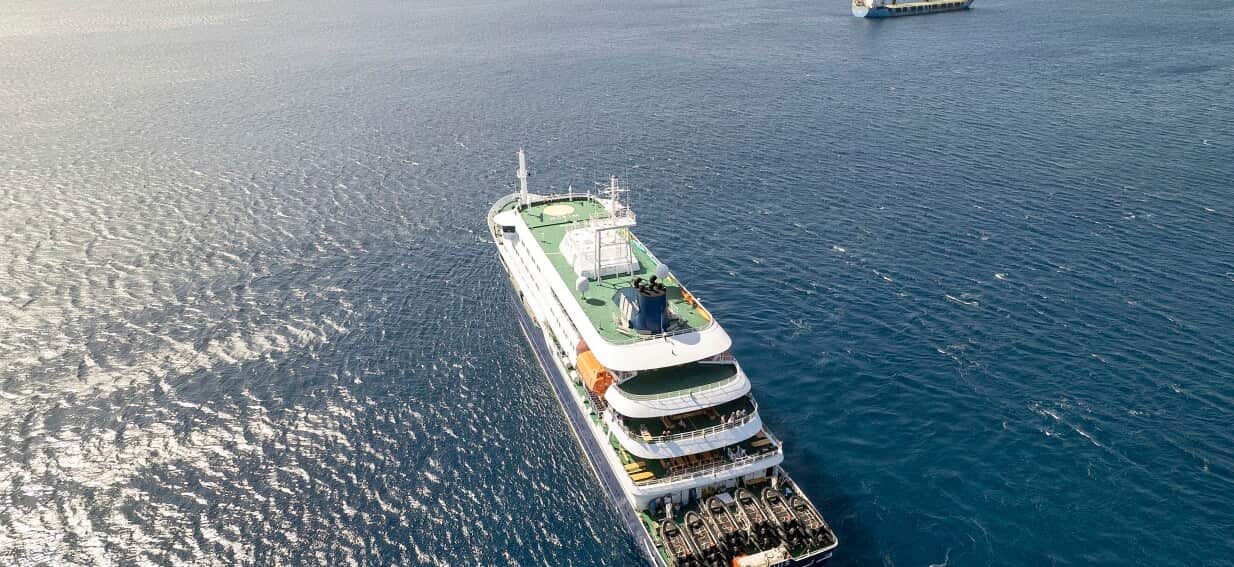
The confirmed deaths of three passengers aboard an Atlantic cruise vessel following a hantavirus outbreak represent a radical departure from established epidemiological patterns of New World orthohantaviruses. Typically, hantavirus is a disease of terrestrial isolation, requiring direct or indirect contact with the excreta of specific rodent reservoirs. Its appearance in a closed, maritime environment—historically insulated from the rural habitats where these viruses thrive—indicates a catastrophic failure in either vessel biosecurity or a shift in the virus's transmission mechanics. To understand the threat, we must deconstruct the outbreak through the lens of environmental vectors, viral stability, and the structural vulnerabilities of cruise ship infrastructure.
[Image of hantavirus structure]
The Vectors of Infiltration: Rodent Reservoirs in Maritime Logistics
Hantaviruses do not exist in a vacuum; they are host-dependent. In the Americas, the primary culprits are sigmodontine rodents (deer mice, cotton rats, and rice rats). For an outbreak to occur on a cruise ship, the virus must have bypassed multiple layers of the "Port-to-Cabin" supply chain.
The probability of infection follows a specific function of density and duration:
$P(i) = 1 - e^{-\lambda t}$
Where:
- $\lambda$ represents the rate of exposure to viral particles in aerosolized form.
- $t$ represents the time spent in the contaminated environment.
In a maritime context, the infiltration of the reservoir host likely occurred through one of three primary structural bottlenecks:
- Dry Stores and Provisions: Large-scale loading of food supplies from regional distribution centers provides the most logical entry point. If a warehouse in a high-endemic area (such as parts of South America or the US Southwest) experienced a rodent infestation, the virus could be transported via contaminated packaging.
- HVAC System Integration: Hantavirus is primarily transmitted through the inhalation of aerosolized urine, droppings, or saliva. Once a reservoir host enters the ship's interstitial spaces—the voids between bulkheads and the ventilation ducting—the HVAC system becomes a mechanized delivery vehicle for viral particles.
- Port-of-Call Excursions: While less likely to result in a multi-person fatality event, passenger contact with infected environments during terrestrial excursions remains a variable. However, the cluster of deaths suggests a centralized exposure point within the ship’s primary envelope.
The Stability of Orthohantavirus in Enclosed Environments
The WHO report highlights a critical variable: the persistence of the virus. Most hantaviruses are relatively fragile when exposed to UV light and extreme temperature fluctuations. However, the climate-controlled, high-humidity environment of a luxury cruise liner acts as a stabilizer.
The virus remains viable in the environment for several days under optimal conditions ($20^{\circ}$C to $25^{\circ}$C with moderate humidity). In the darkness of a ship’s ventilation or storage hold, the decay rate slows significantly. This creates a "lingering risk profile" where a single contamination event can result in staggered infections as different passengers interact with the localized aerosol plume.
Human-to-Human Transmission: The Andes Virus Precedent
The most alarming aspect of an Atlantic outbreak is the possibility of human-to-human transmission. While most hantaviruses (like Sin Nombre) are strictly zoonotic, the Andes virus (ANDV), found in South America, has demonstrated the ability to pass between humans through close contact.
If the WHO-confirmed strain is an ANDV-like variant, the ship's high population density turns a localized hygiene failure into a systemic contagion event. The social architecture of a cruise ship—communal dining, shared air filtration, and tight corridors—maximizes the Basic Reproduction Number ($R_{0}$).
The Calculus of Containment Failure
Containment fails when the "incubation-to-symptom" window is ignored. Hantavirus Pulmonary Syndrome (HPS) has an incubation period of 1 to 8 weeks. This long tail means that by the time the first three fatalities occurred, dozens of other passengers may have been in the prodromal phase—exhibiting non-specific symptoms like fever, myalgia, and fatigue that are easily mistaken for sea sickness or common influenza.
The diagnostic lag creates a "blind spot" in maritime medical protocols. Shipboard infirmaries are equipped for trauma and common norovirus outbreaks but lack the biosafety level 3 (BSL-3) containment and molecular diagnostic tools required to identify orthohantavirus in real-time.
Structural Vulnerabilities in Vessel Design
Modern cruise ship engineering prioritizes luxury and space efficiency over biological compartmentalization. This creates several "failure points" during a zoonotic outbreak:
- Recirculation Ratios: To save energy, many HVAC systems recirculate a percentage of cabin air. If the filtration units lack HEPA-grade specifications capable of capturing viral-laden dust particles (typically 0.1 to 0.3 microns), the system effectively distributes the pathogen.
- Greywater and Waste Management: While hantavirus is primarily respiratory, the management of organic waste on ships can attract rodents if seals are compromised. The proximity of waste processing to food preparation areas is a known risk factor in industrial hygiene.
- Interbulkhead Voids: The "honeycomb" structure of ship cabins provides a protected highway for rodents. These spaces are rarely inspected with the rigor required to detect a low-density, high-impact infestation.
Quantifying the Economic and Operational Fallout
The impact of a hantavirus-related death on a vessel extends beyond the tragic loss of life. It triggers a sequence of mandatory legal and operational devaluations:
- Vessel Stigmatization: Unlike norovirus, which is seen as an annoyance, hantavirus carries a 35% to 50% mortality rate. The "death ship" narrative results in immediate booking cancellations and long-term brand erosion.
- Port Refusal: Sovereign nations have the right to deny entry to vessels with "quarantinable" diseases under International Health Regulations (IHR 2005). This leaves the ship in a state of maritime limbo, increasing operational costs for fuel, water, and food.
- Litigation and Liability: The failure to maintain a "seaworthy" (in this case, bio-secure) vessel opens the parent company to massive class-action liabilities. The discovery process will focus on the Integrated Pest Management (IPM) logs and the maintenance history of the air filtration systems.
Strategic Imperatives for Maritime Bio-Defense
To mitigate the risk of future outbreaks, the industry must move away from reactive cleaning and toward proactive environmental sensing.
- Aerosolized Pathogen Detection: Implementing real-time PCR (Polymerase Chain Reaction) air monitoring in central HVAC nodes can detect viral RNA before the first clinical case appears.
- Thermal Imaging for Pest Control: Utilizing infrared sensors within the bulkheads to detect the heat signatures of rodent activity, allowing for targeted extermination before a colony establishes itself.
- Mandatory Supply Chain Audits: Cruise lines must treat food suppliers as high-risk vectors, requiring BRC (British Retail Consortium) or equivalent certifications that specifically include hantavirus-endemic zone protocols.
The Atlantic incident is not an isolated tragedy but a signal that our luxury corridors are increasingly vulnerable to the spillover of wilderness pathogens. The focus must shift from passenger comfort to the fundamental integrity of the ship's biological envelope. Operators must now treat "rodent-free" as a mission-critical safety metric on par with hull integrity and fire suppression. Failure to adapt these biosecurity frameworks will result in more than just financial loss; it will lead to the total regulatory shutdown of high-risk maritime routes.


00128-7/asset/c466084c-91d2-4e7e-b9c9-54c0be1ccc1c/main.assets/gr1_lrg.jpg)