You hear the stories every summer now, but the timeline just broke. Southern Europe is suffocating under a relentless pattern of back-to-back heatwaves that pushed temperatures past 40°C (104°F) and even 45°C in mid-summer. The result isn't just hot weather. It's an explosive, multi-front fire crisis that has already forced more than 20,000 people to flee their homes in south-west France alone, while emergency crews across Spain, Italy, and Greece hit absolute capacity.
The traditional fire season didn't just expand; it fundamentally changed character. When a wildfire tears through a dense pine forest near Saumos, just west of Bordeaux, and consumes 2,400 hectares in under 24 hours, you realize the old containment playbooks don't work anymore. Three firefighters have lost their lives in this current wave, and the economic and human toll continues to climb.
If you think this is just a standard seasonal warning, you're missing the terrifying shift in how these fires behave. The real issue isn't just that it's hot—it's that the ground itself has been converted into tinder weeks ahead of schedule.
The Mediterranean Powder Keg
What we're seeing right now in Europe isn't a series of isolated bad luck incidents. A massive, historic June heatwave baked the continent, leaving topsoil moisture completely depleted. By the time July rolled around, the vegetation across the Mediterranean basin was essentially a line of gunpowder waiting for a spark.
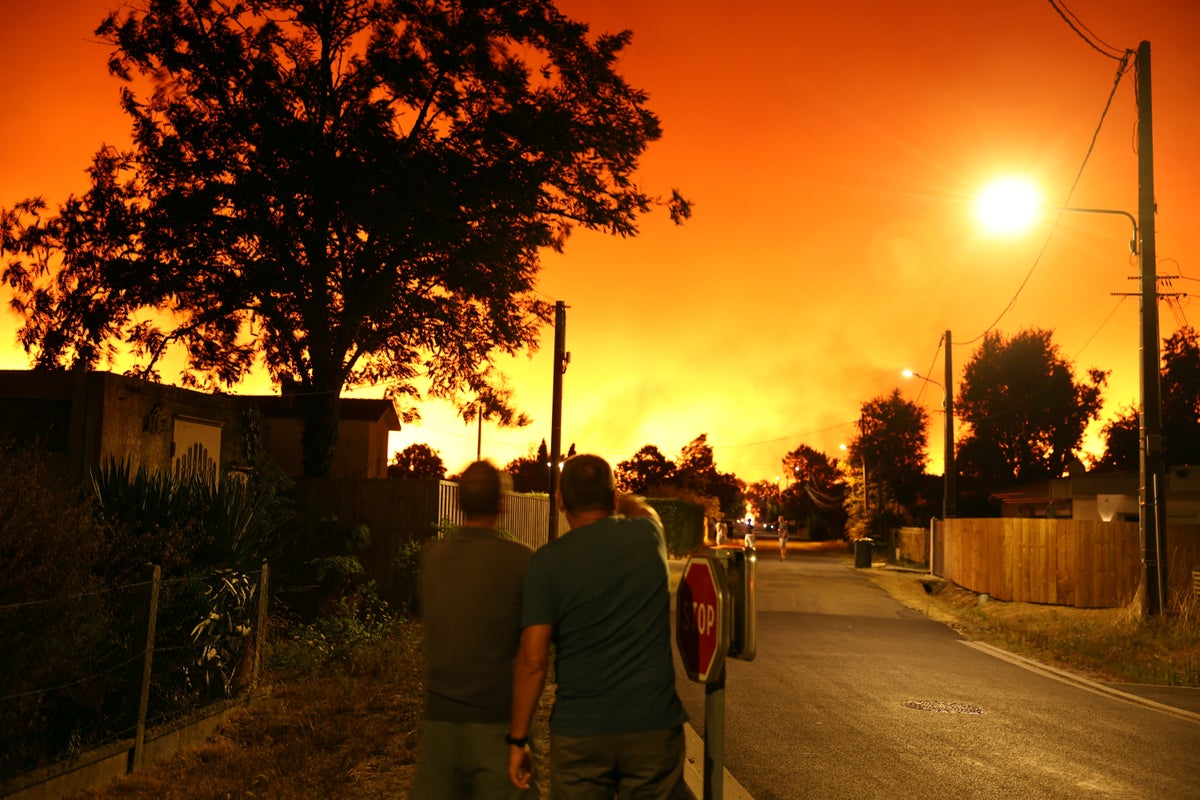
Look at the sheer scale of what's burning. In France's Gironde region, massive walls of grey and black smoke are cutting off popular tourist destinations near the bay of Arcachon. Holidaymakers are packing their car trunks in the middle of the night because the police are literally banging on doors telling them to run.
Over in Sicily, the situation is just as grim. Around 6,000 firefighters and forest guards are actively playing whack-a-mole with roughly 50 simultaneous blazes. When you have that many fires active at once, your aerial water-bombing tankers can't keep up. The planes have to choose which village to save and which valley to abandon.
Then you have the dark side of these disasters: human intent. In the neighboring Calabria region of Italy, local authorities openly state that a significant portion of their 160 active fires weren't started by lightning or dropped cigarettes. They were deliberately set by arsonists using sick, malicious tactics to spread flames across dry brush.
Why the Old Suppression Strategies Are Failing
For decades, European firefighting relied on a simple premise: catch a fire early, dump water on it from the air, and dig a containment line. But the extreme heat stress gripping the continent has broken that formula.
- Erratic Wind Currents: When temperatures stay above 40°C, the air column above a fire becomes incredibly unstable. This creates localized, violent winds that pull embers hundreds of meters ahead of the main fire front. You can dig a perfect firebreak, and the fire will simply jump right over it.
- Toxic Smoke Columns: In places like Greece, fires tearing through urban-rural interfaces have hit industrial zones and recycling plants. The resulting smoke isn't just wood ash; it's a toxic cocktail that forces entire cities, like Thessaloniki, to seal themselves indoors. This reduces visibility to near zero, grounding the very aircraft needed to drop water.
- The Evacuation Friction: Moving thousands of tourists from campsites and rural villages requires clear roads. But when a fire moves as fast as the one near Bordeaux—chewing through terrain at an unprecedented pace—roads quickly turn into high-risk bottlenecks.
The Copernicus Climate Change Service and the EU Joint Research Centre have been waving red flags about these exact fire-weather indices for months. The data shows that the combination of record-low humidity and prolonged drought means that once a fire starts, its rate of spread is almost impossible to halt with ground crews alone.
The Real Cost Beyond the Scared Trees
We talk a lot about hectares burned—over 20,000 hectares across the region in this single wave—but the human cost is far more immediate than a statistic on a dashboard. Local residents in places like Le Porge express absolute shock. People who bought homes in these wooded, scenic areas decades ago never factored in a total loss scenario. They didn't think they lived in a high-risk zone. Now, they do.
Furthermore, the strain on emergency infrastructure is reaching a breaking point. The EU has had to mobilize its RescEU fleet, shifting water-bombing planes all the way from Sweden and Cyprus to assist overwhelmed French crews. When a continent has to play logistics chess just to keep its emergency services from collapsing, the system is stretched too thin.
How to Protect Your Family If You Are in the Zone
If you live in or are traveling through southern Europe right now, you can't rely on the idea that someone will knock on your door in time. You need to take control of your own safety parameters immediately.
First, download the local emergency broadcast apps for the specific country you are in, such as the AMEMET alerts in Spain or the ANEPC updates in Portugal. Do not wait for a formal evacuation order if you can see a significant smoke column shifting toward your location or if you smell strong smoke.
Second, pack a go-bag right now. Include your passports, essential medications, physical maps of the area, and power banks. Keep your vehicle's fuel tank at least half full at all times. If the power grid goes down due to a fire hitting transmission lines, local fuel pumps will stop working entirely.
Clear the immediate perimeter of your property if you live in a rural zone. Move outdoor furniture, firewood piles, and propane tanks away from your main structure. These small steps won't stop a massive forest fire, but they can prevent stray embers from instantly igniting your home before emergency crews can arrive. The window for passive preparation closed weeks ago; active awareness is what keeps you alive.