Governments love a good pivot when the math starts to scream. Mark Carney’s decision to scrap the federal EV sales mandate isn't a victory for "market flexibility" or a pragmatic retreat. It is a desperate attempt to stop a political hemorrhage by trading a stick for an even more expensive, less effective carrot. The headlines want you to believe this is a breather for the automotive industry. It’s actually a death knell for Canadian manufacturing competitiveness.
The consensus says mandates are "too much, too soon." The consensus is wrong. Mandates provided the only thing capital markets actually crave: certainty. By removing the requirement and replacing it with "transition funds," the government has essentially admitted they are subsidizing a slow-motion car crash. We are no longer building an industry; we are funding a hospice for internal combustion.
The Subsidy Trap: Buying the Past with Your Grandchildren’s Money
Scrapping the mandate while "earmarking funds" is the ultimate shell game. In the private equity world, we call this throwing good money after bad. When you mandate a transition, the private sector is forced to find efficiencies because their survival depends on it. When you subsidize a transition without a deadline, you create a welfare state for legacy OEMs.
Look at the unit economics. Canada is currently burning billions in "production incentives" to attract battery plants from Volkswagen and Stellantis. The logic? We need these plants to feed a domestic market. But if you remove the mandate, you remove the guaranteed domestic floor. You are now subsidizing the manufacturing of products that the government has just signaled are "optional."
Imagine a scenario where a venture capitalist funds a hardware startup but tells the CEO, "Actually, don't worry about hitting your sales targets, we'll just keep paying your rent." That startup dies. Every single time. By removing the pressure of a mandate, the federal government has ensured that Canadian-made EVs will be more expensive and less competitive than those coming out of jurisdictions that actually have the stomach to stick to a deadline.
The Myth of the "Infrastucture Gap"
The loudest argument against the mandate is the lack of charging infrastructure. It’s a classic chicken-and-egg fallacy that bureaucrats use to justify inertia. "We can't sell the cars because there are no chargers."
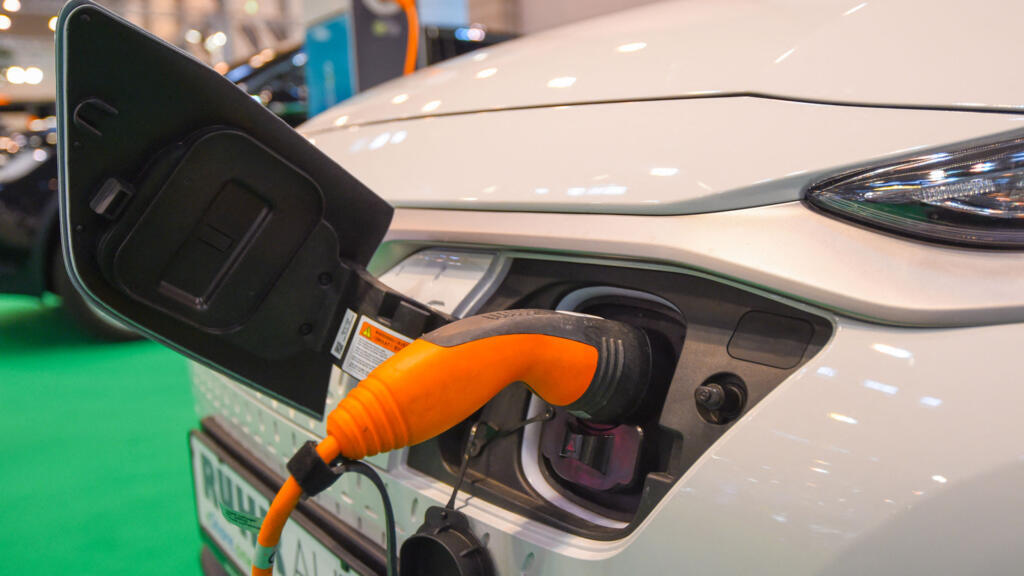
The truth? The chargers aren't there because the utilization rate is a joke. Private capital—the real money, not the government grants—won't touch charging stations until they see a guaranteed fleet of vehicles coming down the pipe. A mandate is a signal to every REIT, gas station owner, and utility provider that the demand is non-negotiable. Without it, charging infrastructure in Canada will remain a patchwork of broken, government-subsidized Level 2 chargers in mall parking lots that nobody uses.
We are essentially telling the world that Canada is a "wait and see" market. In a global race for electrification, "wait and see" is just a polite way of saying "we lose."
China is Not Waiting for Your Consensus
While Canada debates whether 2035 was "too ambitious," BYD and Xiaomi are refining a vertical integration model that makes North American manufacturing look like a blacksmith shop.
By softening our stance, we aren't "protecting" the Canadian consumer from high prices. We are ensuring they will eventually have no choice but to buy foreign. If Canadian plants aren't forced to scale through a mandate, they will never reach the $25,000 price point needed to survive. We are protecting the legacy profits of the "Big Three" at the expense of a domestic industry that could actually compete in 2030.
I’ve seen this play out in the telecommunications sector and the software space. When a country protects its incumbents from the "pain" of a technological shift, those incumbents become bloated, inefficient, and eventually, irrelevant. The "transition funds" Carney is touting are just severance packages for an industry that refuses to evolve without a gun to its head.
The Real Cost of "Flexibility"
- R&D Brain Drain: Engineers go where the mandates are. If the US or the EU stays the course while Canada flinches, our best talent in battery chemistry and power electronics will cross the border.
- Capital Flight: Institutional investors don't like "maybe." They like "must."
- The Hybrid Delusion: Scrapping the mandate usually leads to a surge in hybrid production. While better than pure ICE, hybrids are a complexity nightmare. They require two powertrains, double the maintenance, and provide a fraction of the carbon benefit. It’s a half-measure that satisfies nobody.
The Wrong Question: Is the Consumer Ready?
The media asks: "Are Canadians ready to go electric?"
The question is irrelevant.
The real question is: "Is Canada ready to be a consumer of the world’s technology, or a producer of it?"
By killing the mandate, we have chosen to be a consumer. We have chosen to be the dumping ground for the internal combustion engines that Europe and China no longer want. We are becoming a technological backwater because we’re afraid of the friction of progress.
Efficiency is born from necessity. By removing the necessity, we have guaranteed inefficiency.
The Transition Fund Scam
The earmarked funds are nothing more than a political slush fund. They will be distributed to "aid the transition," which is code for "consulting fees and feasibility studies." Real industrial shifts happen through market-moving legislation, not through a series of government-sponsored webinars and pilot projects.
If the government were serious about a transition, they wouldn't be handing out money to companies to think about EVs; they would be penalizing them for not selling them. That is how you move the needle. Anything else is just expensive theatre designed to make the middle class feel like the government is "listening" while they actually watch the industrial base erode.
The Brutal Reality of Global Competition
We are in a zero-sum game for the future of mobility. The United States, through the Inflation Reduction Act, has created a gravity well for green capital. Canada’s only hope was to be more aggressive, more certain, and more disciplined. Instead, we are folding our hand at the first sign of pressure.
Don't be fooled by the rhetoric of "supporting workers." The workers at a plant that makes engines for a dying market are not being supported; they are being lied to. Their jobs are disappearing regardless of what Mark Carney says. The mandate was the only thing that would have forced the re-tooling necessary to keep those jobs relevant in a decade.
Stop looking for a "smooth" transition. Transitions of this scale are violent, disruptive, and expensive. You either lean into the disruption or you get crushed by it. Canada just decided to lie down and hope the steamroller stops.
It won't.
If you want to save the Canadian auto industry, you don't give them more money to move slower. You tell them they have ten years to figure it out or they can find a new country to operate in. That’s not "anti-business." That’s how you build an industry that actually lasts.
Sell your shares in any Canadian company that thinks this "reprieve" is good news. They’ve just been given permission to fail slowly.