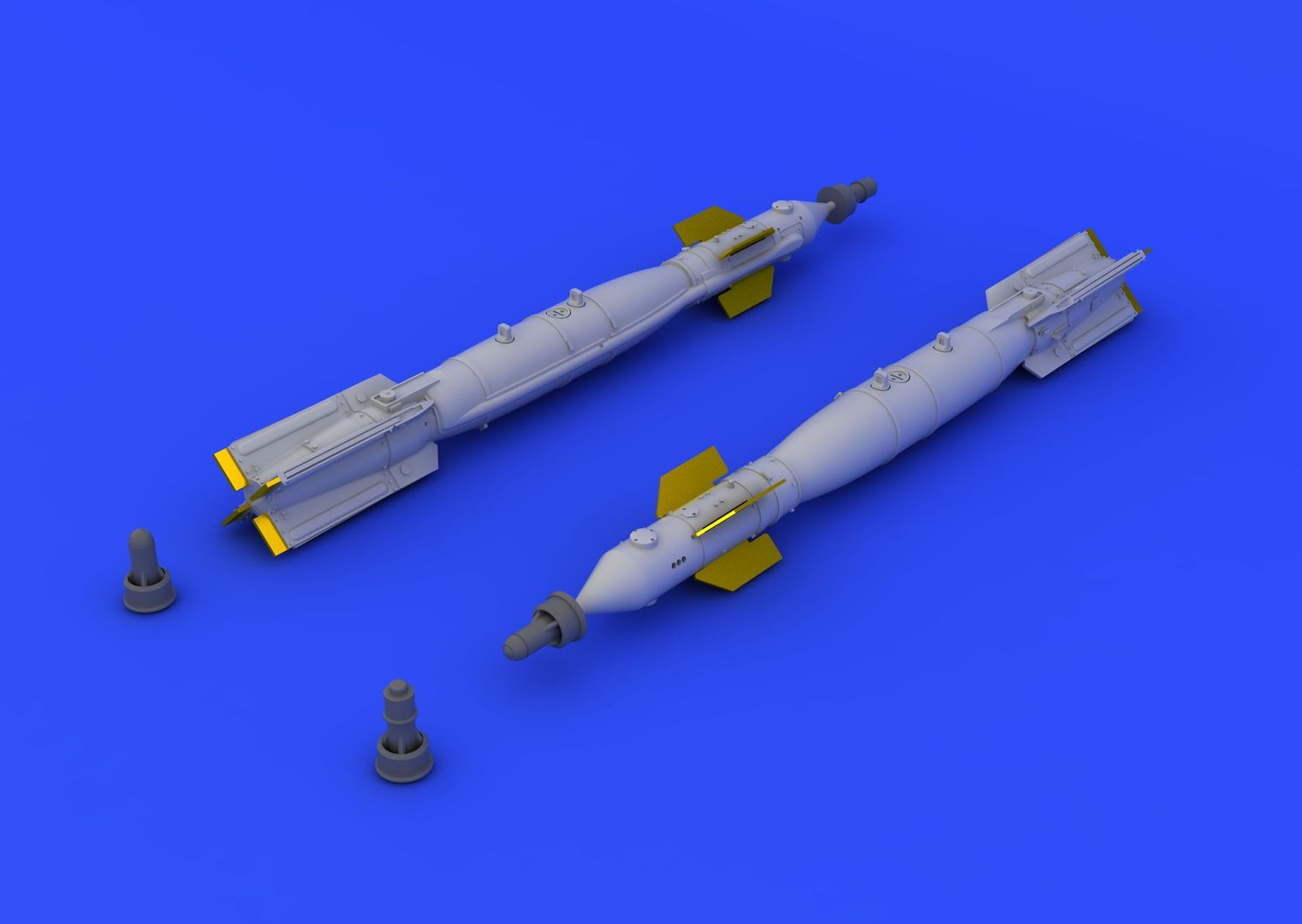
The United States just dropped the hammer on Iranian missile sites near the Strait of Hormuz. We aren't talking about a standard precision strike with small diameter bombs. The Pentagon confirmed the use of 5,000-pound bunker busters, specifically designed to turn reinforced underground concrete into powder. This wasn't just a tactical move to clear out some launchers. It was a loud, vibrating signal sent directly to Tehran about the vulnerability of their most "impenetrable" assets.
If you've been following the tension in the Persian Gulf, you know the Strait of Hormuz is the world's most important oil chokepoint. About 20% of the world's petroleum passes through that narrow strip of water. Iran knows this. They've spent decades lining the coast with anti-ship missiles and ballistic batteries tucked deep into mountain tunnels. They thought they were safe from anything short of a nuclear strike. They were wrong.
Why the 5,000 Pound GBU 72 Matters Right Now
Most people don't realize how much of a leap the GBU-72 Advanced 5K Penetrator is over older tech. For years, the military relied on the GBU-28, a weapon literally slapped together during the Gulf War using old howitzer barrels. The GBU-72 is a different beast entirely. It’s designed to be carried by fighter jets like the F-15E Strike Eagle, not just massive B-2 stealth bombers.
This means the U.S. can deploy "mountain-killing" power with much more agility. When the U.S. Central Command (CENTCOM) decided to hit these Iranian sites, they didn't just want to break the missiles. They wanted to collapse the very tunnels housing them. By using a 5,000-pound kinetic warhead, the shockwave travels through the earth, crushing internal structures even if the bomb doesn't hit a specific room. It’s the difference between breaking a window and leveling the entire foundation of a house.
The timing of this strike isn't a coincidence. Iranian-backed proxies have been poking the bear for months, interfering with commercial shipping and threatening regional stability. By taking out these specific missile sites near the Strait, the U.S. is effectively stripping away Iran's ability to "close the gate" on global oil markets. It’s a bold stance. Some might call it risky, but in the world of high-stakes geopolitics, showing you can reach into a mountain and snatch someone’s best defense is the ultimate deterrent.
The Engineering of a Bunker Buster
Let's get into the weeds of how these things actually work. A normal bomb explodes on contact. That’s great for clearing a parking lot but useless against ten feet of reinforced concrete and thirty feet of granite. A bunker buster uses a delayed fuse and a hardened steel casing.
The GBU-72 hits the ground at supersonic speeds. It doesn't explode immediately. It uses its massive weight and velocity to "drill" deep into the earth. Only after it reaches a pre-programmed depth—calculated by the density of the rock—does the warhead detonate.
- Kinetic Energy: The sheer force of a two-and-a-half-ton object falling from 30,000 feet is enough to crack most structures before the explosives even kick in.
- GPS Guidance: Using JDAM (Joint Direct Attack Munition) tail kits, these bombs are accurate within a few meters.
- Thermal Effects: The explosion inside a confined tunnel creates a vacuum and immense heat, incinerating everything inside and sucking the oxygen out of the ventilation systems.
I’ve seen reports suggesting that Iran’s "missile cities" were built to withstand standard 2,000-pound MK-84 bombs. They probably were. But nobody builds a mountain base expecting a 5,000-pound precision-guided hammer to fall on their head. The U.S. Air Force conducted tests on the GBU-72 back in 2021 at Eglin Air Force Base, proving it could survive the impact into high-strength concrete. Seeing it used in a live combat theater near the Strait of Hormuz suggests those tests were more successful than many analysts initially thought.
The Geopolitical Fallout Near the Strait
You can bet the Iranian Revolutionary Guard Corps (IRGC) is scrambling right now. Their entire strategy relies on "asymmetric deterrence." They know they can't win a traditional dogfight against F-35s or a naval battle against a carrier strike group. So, they hide. They hide their drones, their missiles, and their command centers underground.
By targeting these sites, the U.S. is telling the IRGC that their hiding spots are now just expensive tombs. This strike changes the math for every commander in the region. If your "hardened" site isn't actually hard enough to stop a GBU-72, you lose your leverage.
There's also the shipping angle. Insurance rates for oil tankers in the Persian Gulf skyrocket every time a cruise missile is fired from the Iranian coast. By neutralizing these batteries, the U.S. is attempting to stabilize those markets. It’s as much about economics as it is about explosives. If the Strait stays open, the global economy breathes a sigh of relief. If Iran can threaten it at will, prices at the pump in Ohio or London go through the roof.
Misconceptions About the Scale of the Attack
A common mistake people make is thinking this is the start of an all-out war. It’s usually the opposite. These kinds of surgical, high-yield strikes are often used to prevent a larger conflict. By taking away Iran's most dangerous "first-strike" capabilities—their coastal missile batteries—the U.S. reduces the chance that Iran will try something reckless. It’s a "check" in a very long game of chess.
Another misconception is that these bombs are "dumb" or "messy." Because they are so heavy, people assume they cause massive collateral damage. In reality, because they explode underground, the surface damage can actually be less than a smaller bomb exploding in the open air. Most of the energy is directed downward and inward. The goal is to kill the machine, not level the neighborhood.
What This Means for Regional Security
Keep an eye on how the regional players react. Saudi Arabia and the UAE are likely watching this with a mix of relief and anxiety. They want the Iranian threat neutralized, but they also don't want a fire in their backyard.
The U.S. is clearly pivoting back to a "peace through strength" model in the Middle East. After years of focusing on smaller drone strikes and counter-insurgency, we're seeing the return of heavy-duty conventional deterrence. Using a 5,000-pound bomb is a reminder that the U.S. still has the "big stick" and isn't afraid to swing it when vital interests—like the flow of global energy—are on the line.
The Iranian response will likely be through proxies rather than a direct counter-attack. They can't match this level of firepower. Expect increased cyber activity or small-scale harassment by fast-attack boats in the coming weeks. But as far as the "missile cities" go, the myth of their invincibility just died a very loud, very heavy death.
Watch the flight paths of B-2s and F-15s in the region over the next 48 hours. If more heavy ordnance starts moving toward forward bases, it means this wasn't a one-off strike, but the beginning of a systematic dismantling of coastal threats. For now, the message has been delivered. Iran's move is next, but their options just got a lot more limited.
Check the latest CENTCOM briefings for satellite imagery of the impact sites. The craters don't lie. When you drop 5,000 pounds of steel and high explosives on a target, the earth literally moves. If you're invested in energy markets or defense stocks, these are the moments that define the next six months of volatility. Stay sharp and don't get distracted by the political noise; look at the hardware being used. The hardware tells the real story.