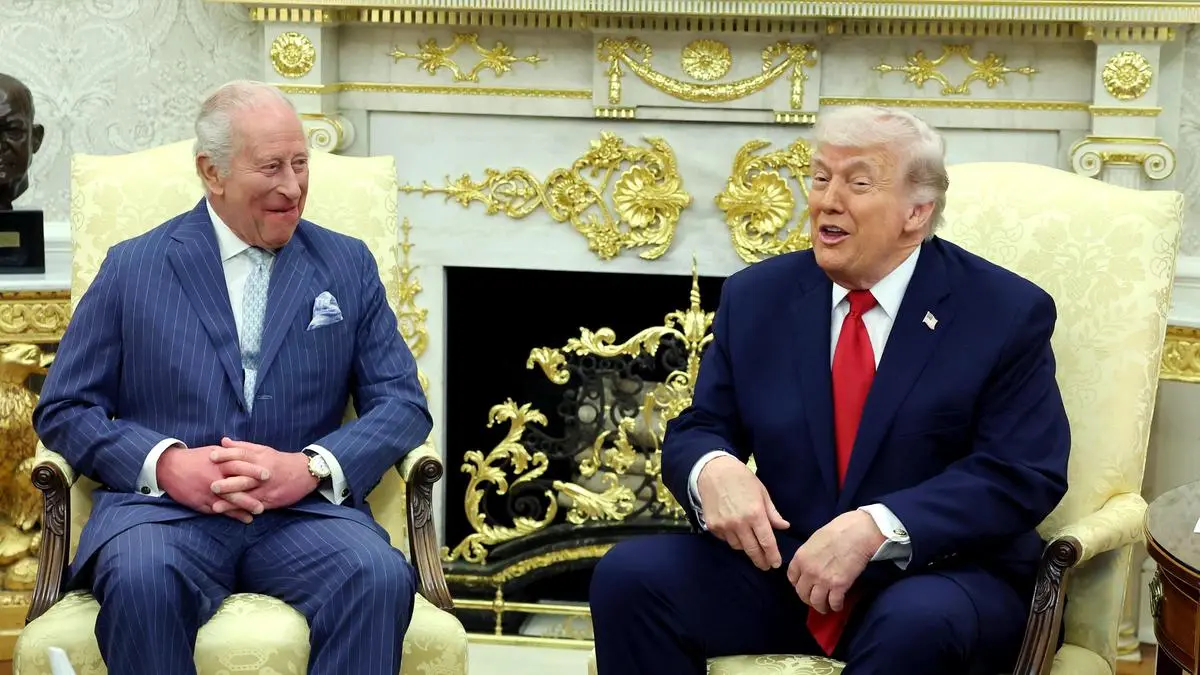
The invitation for King Charles III to address a joint meeting of the United States Congress represents the activation of a high-leverage diplomatic instrument. While media narratives often focus on the pageantry of the "Special Relationship," a rigorous analysis reveals this event as a calculated deployment of soft power intended to stabilize trans-Atlantic alignment during a period of tectonic shifts in global security architecture. The address is not a ceremonial formality; it is a strategic signaling mechanism designed to synchronize the legislative priorities of the U.S. Congress with the long-term foreign policy objectives of the British Crown and the UK Government.
The Tri-Pillar Framework of the Royal Address
The utility of a monarch addressing a foreign legislature operates across three distinct strategic layers. Each layer serves a specific function that cannot be replicated by elected officials, who are inherently constrained by shorter electoral cycles and partisan volatility. If you found value in this piece, you might want to read: this related article.
- Institutional Continuity: The King acts as a living embodiment of historical precedent. In an era of political polarization within the U.S. domestic sphere, the presence of the British Head of State provides a neutral platform that temporarily bridges the partisan divide. This "Constitutional Anchor" effect allows for the reaffirmation of shared values—specifically the commitment to democratic governance and the rule of law—without the friction of immediate policy disputes.
- Defense and Intelligence Integration: The United Kingdom remains the primary intelligence partner of the United States through the Five Eyes alliance. The address serves as a public-facing validation of this opaque but essential infrastructure. By appearing before Congress, the King reinforces the UK's position as the indispensable European partner, particularly regarding the AUKUS pact and NATO’s eastern flank.
- Economic Diplomacy and Trade Stabilization: Although the King holds no direct executive power over trade negotiations, his presence acts as a high-level marketing effort for the UK’s post-Brexit economic landscape. The objective is to signal reliability to American capital markets and legislators, influencing the climate in which future bilateral trade agreements or state-level MOUs are negotiated.
The Cost Function of Sovereign Diplomacy
Every diplomatic engagement of this magnitude carries an inherent cost-benefit ratio that must be managed to avoid diminishing returns. The "reputation risk" for the monarchy is high if the address is perceived as meddling in domestic American politics, particularly on sensitive issues like climate change or specific trade protectionism.
The risk profile is calculated through the following variables: For another look on this event, see the latest update from The New York Times.
- Partisan Reception: The danger that certain factions within Congress may boycott or protest the address, thereby degrading the "aura of neutrality" that the monarchy requires to function effectively.
- Policy Overreach: If the King’s speech deviates from the established briefs provided by the UK Foreign, Commonwealth & Development Office (FCDO), it risks creating a constitutional crisis at home while confusing allies abroad.
- Media Narrative Distortion: The tendency for American press outlets to prioritize celebrity-style coverage over the substantive geopolitical implications of the visit, which can dilute the intended strategic message.
Strategic Signaling and the Post-NATO Paradigm
The timing of this address coincides with a period of heightened uncertainty regarding the future of European security. The UK has positioned itself as the most proactive European supporter of Ukraine, often moving ahead of the U.S. and Germany in providing specific weapon systems like long-range missiles and tanks. King Charles’s presence in Washington is a physical manifestation of the UK’s desire to lead the European defense conversation.
The logical chain of this signaling is as follows:
The UK demonstrates leadership in European security -> The King validates this role before the U.S. Congress -> The U.S. recognizes the UK as its most reliable conduit for European influence -> This strengthens the UK’s leverage in both Washington and Brussels.
This creates a "feedback loop of influence" that offsets the UK’s loss of formal power within the European Union. By bypassing the EU's bureaucratic structures and speaking directly to the American legislature, the UK reasserts its "Global Britain" thesis.
Decoupling Symbolism from Substantiation
To understand the true impact of the address, one must decouple the optics from the actual mechanics of governance. The "success" of the address is not measured by the volume of applause in the chamber, but by the subsequent movement in specific legislative and diplomatic indicators.
- Legislative Momentum: Does the address correlate with a shift in Congressional sentiment toward UK-focused trade initiatives?
- Defense Appropriations: Is there a perceptible increase in enthusiasm for joint technology transfers or the streamlining of ITAR (International Traffic in Arms Regulations) for UK entities?
- Public Sentiment Shift: Does the monarch’s presence improve the "favorable" rating of the UK among the American electorate, thereby providing political cover for U.S. representatives to support UK-aligned policies?
The address also serves to answer "People Also Ask" style inquiries regarding the role of a modern monarch in international relations. Critics often question the relevance of a King in a 21st-century democracy; however, the ability to command a joint session of Congress is a unique capability that no other non-political figure possesses. It is a rare instance of "soft power" having a tangible, physical manifestation in the most powerful legislative body in the world.
The Mechanism of the "Special Relationship" 2.0
The traditional view of the Anglo-American relationship relies on historical sentimentality. A data-driven approach, however, views it as a series of interlocking dependencies. The UK provides the U.S. with global basing rights, a nuclear-capable ally in the North Atlantic, and a sophisticated financial hub in the City of London. In return, the U.S. provides the UK with the security umbrella of the U.S. nuclear deterrent and access to the world’s largest consumer market.
King Charles III’s address is the "System Update" for this relationship. It acknowledges the transition from the era of Queen Elizabeth II—which was defined by post-WWII reconstruction and the Cold War—to an era defined by technological competition, climate-driven migration, and the rise of multi-polar power blocs.
The speech must navigate these three critical friction points:
- Climate Change: King Charles is a long-standing advocate for environmental sustainability. In the U.S., this is a deeply partisan issue. The King must frame environmental stewardship as a matter of "National Security" and "Economic Resilience" to gain broad-spectrum Congressional buy-in without appearing to lecture the host nation.
- Economic Disparity: The address must acknowledge the shared challenges of inflation and industrial transition without endorsing specific fiscal policies that would alienate the opposition party.
- Global Stability: Specifically regarding the Indo-Pacific and the Middle East, the King’s words must align with the "integrated review" of UK foreign policy, which emphasizes a "tilt" toward the Indo-Pacific while maintaining a leadership role in the Euro-Atlantic.
The Strategic Recommendation for the UK Foreign Office
The success of this engagement depends entirely on the "Post-Address Follow-up." The address should not be viewed as the end of a diplomatic cycle, but as the opening of a high-level window of opportunity. The FCDO and the UK Department for Business and Trade must immediately deploy secondary delegations to capitalize on the goodwill generated by the Royal visit.
The focus should be directed toward:
- State-Level Trade Agreements: Targeting states like Texas, California, and South Carolina where the UK has existing industrial ties.
- Joint Technology Initiatives: Specifically in the realms of Artificial Intelligence, Quantum Computing, and Green Hydrogen, where the UK possesses a comparative advantage in R&D.
- Defense Industrial Base Integration: Pushing for the further removal of barriers that prevent UK defense firms from competing on a level playing field within the U.S. procurement system.
The monarch provides the "Opening Act" that makes these technical, often grueling negotiations possible. By elevating the conversation to the level of "destiny and shared values," the King creates the psychological space for American legislators to view UK-specific concessions as being in the national interest of the United States.
The definitive forecast for this engagement is a stabilization of the UK’s "Tier 1 Ally" status. In a world where the U.S. is increasingly focused on the Pacific, the UK’s ability to remain relevant in Washington depends on its capacity to offer unique value. The Royal address is the most potent tool in the UK’s arsenal to remind the American political class that while governments change, the underlying alignment of the two nations remains an immutable fact of global geopolitics.