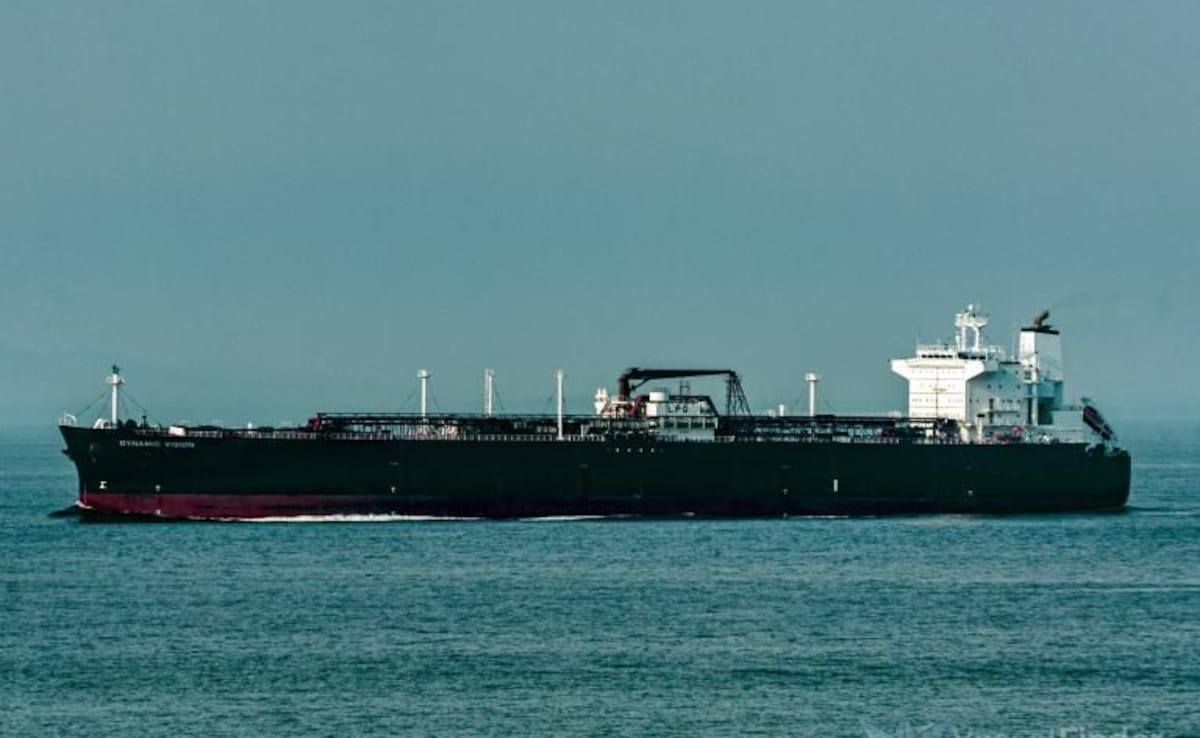
If you think your local gas station is expensive now, you haven't seen anything yet. The effective closure of the Strait of Hormuz this month has turned the global energy market into a pressure cooker, and Asia is the one getting burned. We’re talking about a narrow strip of water that handles 21% of the world's daily oil consumption. With tankers now sitting idle or fleeing the region, the math for countries like China, India, and Japan simply doesn't add up.
Basically, there is no plan B that actually works. While people talk about "alternative pipelines" as if they’re some magical safety valve, they aren't. They're a garden hose trying to put out a forest fire.
The Brutal Reality of the Numbers
Asia isn't just a customer of Middle Eastern oil; it's the lifeblood of the market. In 2025, roughly 80% of the crude flowing through the Strait was destined for Asian ports. When the Revolutionary Guards basically slammed the door shut earlier this month, they didn't just stop a few ships. They cut off the primary energy source for the world's manufacturing hub.
Brent crude has already screamed past $100 and is knocking on the door of $120. Some analysts at Macquarie are even whispering about $150 or $215 if this standoff lasts through the spring. You can't just "switch off" a dependency this deep. Japan gets 95% of its crude from this region. South Korea is at 70%. For them, this isn't a "market fluctuation." It's an existential threat to their economy.
Pipelines are a Mathematical Failure
I've heard people say that Saudi Arabia and the UAE can just pump the oil across the desert to avoid the Strait. It sounds good on paper, but let's look at the actual capacity.
The most famous bypass is Saudi Arabia’s East-West Pipeline (Petroline). It can move about 7 million barrels per day (b/d) in a pinch, but it hasn't been tested at those levels for any real length of time. Then you have the UAE’s Habshan-Fujairah line, which tops out at about 1.8 million b/d.
Add those up and you get maybe 8.8 million b/d of theoretical bypass capacity. The problem? The Strait of Hormuz normally moves over 20 million b/d. Even if every single pipeline ran at 100% efficiency—which never happens—you're still missing over 11 million barrels every single day. That's a massive hole in the global supply that no amount of US shale or Russian exports can fill overnight.
The Qatar Factor Nobody Mentions
Everyone focuses on crude oil, but the gas situation is actually worse. Qatar is the heavyweight champion of Liquefied Natural Gas (LNG), and almost 20% of the world's LNG supply has to pass through Hormuz. Unlike oil, you can't just shove LNG into a crude pipeline.
China and Japan rely on this gas to keep their lights on. Without it, you’re looking at rolling blackouts in some of the most advanced cities on Earth. European gas prices have already spiked 50% because they’re competing with Asia for whatever's left on the spot market. It’s a bidding war where nobody wins.
Who Suffers the Most
China is trying to act cool, but they’re sweating. They import about half of their crude through this waterway. Sure, they have some coal and a lot of solar, but their chemical and transport sectors need oil. If their factories slow down, the whole global supply chain for electronics and car parts starts to rattle.
India is in a similar spot. They’re price-sensitive. When oil hits $120, their trade deficit explodes. We’re already seeing them scramble to find alternative cargoes from West Africa and South America, but those ships take weeks longer to arrive and the shipping rates have tripled.
The Logistics are a Total Mess
Even if you find the oil elsewhere, getting it to Asia is now a logistical nightmare. Major carriers like Maersk have already bailed on the Persian Gulf. Rerouting around the Cape of Good Hope adds 14 to 20 days to a trip.
That’s two extra weeks of fuel, two weeks of wages, and massive hikes in "War Risk" insurance. Basically, even the oil that does make it out of the ground is becoming too expensive to move.
What You Should Do Now
If you’re a business owner or an investor, stop waiting for "de-escalation" news that might not come. The "Black Swan" event is already here.
- Audit your supply chain for petrochemicals. It’s not just about fuel; it's about plastics, fertilizers, and resins. If your supplier is in China or South Korea, expect price hikes and shipping delays of at least three weeks.
- Hedge your energy costs. If you haven't locked in rates or looked at fuel surcharges for your logistics, you're already behind.
- Watch the Saudi Red Sea ports. The Yanbu terminal is the new center of the world. Any news of delays or attacks there will send the $120 oil price straight to $150.
The world ignored the vulnerability of this 21-mile-wide passage for decades because it was convenient. Now, the bill has come due. Don't expect a quick fix—the infrastructure to replace Hormuz simply does not exist.