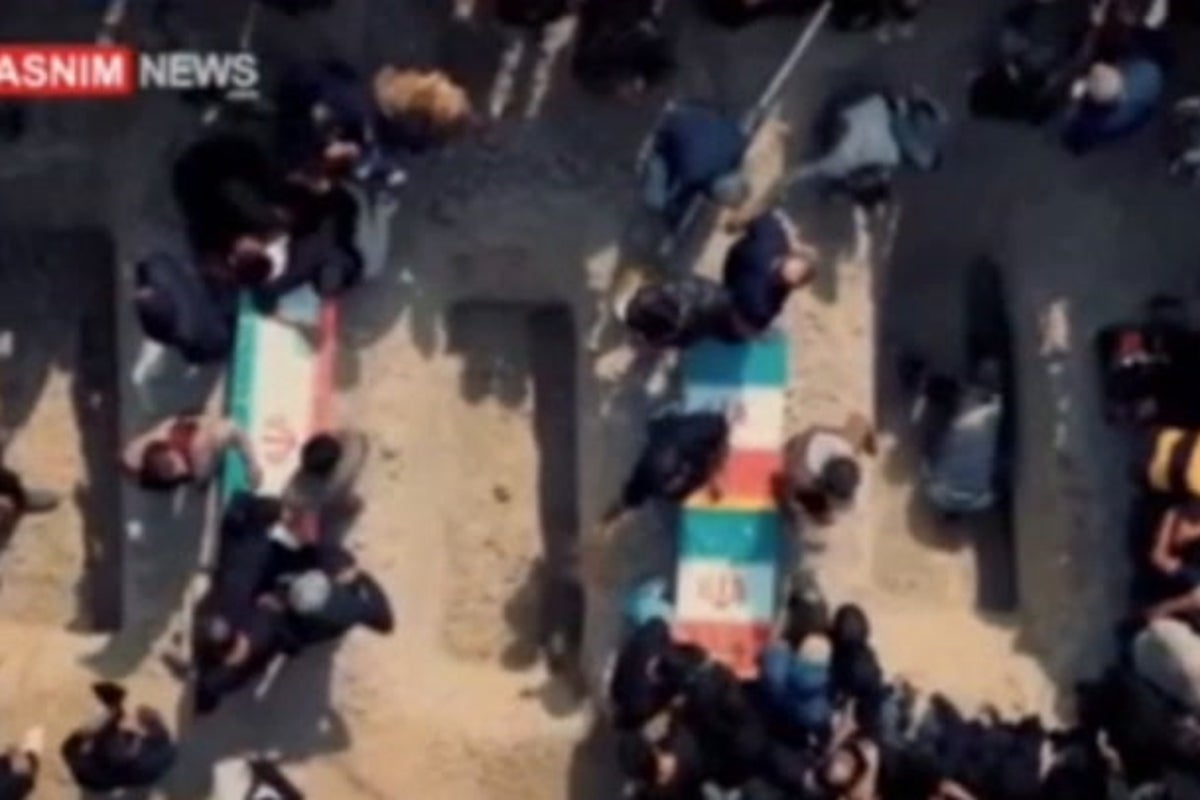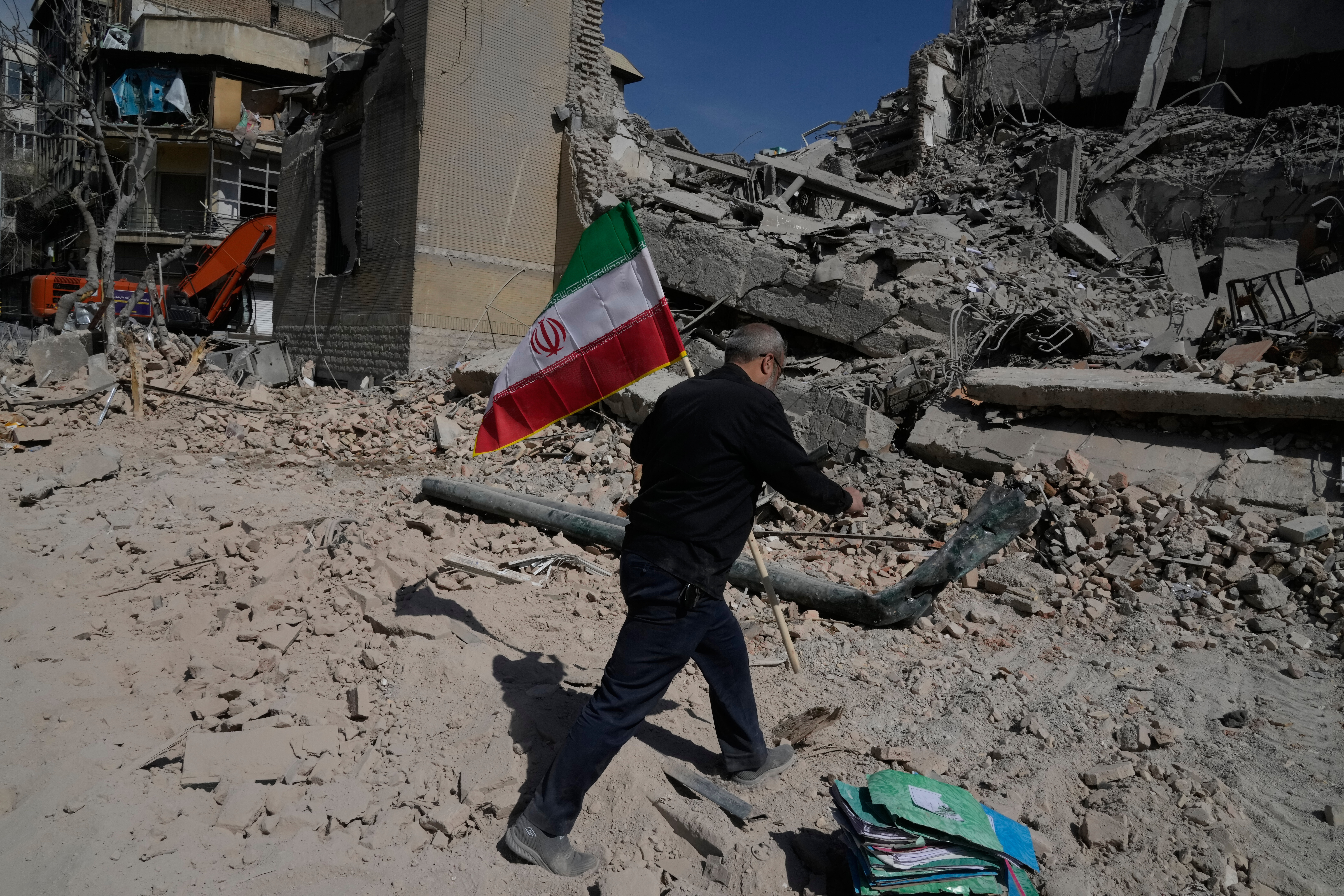
The recent escalation of direct kinetic strikes between Iran and Israel represents a structural breakdown of the "Gray Zone" conflict model that defined Middle Eastern security for four decades. While previous engagements relied on deniable proxies or localized sabotage, the transition to state-on-state strikes creates a new legal and strategic equilibrium—one where the UN Charter is not merely ignored, but functionally redefined by the participants. An independent probe's finding that these strikes violate international law is technically accurate but strategically secondary to the shift in how Proportionality, Necessity, and Attribution are calculated by regional actors.
To understand the erosion of these norms, one must analyze the conflict through three specific analytical pillars: the Breakdown of Proxy Insulation, the Expansion of the Self-Defense Calculus, and the Failure of Multilateral Deterrence.
The Breakdown of Proxy Insulation
For decades, the strategic depth of Iran relied on the Principal-Agent Framework. By utilizing non-state actors (Hezbollah, the Houthis, and various militias), Tehran maintained a layer of plausible deniability that prevented direct retaliatory strikes on its sovereign soil. This insulation served a dual purpose: it lowered the risk of an all-out regional war and forced Israel to exhaust resources on the "tentacles" rather than the "head" of the network.
The April 2024 exchange fundamentally altered this cost function. When Israel targeted a diplomatic facility in Damascus—an act Iran viewed as an attack on its sovereign territory—the "Agent" model was bypassed. Iran’s response, involving hundreds of drones and missiles launched directly from Iranian soil, signaled the end of the proxy buffer.
The Shift in Risk Tolerance
This transition implies that the cost of inaction is now perceived as higher than the cost of direct escalation. In game theory terms, this is a move from a Repeated Game (where small skirmishes maintain a status quo) to a One-Shot High-Stakes Game (where survival or prestige depends on a massive display of force). The legal violations cited by UN investigators are the byproduct of this shift; when a state believes its fundamental deterrent is failing, the constraints of Article 2(4) of the UN Charter—prohibiting the threat or use of force—become secondary to the restoration of that deterrent.
The Expansion of the Self-Defense Calculus
The core of the legal dispute centers on Article 51, which allows for self-defense if an armed attack occurs. However, both Iran and Israel have adopted an expansive interpretation of this article that effectively renders it a tool for "preemptive retaliation."
- The Israeli Definition: Israel views the presence and armament of Iranian-backed groups on its borders as a continuous "armed attack." Under this doctrine, strikes on Iranian commanders or infrastructure in third-party states (like Syria or Lebanon) are framed as necessary measures to prevent future aggression.
- The Iranian Definition: Iran frames its strikes as a legitimate response to the violation of its diplomatic immunity and the assassination of its military personnel. By labeling their actions "Operation True Promise," they attempted to codify the strike as a legalistic "punishment" rather than an act of war.
The Problem of Imminence
International law requires that a threat be "instant, overwhelming, leaving no choice of means, and no moment for deliberation" to justify preemptive self-defense (the Caroline Test). Neither side currently adheres to this standard. Instead, they utilize Accumulative Impact Logic. This logic suggests that while one specific drone strike might not warrant a massive missile barrage, the sum total of 100 small incidents justifies a major kinetic response. This creates a legal vacuum where any action can be retroactively justified as "self-defense."
The Failure of Multilateral Deterrence
The UN probe highlights that the international community has failed to provide a credible mechanism for de-escalation. When the UN Security Council is paralyzed by vetoes—usually from the United States or Russia/China depending on the party being criticized—the legal framework of the UN Charter ceases to be an enforcement mechanism and becomes a rhetorical one.
The Sovereignty Arbitrage
A critical missing piece in the standard analysis is the role of Host State Sovereignty. The strikes occur largely in Iraq, Syria, and Lebanon—states that lack the air defense or political capital to prevent their territory from becoming a kinetic playground.
- Sovereignty Erosion: When Iran or Israel strikes a target in Syria, they are violating Syrian sovereignty as much as they are attacking each other.
- The Power Vacuum: Because the UN cannot or will not protect the sovereignty of these intermediary states, it signals to regional powers that international law is "opt-in" rather than "opt-out."
Quantifying the Kinetic Exchange: A Structural Breakdown
While the UN probe focuses on the illegality of the acts, a data-driven look at the strikes reveals a calculated, almost choreographed attempt to manage escalation.
The Proportionality Gap
In the April exchange, the vast majority of Iranian projectiles were intercepted. Technically, the intent was massive, but the impact was minimal. Conversely, Israeli strikes are often surgical, focusing on high-value human capital (generals, scientists) or specific radar installations.
This creates a Deterrence Asymmetry:
- Iran uses Volume to signal capability.
- Israel uses Precision to signal intelligence dominance.
The violation of the UN Charter in these instances is not an accident of war; it is a calculated risk taken to test the technical and political thresholds of the opponent. The "independent probe" accurately identifies that no side followed the legal requirement of exhaustion of peaceful means. However, in a security environment where "peaceful means" are synonymous with "stalling for time," the legal path is viewed as a strategic liability.
The Cost Function of Future Engagement
If the legal barriers of the UN Charter no longer provide a ceiling for conflict, the future of the Iran-Israel rivalry will be dictated by the Attrition of Critical Systems. We are moving away from the era of "Shadow Wars" and into an era of "Open Attrition."
Operational Variables to Track
- Air Defense Depletion: The cost of an interceptor missile (e.g., the Arrow-3 or David’s Sling) significantly outweighs the cost of a mass-produced Shahed drone. Iran’s strategy is to force Israel into an economic and logistical bottleneck by exhausting their interceptor stockpiles.
- Intelligence Leakage: The precision of Israeli strikes suggests a deep penetration of the Iranian security apparatus. Until Iran can plug these leaks, its sovereign territory remains vulnerable regardless of how many UN reports condemn the strikes.
- Threshold Testing: Each strike that goes "unpunished" by the international community lowers the bar for the next escalation. We are currently seeing the normalization of ballistic missile usage in regional disputes.
The findings of the UN probe serve as a historical record of the death of the post-WWII security consensus in the Middle East. For analysts and policymakers, the focus must shift from "How do we return to legal compliance?" to "How do we manage a conflict where legal compliance is no longer a factor?"
The immediate strategic priority for regional stability is the establishment of a Hotline or Indirect Communication Protocol that functions outside of the UN framework. If the Charter cannot prevent strikes, a bilateral understanding of "Red Lines" must be codified to prevent a miscalculation that triggers a total regional collapse. The focus should be on defining the limits of "Targetable Infrastructure"—for example, excluding energy grids or civilian population centers—to prevent the current kinetic cycle from evolving into total war. Failure to establish these informal guardrails will result in a continued descent into a "Hobbesian" regional order where the only law is the reach of one’s missile battery.
Would you like me to map the specific air-defense saturation points for the Eastern Mediterranean to further quantify this attrition risk?