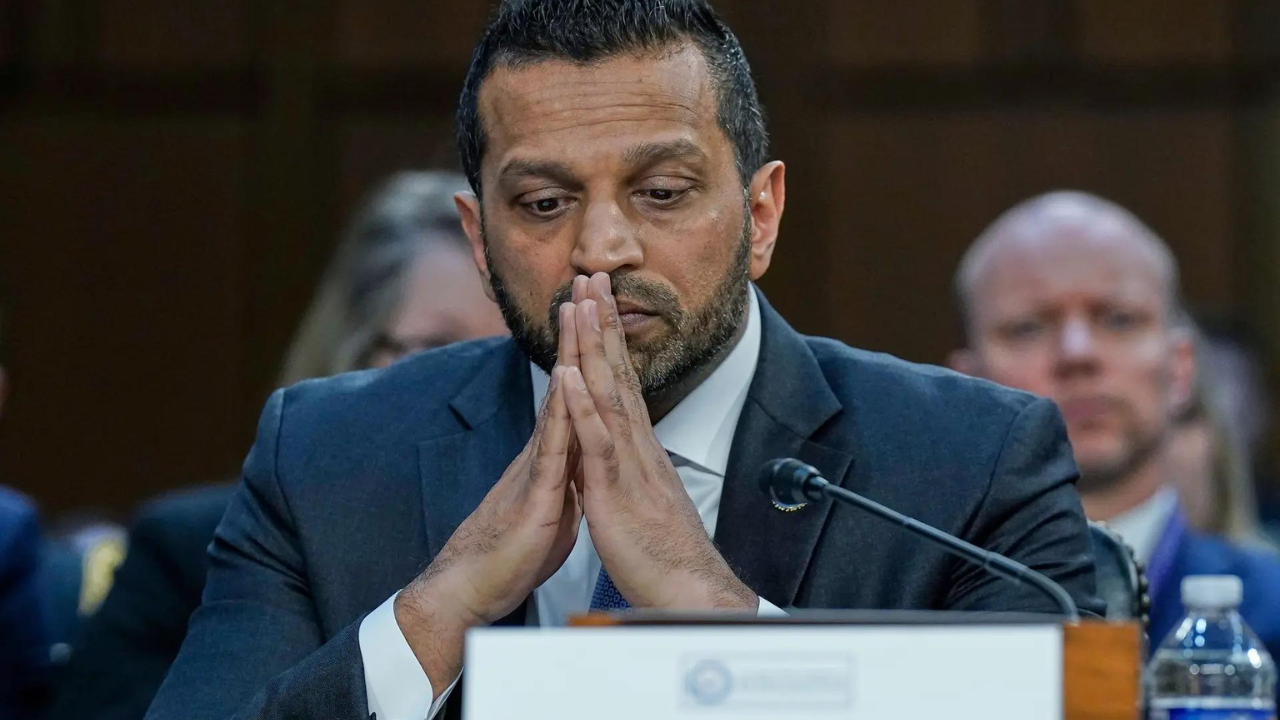
The breach was as simple as it was devastating. While the Federal Bureau of Investigation continues to scramble for damage control, the core facts are no longer in dispute. Hackers linked to the Iranian government successfully infiltrated the personal email account of FBI Director Kash Patel. The Department of Justice has quietly acknowledged the authenticity of the leaked data, a move that signals a profound failure in the American counter-intelligence apparatus. This is not just another data leak. It is a targeted strike against the very head of domestic security, executed by an adversary that has spent years refining its "hack-and-leak" operations to destabilize Western political structures.
For decades, the standard playbook for state-sponsored cyber warfare involved the quiet theft of intellectual property or the slow-burn infiltration of infrastructure. That era is over. The breach of Director Patel’s communications represents the evolution of the Iranian cyber strategy—one that prioritizes psychological impact and the erosion of public trust over mere technical data collection. By targeting the Director himself, Tehran has sent a clear message. No one is unreachable.
The Mechanics of a High Level Compromise
Security professionals often talk about the "human element" as the weakest link in any defensive chain. In this instance, the vulnerability wasn't a flaw in the FBI’s encrypted servers or a backdoor in a government-issued device. Instead, the attackers exploited the Director’s personal digital footprint. It is a classic tactical maneuver. State actors understand that while government networks are hardened with multi-layer authentication and constant monitoring, personal accounts are often protected by little more than a standard password and perhaps a consumer-grade mobile verification system.
Initial forensic indicators suggest a sophisticated spear-phishing campaign. This isn't the clumsy, misspelled email from a fake bank that most people ignore. These are surgical strikes. They use social engineering to craft a message so specific and so urgent that even a seasoned intelligence official might succumb to a momentary lapse in judgment. Once the hackers gained access to the primary email account, they likely used it to pivot into linked services, harvesting years of correspondence, contact lists, and potentially sensitive documents stored in the cloud.
The Department of Justice’s confirmation that the materials "appear authentic" is a rare admission. Usually, federal agencies hide behind a wall of "no comment" to avoid validating the hackers' efforts. However, the volume and specificity of the leaked data made a denial impossible. By admitting the truth, the DOJ is attempting to get ahead of a narrative that is already spiraling out of control.
A History of Iranian Cyber Aggression
Tehran has been playing this game for a long time. To understand the Patel breach, you have to look back at the 2024 election cycle and the persistent targeting of political campaigns. Iranian groups like APT42—frequently linked to the Islamic Revolutionary Guard Corps (IRGC)—have mastered the art of identity theft and digital surveillance. They don't just want data; they want leverage.
In previous operations, Iranian hackers focused on academic researchers, human rights activists, and mid-level diplomats. Moving up the chain to the Director of the FBI indicates a massive increase in risk tolerance. It suggests that Tehran no longer fears the immediate repercussions of direct digital confrontation with the United States. This boldness stems from a perception of vulnerability within the American political landscape, where internal divisions can be exploited to amplify the impact of any single leak.
The timing is equally significant. With geopolitical tensions in the Middle East at a boiling point, the IRGC uses these breaches as a form of non-kinetic deterrence. They are effectively telling Washington that if the U.S. leans too hard on Iranian interests, the private lives and secret communications of its highest-ranking officials will be laid bare for the world to see.
The Failure of Personal OpSec
There is a hard truth that the intelligence community hates to discuss. High-ranking officials often view security protocols as a burden rather than a necessity. The Director of the FBI is someone who oversees thousands of agents tasked with protecting the nation, yet the most basic principles of Operations Security (OpSec) were ignored in his private life.
- The Myth of Separated Lives: Many officials believe their "personal" email is distinct from their "professional" life. In the eyes of a foreign intelligence service, there is no distinction. Everything is a target.
- Credential Stuffing and Reuse: If a single password was reused across multiple platforms, the hackers didn't even need to be "sophisticated." They just needed to be persistent.
- The Shadow of Mobile Devices: Personal smartphones are often the gateway to compromise. If the Director’s phone was targeted with "zero-click" malware, the email breach might just be the tip of the iceberg.
This incident forces a re-evaluation of how we protect the individuals who hold the keys to the kingdom. We spend billions of dollars on "hardened" networks while the people using them remain walking vulnerabilities. If the Director of the FBI can be compromised via a personal account, every Cabinet member and every Congressional leader is currently at risk.
Counter Arguments and the Disinformation Trap
We must also consider the possibility of "tainted" leaks. In many hack-and-leak operations, the attackers mix real, authentic documents with subtle forgeries. This is a tactic designed to sow maximum confusion. While the DOJ says the emails appear authentic, that doesn't mean every word in the leaked cache is true. By seeding a massive pile of real data with a few choice lies, an adversary can destroy a reputation or manipulate policy without ever being caught in a direct falsehood.
Some analysts argue that the focus on the breach itself is a distraction from the content of the emails. This is exactly what the hackers want. They want the public to ignore the illegality of the theft and instead focus on whatever political gossip or internal friction the emails reveal. Falling into this trap validates the Iranian strategy. It turns the American public into an unwitting accomplice in a foreign influence operation.
The Technical Reality of Modern Espionage
State-sponsored hacking is no longer a niche activity. It is a primary pillar of modern statecraft. Groups like the IRGC-linked Mint Sandstorm have developed toolsets that allow them to bypass traditional two-factor authentication. They use "adversary-in-the-middle" (AiTM) attacks to capture session cookies, allowing them to stay logged into an account even after a password has been changed.
$$Log(Security) = \frac{Technical \ Controls}{Human \ Error}$$
The math is simple. No matter how much you increase technical controls, if human error remains high, the overall security of the system plummets. In the case of Kash Patel, the denominator in that equation was too large.
This breach also highlights the limitations of current encryption standards for consumer email. While the FBI uses advanced cryptographic protocols for its internal communications, the Director's personal email likely relied on standard TLS (Transport Layer Security), which protects data in transit but does nothing if the account itself is accessed via stolen credentials.
Rebuilding the Wall
The fallout from this breach will be felt for years. It will trigger a massive internal audit of how senior officials handle their private digital lives. There will likely be new mandates requiring all high-level appointees to use government-managed devices for all communications, effectively ending the era of the "private" personal email for people in sensitive positions.
But mandates are only as good as their enforcement. The real challenge is cultural. The American intelligence apparatus must stop treating cyber-hygiene as a chore for the IT department and start treating it as a core component of national defense.
The Iranian hackers didn't need a supercomputer to get into Kash Patel's inbox. They just needed a target who wasn't looking.
Fixing the technical vulnerabilities is the easy part. Changing the behavior of the people who lead these agencies is a much steeper climb. If the United States cannot protect the private communications of its top law enforcement officer, it has no hope of protecting the digital sovereignty of the average citizen. This breach is a siren. It remains to be seen if anyone in Washington is actually listening.
The next step is not another committee hearing or a technical patch. It is a fundamental shift in how we define the boundaries of a national security official's life. We have reached a point where a "personal" email account no longer exists for anyone in power. Every message sent, every photo shared, and every contact saved is a potential weapon in the hands of an adversary. If you aren't willing to live under that reality, you shouldn't be in the room where the decisions are made.