Barbie just got a lot more relatable for millions of families. Mattel recently launched its first-ever autistic Barbie doll, and honestly, it’s about time. This isn't just another plastic toy hitting the shelves to fill a quota. It’s a carefully designed tool for visibility. For a long time, the toy industry treated disability like an afterthought or a "special edition" that felt clunky and clinical. This release feels different because it actually respects the nuances of the neurodivergent experience.
You might think a doll is just a doll. But for an autistic child who has never seen their specific behaviors or sensory needs reflected in their favorite plaything, this is huge. It's about more than just "inclusion" as a corporate buzzword. It’s about the kid in the living room feeling like they finally belong in the world of pretend.
Why the Details on the Autistic Barbie Actually Matter
Mattel didn't just slap a label on a box and call it a day. They partnered with the National Autistic Society (NAS) in the UK to get the specifics right. This is where most companies usually mess up. They rely on stereotypes instead of lived experience.
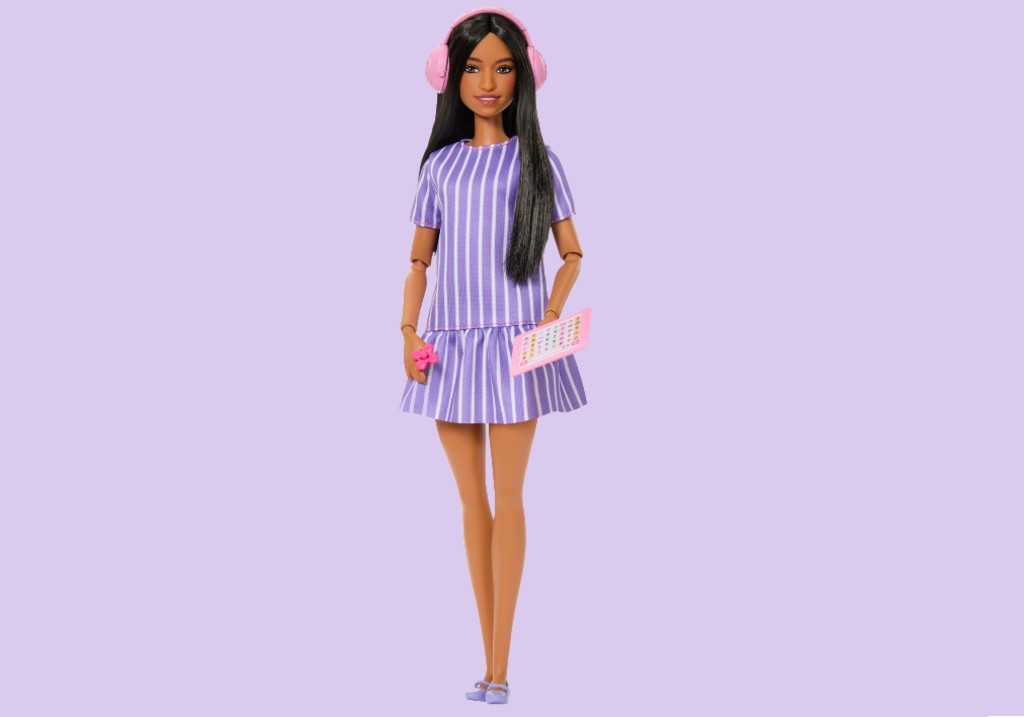
The doll comes with several intentional features that reflect the daily lives of many autistic people. First, she wears noise-canceling headphones. For many on the spectrum, auditory processing can be overwhelming. The world is loud. Having a Barbie that acknowledges this sensory boundary is a subtle but powerful way to normalize self-regulation.
Then there’s the outfit. It isn't just a random fashion choice. The doll wears a green dress with ruffled sleeves and a multi-colored pattern, but the texture is key. Autistic individuals often have high sensitivity to certain fabrics. Mattel focused on tactile elements that feel "right" to a sensory-seeking or sensory-avoidant child. Even the way the doll's joints move was considered.
The Power of the Fidget Spinner Accessory
One of the most talked-about additions is the inclusion of a fidget spinner. For years, fidget toys were seen as distractions or "annoyances" in classrooms. In reality, they're essential tools for many neurodivergent people to maintain focus and manage anxiety. By giving Barbie a fidget toy, Mattel is saying that stimming and sensory regulation aren't things to hide. They're just part of how some people navigate their day.
Breaking the Stigma of the Perfect Barbie
We all know the old Barbie. She was the "perfect" blonde with the "perfect" life. That image did a lot of damage over the decades by setting an impossible standard. Over the last few years, the Fashionistas line has been trying to dismantle that. We’ve seen Barbies with wheelchairs, hearing aids, and vitiligo.
Adding an autistic doll to this lineup is a smart move because autism is an invisible disability. You can't always "see" it the way you see a physical aid. By using accessories like headphones and specific clothing, Mattel makes the invisible visible. It gives parents and educators a concrete way to start conversations about neurodiversity with kids who aren't on the spectrum. It builds empathy through play.
What Mattel Got Right This Time
I've seen plenty of "inclusive" product launches that felt like a cash grab. Usually, they're poorly researched and end up offending the community they're supposed to represent. Mattel avoided this trap by listening to experts and people with actual lived experience.
- Consultation with the National Autistic Society: They didn't guess what autism looks like. They asked.
- Focus on Sensory Needs: They prioritized textures and accessories that resonate with the community.
- Affordability: Keeping this doll as part of the standard Fashionistas line means it's accessible to everyone, not just those who can afford "specialty" toys.
It's also worth noting the packaging. The box features graphics and colors that are designed to be less overstimulating. It’s a small touch, but it shows they were thinking about the user experience from the moment the child sees the toy on the shelf.
The Impact on Social Development
Play is the primary way kids learn about the world. When a child plays with a doll that has different needs than theirs, they're practicing social skills. They're learning that some people need headphones when a room gets too noisy. They're learning that some people might need to fiddle with a toy to feel calm.
This isn't just beneficial for autistic kids. It's vital for all kids. If we want a future where neurodivergent adults are respected and accommodated in the workplace and in society, we have to start in the playroom. We have to make neurodiversity a normal, unremarkable part of childhood.
Addressing the Critics of Toy Diversity
You'll always have people who claim this is "woke" or unnecessary. They'll say "Barbie was fine the way she was." These people usually haven't spent much time around a child who feels invisible. Honestly, if a doll makes a kid feel better about themselves, who cares about the politics?
The market data also supports these moves. Consumers, especially Gen Z and Millennial parents, are actively looking for brands that reflect the real world. They want their kids to grow up with a global perspective. Mattel isn't just being "nice"—they're being smart. They're staying relevant in a world that no longer accepts a one-size-fits-all definition of beauty or "normalcy."
Practical Ways to Use the Autistic Barbie for Education
If you’re a parent or a teacher, this doll is a great bridge. You don't need a formal lesson plan. Just put the doll in the mix.
- Normalize the headphones: If a child asks why the doll is wearing them, explain it simply. "Sometimes the world sounds too loud for her, and these help her feel safe."
- Discuss sensory preferences: Use the doll's dress to talk about how everyone likes different textures. Some people hate itchy tags; some people love soft ruffles.
- Encourage inclusive storytelling: When playing pretend, make sure the autistic Barbie is part of the group. She doesn't have to be the "special" character; she's just one of the friends.
Looking at the Bigger Picture of Disability Representation
This launch is a win, but it's one step. The disability community is massive and diverse. While a single doll can't represent every person on the autism spectrum—because it is, after all, a spectrum—it’s a massive leap forward from where we were ten years ago.
We need to see this energy across all categories. We need more neurodivergent characters in books, movies, and TV shows that aren't just "The Genius" or "The Burden." We need stories where being autistic is just one part of a complex, interesting person. Barbie is a cultural icon, and when she changes, the culture notices.
If you're looking to add this to your collection or buy it for a child, look for the Barbie Fashionista #208. It's widely available at major retailers. Don't just buy it for an autistic child—buy it for any child. Every toy box should reflect the diversity of the real world. That's how we raise a generation that's actually inclusive, not just using it as a hashtag.
The new autistic Barbie is more than a toy—it's a tool for compassion and a mirror for the neurodivergent community.