The Absurdity of the 19-Roll Comparison
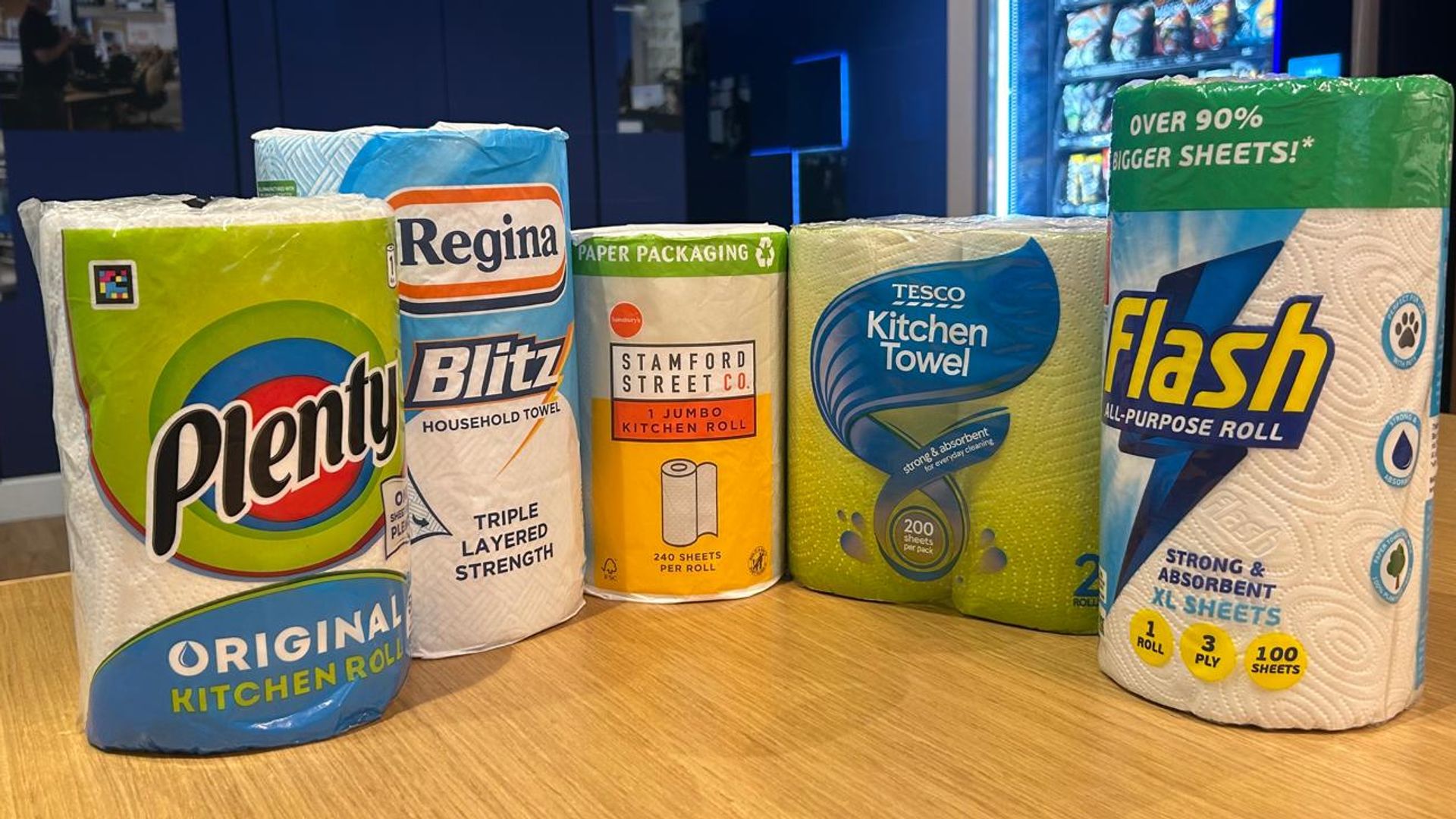
Most consumer "tests" are a race to the bottom of a shallow pool. You’ve seen the format: a journalist lines up nineteen different rolls of perforated paper from Tesco, Aldi, and Waitrose. They spill exactly 10ml of blue-dyed water. They count the sheets. They weigh the "ply." Then, they tell you the supermarket own-brand is a "hidden gem" because it costs 40p less than the market leader.
This isn't journalism. It’s a distraction from the fundamental failure of your domestic logistics.
If you are standing in an aisle debating the structural integrity of a two-ply sheet versus a three-ply quilted "extra-absorbent" luxury roll, you have already lost. The industry wants you obsessed with "sheets per roll" because it keeps you trapped in a cycle of micro-transactions and low-utility labor. We need to talk about why the kitchen roll is the ultimate monument to inefficient living.
The Absorption Lie
The core metric in every kitchen roll review is "absorbency." This is a flawed premise.
Paper towels are engineered for failure. To make a paper towel "strong," manufacturers add wet-strength resins—polyamide-epichlorohydrin (PAE) or urea-formaldehyde. These chemicals allow the paper to hold together while wet, but they don't actually improve the physics of fluid dynamics. They just stop the paper from disintegrating into a pulp in your hands.
In my time auditing supply chains for commercial hospitality, I saw the math that the consumer market ignores. A standard kitchen roll sheet can hold about 10 to 15 times its weight in water. Sounds impressive? It isn't. A dedicated microfiber cloth or a high-density cotton huck towel can hold up to 25 times its weight and, crucially, doesn't require a trip to the bin every thirty seconds.
The "19-roll test" validates a disposable mindset. It suggests that the solution to a spill is better trash, rather than better tools. You are paying a premium for the convenience of throwing things away. Over a lifetime, the average household spends thousands on paper that exists for three seconds of utility.
The Physics of the "Quilted" Scam
Manufacturers love to talk about "pockets" and "quilting." They claim these air-filled patterns trap more liquid.
Logic check: Air doesn't absorb water.
Quilting is a clever way to use less pulp while making the roll look larger on the shelf. It’s volumetric trickery. By embossing the paper, companies increase the thickness (bulk) of the roll without increasing the mass. You think you’re getting a "thick, sturdy roll," but you’re actually buying a roll of air gaps.
When you see a "Mega Roll" that claims to be "equal to 3 regular rolls," look at the weight, not the diameter. In the paper industry, we look at basis weight—the weight of a given area of paper. Most "luxury" supermarket rolls actually have a lower basis weight than commercial-grade towels. They just have more "fluff" from the embossing rollers.
The Real Cost Table
| Product Type | Cost per 100 uses | Environmental Impact | Durability |
|---|---|---|---|
| Supermarket "Luxury" | £4.50 - £6.00 | High (Single Use) | Low (Tears easily) |
| Supermarket "Budget" | £2.00 - £3.50 | High (Single Use) | Abysmal |
| Commercial Huck Towels | £0.12 (Wash cost) | Low (Reusable) | High (Industrial) |
| Microfiber (300 GSM) | £0.08 (Wash cost) | Medium (Microplastics) | Extreme |
Why "Value" Brands are a Trap
The "lazy consensus" says that buying the Aldi or Lidl version of a brand-name towel is the ultimate "hack."
It’s not.
Budget rolls are often made with shorter fibers. Short fibers mean less capillary action. To compensate, budget brands often use more mechanical pressing to keep the sheets together, which makes the paper "slick." If you’ve ever tried to wipe up oil with a cheap paper towel and ended up just pushing the oil around the counter, you’ve experienced the failure of short-fiber geometry.
If you insist on using disposables, the "value" play is to go the opposite direction. Stop looking at supermarkets entirely. Buy industrial blue rolls used in automotive garages. These are designed for mechanics who need to wipe grease, oil, and chemicals. They aren't pretty. They don't have little floral patterns. But they have a higher tensile strength and a lower lint-shedding rate than anything you’ll find in the cleaning aisle.
The Myth of "Sustainable" Paper
The competitor article likely mentions FSC certification or "recycled content" as a tie-breaker.
Let’s dismantle that.
Recycled paper towels are the end of the line for paper fibers. Each time paper is recycled, the fibers get shorter and weaker. To make a recycled towel feel as soft as a virgin-pulp "quilted" towel, manufacturers have to use more chemical softeners and binders.
Furthermore, you cannot recycle a paper towel once it has been used. It is contaminated with food waste or grease. It goes straight to the landfill or the incinerator. Claiming a paper towel is "eco-friendly" because it’s made from recycled office paper is like claiming a cigarette is healthy because the filter is biodegradable. It ignores the primary impact of the product’s lifecycle.
The Professional Alternative: The "Huck" Method
If you want to solve the kitchen roll problem permanently, look at how surgical centers and high-end restaurants operate. They don't use Bounty. They use Huck towels.
Huck towels are 100% cotton, lint-free, and incredibly durable. They were originally used to clean surgical instruments because they don't leave fibers behind.
- Buy a pack of 50. It costs about the same as two "bulk buys" of premium kitchen rolls.
- Assign a "Wet Bin." A small, ventilated basket under the sink.
- Use and Toss. Use them for everything you’d use a paper towel for.
- The Hot Wash. Once a week, throw them in the machine on a 60°C cycle.
The time you "save" by throwing away a paper towel is lost ten times over by the frequency of your shopping trips and the mental load of tracking inventory. A stack of 50 huck towels means you are never "out" of cleaning supplies. It removes the chore from your mental whiteboard.
Challenging the "Convenience" Narrative
We are told that disposables save time. This is the great lie of the modern consumer "landscape."
Think about the workflow of a spill:
- Paper Towel: Reach for roll, tear sheet (often two because one isn't enough), wipe, walk to bin, dispose, realize the bin is full, take out trash.
- Cloth: Reach for cloth, wipe, toss in laundry basket.
The "convenience" of the paper towel is actually an externalization of effort. You are trading a 10-second walk to the washing machine for a 10-minute trip to the supermarket and a lifetime of paying for wood pulp.
The Zero-Sum Game of Sheet Counting
The "19-roll test" obsessed over sheet counts. "Roll A has 240 sheets, Roll B has 200."
This is irrelevant.
In a professional environment, we measure performance-to-task. If a spill requires four sheets of the "value" brand but only one sheet of a high-GSM (grams per square meter) cloth, the "sheets per roll" metric is a vanity stat.
Most people use two sheets of kitchen roll regardless of the size of the mess. It’s a psychological habit, not a functional requirement. Manufacturers know this. They have slowly reduced the size of the "select-a-size" sheets, encouraging you to pull more frequently. You aren't "selecting a size"; you’re being conditioned to increase your consumption frequency.
The Verdict on Your Shopping List
If you are still reading this and planning to buy the "winner" of a supermarket test, you are choosing to stay on the treadmill.
The "winner" of the 19-roll test is whichever brand successfully convinced a journalist that their specific blend of chemical binders and embossed air pockets is worth £1.50 a roll.
Stop testing paper. Stop comparing ply. Stop treating your kitchen like a laboratory for disposable waste.
The only way to win the kitchen roll game is to stop playing it. Buy a bale of industrial cloths, reclaim your cupboard space, and stop letting supermarket buyers dictate the efficiency of your home.
Throw the roll away. Keep the cloth.
Would you like me to help you source the specific grade of commercial huck towels used in industrial kitchens?