The streetlamp outside my window has a particular, aggressive hum. It is a sodium-vapor orange that bleaches the life out of the garden and turns the midnight sky into a bruised, muddy purple. For most of us living in the UK, this is the ceiling of our world. We have traded the infinite for the convenient. We trade the cosmos for the safety of a well-lit pavement.
But something is happening.
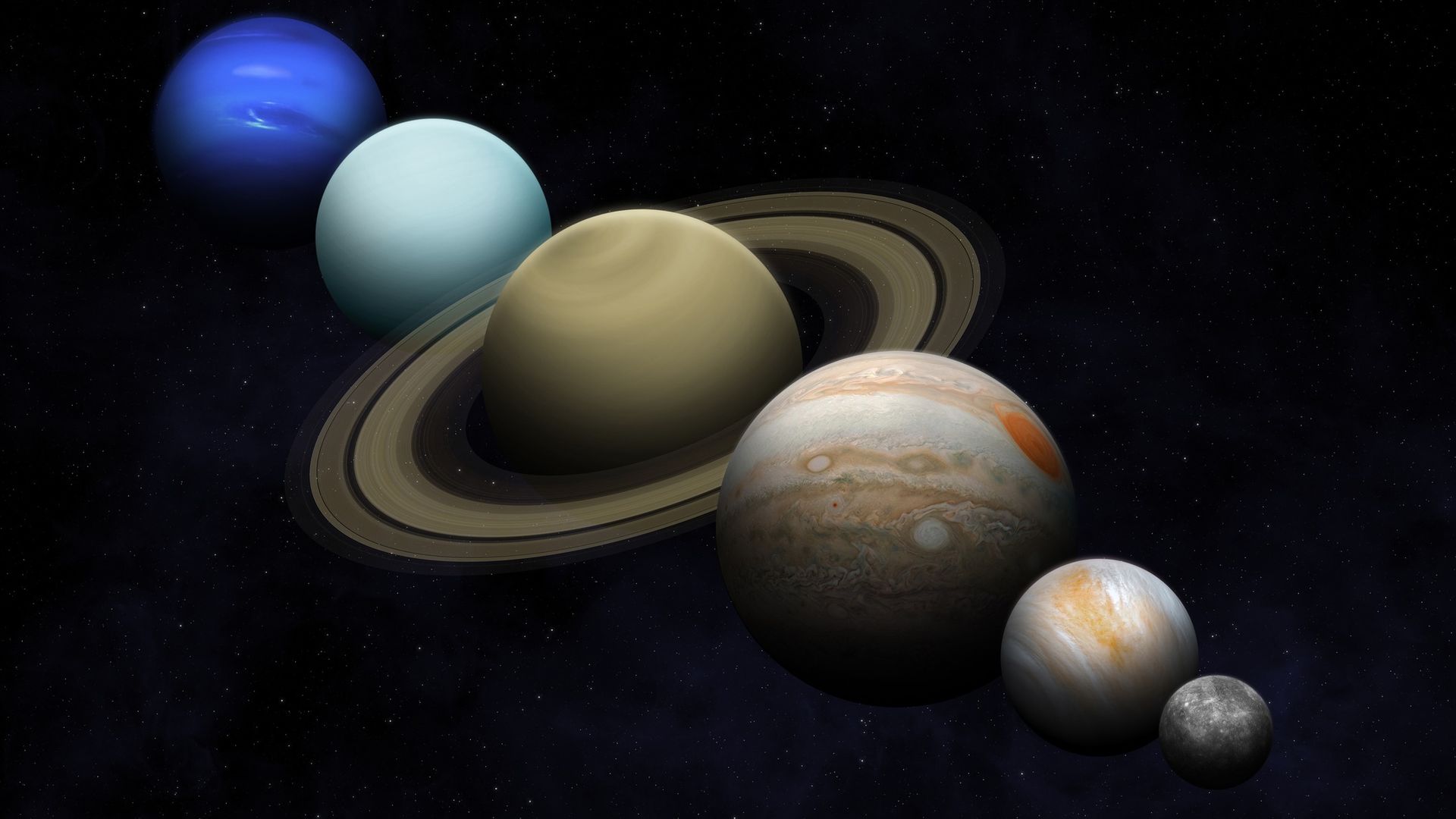
High above the damp rooftops of Manchester, the wind-swept ridges of the Peak District, and the quiet suburbs of Surrey, the gears of the solar system are grinding into a rare, silent alignment. We call it a planetary parade. It sounds like a carnival. In reality, it is a moment of profound cosmic synchronicity where six of our neighbors—Mercury, Mars, Jupiter, Saturn, Uranus, and Neptune—decide to occupy the same narrow corridor of the sky.
Most people will sleep through it. They will wake up, check their phones, and grumble about the drizzle. They will miss the moment the clockwork of the universe becomes visible to the naked eye.
The Dawn Patrol
Consider a woman named Elena. She isn’t an astronomer. She’s a nurse finishing a night shift in a hospital in Leeds. It is 4:45 AM. Her eyes are gritty, her coffee is cold, and the weight of a dozen human crises sits on her shoulders. As she walks to her car, she looks up.
Usually, she sees nothing but the glow of the M62. But this morning, the air is unusually crisp. The clouds have pulled back like a theater curtain.
There, hanging just above the eastern horizon, is a spark that looks too steady to be an airplane and too bright to be a star. That is Jupiter. It is the king of the gods, a gas giant so massive it could swallow 1,300 Earths, and right now, it is acting as a lighthouse for a weary woman in a car park.
To see the parade, you have to understand the geometry of our insignificance. The planets don't actually line up in a straight row like soldiers on a parade ground. They are spread across millions of miles of void. But from our tiny, spinning vantage point, they appear to gather. This is a perspective trick, a celestial "syzygy" that happens because the planets all orbit the sun on roughly the same flat plane, known as the ecliptic.
Think of it like standing on the edge of a giant record player. If you look across the spinning disc, every now and then, the various dust motes on the grooves will seem to stack up in your line of sight.
The Invisible Six
For those watching from the UK during this window, the challenge is the sun. Our star is a jealous god; it floods the sky with light the moment it rises, erasing the subtle glow of its children.
- Saturn: The first to arrive. It rises late in the night, a yellowish dot that looks unremarkable until you realize you are looking at a world adorned with rings of ice and rock. It sits high and lonely, waiting for the others.
- Neptune: The ghost. You won't see this one with your eyes. It requires binoculars and a dark sky, tucked between Saturn and Mars. It is a deep, freezing blue, a world so far away that sunlight there is a mere dim glimmer.
- Mars: The Red Planet. It follows Saturn, distinctive for its ruddy, unblinking tint. It looks like a drop of blood on the velvet of the night.
- Uranus: Another giant hiding in the shadows. Like Neptune, it is a challenge for the naked eye, but its presence in the line completes the architectural integrity of the parade.
- Jupiter: The anchor. Brightest of the lot. It sits low, commanding the horizon.
- Mercury: The messenger. This is the hardest one to catch. It sits so close to the sun that it only emerges for a heartbeat before the dawn swallows it whole.
For Elena, and for you, the window of opportunity is narrow. The best time to look is roughly an hour before sunrise. In the UK, depending on the time of year, this means being awake and outside when the rest of the world is a graveyard of dreams.
The Logistics of Wonder
I spent a night on a hill in the Cotswolds trying to find this alignment. The grass was wet enough to soak through my jeans within minutes. My breath came out in white plumes. I had a cheap pair of binoculars and a sky-mapping app that kept blinding me with its blue light.
I felt ridiculous.
Why stand in the cold to see dots of light that I could see in high-definition on a NASA website?
The answer came when I finally put the phone away and let my eyes adjust to the dark. It takes about twenty minutes for your pupils to fully dilate, for the chemical rhodopsin to build up and grant you "night vision." During those twenty minutes, the sky changes. It stops being a flat black sheet. It gains depth.
You start to notice the colors. Mars really is red. Not fire-truck red, but a burnt, ancient ochre. Saturn is pale, like old parchment. When you see them all stretched out in a line, you aren't just looking at lights; you are looking at the path of our solar system. You are seeing the "plane" of the ecliptic. For a fleeting second, the ground beneath your feet stops feeling like solid earth and starts feeling like a spaceship.
You feel the tilt of the Earth. You feel the speed of our orbit—67,000 miles per hour—as we hurtle through the dark. The parade isn't just a show; it's a map. It tells you exactly where you are in the neighborhood.
The Stakes of Looking Up
We are the first generation of humans to lose the night.
For thousands of years, our ancestors navigated by these lights. They told stories about them. They timed their harvests by them. They knew the planets like they knew the faces of their own children. Today, we know the logos on our apps better than the constellations above our heads.
There is a psychological cost to this. When we stop looking up, our world shrinks. It becomes bounded by our screens, our chores, and our local grievances. We become "flat-earth" thinkers, not in the conspiratorial sense, but in the emotional sense. We forget that we are part of a terrifying, beautiful, and massive system.
The planetary parade is a correction. It is a reminder that the world is bigger than your inbox.
If you want to see it, don't wait for a "perfect" night. In the UK, waiting for a perfect night is a recipe for a lifetime of disappointment. Go out when it’s "clear enough." Find a spot where the eastern horizon is low—away from tall buildings and dense woods. A coastal cliff is perfect. A high moor is better. Even a suburban park will do if you can get away from the direct glare of a streetlight.
The Physics of the Phantasm
People often ask if this alignment will cause disasters. Will the combined gravity of six planets pull the tides into a frenzy? Will it trigger earthquakes?
The short answer is no.
While the planets are massive, they are also incredibly far away. The gravitational pull of a passing delivery truck has more effect on your body than the gravity of distant Saturn. The "stakes" of a planetary alignment are not physical. They are existential.
The beauty of the parade lies in its fragility. Mercury moves so fast in its orbit that the alignment only lasts for a few days before the "line" breaks. It is a temporary gathering of giants. If you miss it, you might have to wait years for the next one of this scale.
There is a specific kind of silence that happens at 5:00 AM in the English countryside. The birds haven't quite started their frantic morning chorus. The traffic hasn't begun to hiss on the damp tarmac. In that silence, if you are looking at the parade, you can almost hear the ticking of the cosmic clock.
How to Hold the Moment
If you are standing out there, shivering, looking for these six worlds, remember that you are seeing history. Not just the history of the universe, but your own. Light from Saturn takes over an hour to reach your eyes. When you look at it, you are seeing the planet as it was while you were still finishing dinner. Light from the more distant giants has been traveling for hours.
You are a time traveler.
Do not try to take a photo with your phone. Unless you have a specialized lens and a tripod, you will only end up with a blurry, grainy image that looks like a smudge on a dirty window. It will never capture the feeling of the cold air or the scale of the void.
Instead, use your eyes. Use a pair of 10x50 binoculars if you have them. If you don't, just use your imagination to connect the dots. Draw the line in your mind from the horizon up toward the moon.
The Final Guard
As the sun begins to bleed into the sky, the parade will vanish.
One by one, the planets will be drowned in gold. Mercury will go first, slipping into the glare. Then Neptune and Uranus will fade back into the infinite. Mars and Saturn will linger like stubborn embers, and finally, Jupiter—the last holdout—will be extinguished by the day.
You will go back inside. You will put the kettle on. You will start your Tuesday or your Friday.
But you will carry something.
You will know that while you are typing an email or sitting in a meeting, those six worlds are still out there, locked in their silent, ancient dance. They don't care about our deadlines. They don't care about our politics. They simply exist, spinning in the dark, a reminder that we are part of something so vast it defies description.
The streetlamp outside my window is still humming. But the clouds are breaking. And somewhere out there, the giants are lining up.
Would you like me to help you find the specific coordinates and rising times for your exact location in the UK so you don't miss the next window?