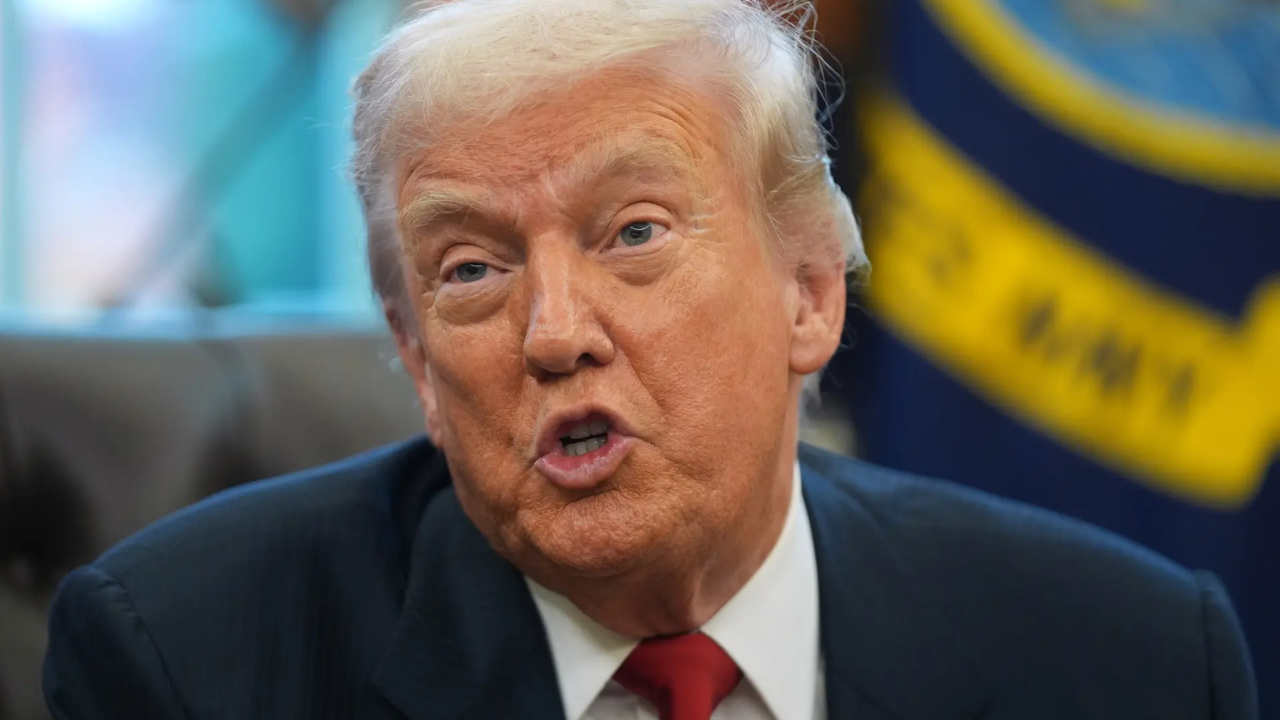
The Atlantic Alliance is currently facing its most severe existential crisis since 1949, not because of a Russian tank column, but because of a maritime chokepoint and a President who has lost his patience. On Friday, Donald Trump turned his rhetorical heavy artillery on NATO, branding the organization a "paper tiger" and labeling European allies as "cowards" for their refusal to join the U.S.-led military campaign against Iran. The timing of this outburst is not accidental. As the conflict enters its fourth week, the economic fallout is beginning to hurt, and the White House is looking for someone to shoulder the burden of a war that most of the world never wanted.
At the center of this dispute is the Strait of Hormuz, a narrow strip of water through which roughly 20% of the world’s petroleum flows. Since the joint U.S.-Israel strikes began on February 28, the waterway has become a graveyard for commercial shipping. Iran has effectively shuttered the passage with a mixture of missile strikes, drone swarms, and mine-laying operations. While the White House claims the war against Iran’s nuclear and military infrastructure is "militarily won," the global economy tells a different story. Brent crude is currently hovering near $110 a barrel, a 40% jump that is threatening to tip Europe into a deep recession.
The Strategic Divorce
The disconnect between Washington and Brussels has never been more visible. Trump’s "paper tiger" comment strikes at the heart of the NATO charter, specifically the concept of collective defense. However, the U.S. and Israel launched their strikes against Iran without consulting their European partners. This unilateralism has provided the legal and political cover for leaders like French President Emmanuel Macron and German Chancellor Friedrich Merz to stay on the sidelines.
From the European perspective, this is a "war of choice" rather than a defensive necessity. German Defense Minister Boris Pistorius was blunt earlier this week, stating simply, "It's not our war. We didn't start it." This sentiment is echoed across the continent, where public opinion is overwhelmingly against involvement. In the UK, Prime Minister Keir Starmer has faced massive domestic pressure to keep British hulls out of the line of fire, despite traditional "special relationship" ties.
The result is a fragmented alliance where the U.S. provides the overwhelming majority of the muscle while the allies provide little more than polite, often veiled, criticism. Trump’s "cowards" label is a direct response to this perceived freeloading. He argues that if Europe wants lower oil prices, they should be the ones to send their destroyers to clear the mines in the Strait.
A Conflict Without a Map
The military reality on the ground—and in the air—is a study in contradictions. U.S. officials claim that Iran’s conventional navy has been neutralized, with over 50 vessels allegedly destroyed in just two days of engagements. Yet, the asymmetrical threat remains potent. Iran’s Revolutionary Guard (IRGC) continues to launch strikes from mobile coastal batteries and hidden inland sites, making any attempt to "open" the Strait of Hormuz far more dangerous than the White House suggests.
- Oil Volatility: Energy prices are reaching levels that threaten the stability of the Eurozone.
- Legal Vacuum: International legal experts point out that the campaign likely violates the UN Charter, complicating any NATO involvement.
- Refugee Crisis: The strikes have already displaced millions, creating a new humanitarian wave that will inevitably break on Europe’s shores.
The U.S. is now preparing to deploy thousands of additional Marines and several more warships to the region. This suggests that despite the "mission accomplished" rhetoric coming from the Truth Social posts, the Pentagon is bracing for a long, grinding occupation or a naval blockade that could last months.
The Cost of the Empty Chair
By calling NATO a paper tiger, Trump is signaling that the U.S. might finally be ready to walk away from the post-war security architecture if the "one-way street" of American protection continues. For decades, the U.S. has grumbled about European defense spending. Now, that grumbling has turned into a public shaming on the world stage during an active shooting war.
The allies are in a bind. If they join the coalition, they risk becoming targets for Iranian retaliation—a threat Tehran has already made clear by warning the UK that providing bases for U.S. strikes is an act of aggression. If they stay out, they face the wrath of an American administration that is increasingly transactional and willing to let the alliance wither.
The irony is that the high oil prices Trump complains about are a direct result of the military action he initiated. By demanding the allies "clean up the mess," he is testing the structural integrity of NATO to its breaking point. If the alliance cannot find a common ground on a crisis that affects the global energy supply, its relevance as a security bloc may have already expired. The next few weeks will determine if NATO is indeed a tiger or just a collection of nations that no longer share a common objective.
Keep a close eye on the upcoming EU summit in Brussels for any sign of a "coalition of the willing" that might break away from the official NATO stance to provide maritime escorts.