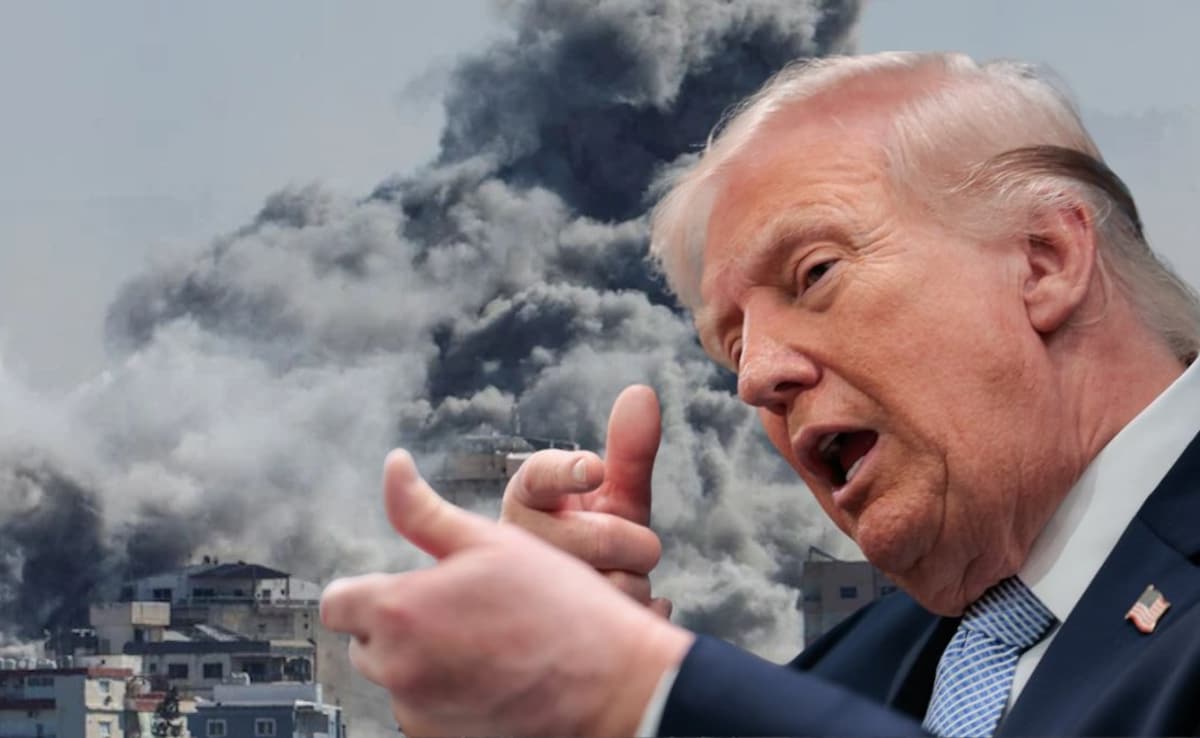
The headlines are screaming about troop deployments and "conquests." They are obsessed with the optics of American boots on the ground near the Iranian border. They want you to believe this is a chess move. It isn't. It is a desperate, expensive attempt to maintain a status quo that died a decade ago.
When Trump or any other commander-in-chief speaks about the US Army staying deployed near Iran, the media treats it like a prelude to a 1940s-style invasion. This is the first great lie. Modern warfare is not about holding dirt; it is about the cost of kinetic energy versus the cost of regional influence. Washington is currently spending billions to protect a geography that Iran has already effectively bypassed through asymmetric integration. Also making headlines in this space: The Combs Legal Strategy Anatomy of Federal Appellate Risk and Pretrial Detention.
The Myth of the Conquest
The phrase "next conquest" is political theater designed for a domestic audience that still thinks in terms of Risk board pieces. In reality, the US military presence in the Middle East is becoming a strategic liability rather than an asset. We are parked in the desert with the world's most expensive equipment, while Iran builds a "land bridge" using cheap drones, local proxies, and diplomatic maneuvers that don't require a single Iranian tank to cross a border.
Traditional military thinkers love to talk about "deterrence." They think if you put enough Abrams tanks in a row, the other guy stops moving. I have spent years analyzing regional defense budgets and procurement cycles, and the data tells a different story. For every dollar the US spends on maintaining a carrier strike group or a forward operating base, Iran spends about ten cents on a swarm of Shahed drones or a local militia's payroll. Additional insights on this are detailed by The Guardian.
Deterrence is failing because the cost-benefit analysis is broken. We are using $2 million missiles to shoot down $20,000 drones. That isn't a strategy. It's a slow-motion bankruptcy.
Why Geography No Longer Matters
The "lazy consensus" among pundits is that troop placement equals power. It doesn't. We are obsessed with the Strait of Hormuz and the physical borders of Iraq and Syria. Meanwhile, Tehran has mastered the art of "gray zone" warfare.
Imagine a scenario where the US has 50,000 troops stationed around Iran. On paper, Iran is surrounded. In practice, those 50,000 troops are 50,000 targets. They require massive logistics chains, constant protection, and enormous political capital to maintain. Iran, conversely, operates through a decentralized network. They don't need to "conquer" Baghdad or Damascus; they just need to make sure those governments are more afraid of Tehran than they are of Washington.
They have succeeded.
The Logistics of Obsolescence
The US Army is the finest fighting force in history for a war that occurred in 1991. Today, our "forward-deployed" posture is a relic. The Pentagon continues to prioritize "presence" over "utility."
- Fixed Bases: These are essentially stationary targets for precision-guided munitions.
- Carrier Groups: Heavily defended, but one lucky hit from a hypersonic missile changes the global power dynamic overnight.
- Heavy Armor: Irrelevant in an environment defined by urban insurgency and cyber-warfare.
The obsession with staying "near Iran" ignores the fact that Iran is already everywhere else. They are in the Mediterranean via Hezbollah. They are at the Bab el-Mandeb strait via the Houthis. They are in the halls of power in Baghdad. Keeping troops in a desert camp doesn't stop a fiber-optic cable from carrying a cyberattack or a political payoff from flipping a local official.
The Conquest Fallacy
When politicians talk about "conquest," they are feeding a fantasy of total victory. But look at the history of the last twenty years. We "conquered" Iraq. We "conquered" Afghanistan. How did that work out for the balance of power?
Every time the US removes a local strongman or destabilizes a regime, it creates a vacuum. In the Middle East, Iran is the world's best vacuum cleaner. They don't need to fire a shot to expand their influence; they just wait for us to break things and then they move in to fix the plumbing.
The real conquest isn't military. It's the slow, methodical construction of a regional infrastructure that excludes the West. China is helping them build it. Russia is providing the diplomatic cover. While we argue about troop levels, they are building pipelines and trade routes that make our sanctions regime look like a sieve.
The High Price of "Standing Firm"
The contrarian truth is that the US would be infinitely more powerful if it left.
By staying, we provide a unifying enemy for disparate groups. We provide a target for every radical with a rocket launcher. We shoulder the entire cost of regional security while our "allies" hedge their bets and sign energy deals with our rivals.
If the US pulled back to a "horizon-based" strategy—using long-range precision strikes and naval dominance from a distance—we would force the regional players to actually deal with each other. Right now, Saudi Arabia, the UAE, and Israel can afford to be aggressive because they know the US taxpayer is footed the bill for the ultimate defense. Remove that safety net, and you’ll see how quickly "conquest" turns into "negotiation."
Dismantling the "People Also Ask" Nonsense
People ask: "Will there be a war with Iran?"
The honest answer: We have been at war with Iran since 1979. It just doesn't look like the wars you see in movies. It’s a war of attrition, subversion, and economic sabotage.
People ask: "Can the US Army defeat Iran?"
Technically, yes. We could turn every Iranian city into a crater. But then what? We would own the most radioactive, hostile territory on earth, and we’d have to stay there for fifty years to manage the fallout. Victory in the 21st century isn't about destroying the enemy; it's about making the enemy's strategy irrelevant. We are doing the opposite. We are playing directly into their hands by staying exactly where they can hit us.
The Intelligence Gap
We also suffer from a profound lack of cultural intelligence. Our planners see Iran as a "rogue state" or a "ticking time bomb." They fail to see it as a rational actor playing a very long game. The Iranian leadership isn't looking for a "conquest" in the sense of a Roman triumph. They are looking for "hegemony"—the ability to dictate the terms of regional existence.
They are winning because they are patient. We are losing because we operate on four-year election cycles. Every time a new administration comes in, we flip-flop on our Iran policy. We sign a deal, then we rip it up, then we threaten a war, then we send a "stay deployed" memo. This inconsistency is a gift to Tehran. It makes the US look like an unreliable partner and a confused bully.
The Hard Truth About Regional Alliances
We talk about our "allies" in the region as if they are a unified front against Iranian expansion. They aren't. They are customers. They buy our weapons to maintain their own internal power structures. Many of them are already making back-channel deals with Tehran because they can see the writing on the wall. They know the US interest in the Middle East is waning as we pivot to the Pacific.
The "staying deployed" rhetoric is a ghost story we tell ourselves to feel relevant. We are terrified of what happens if we leave, so we stay and bleed resources in a theater that provides diminishing returns.
If we actually wanted to "conquer" the challenge of Iran, we would stop focusing on the number of soldiers in Kuwait and start focusing on energy independence and technological dominance. As long as the world runs on oil that flows past Iranian-controlled chokepoints, they have the leverage. Our Army is just a very expensive security guard for a building that's already being looted from the back door.
The military-industrial complex thrives on the "Iran threat." It justifies the next generation of bombers, the next round of carrier upgrades, and the continued existence of massive overseas bureaucracies. But as a strategy, it is a failure. We are defending a map that doesn't exist anymore.
Stop looking at the troop movements. Start looking at the bank accounts and the drone factories. That's where the real war is being lost.