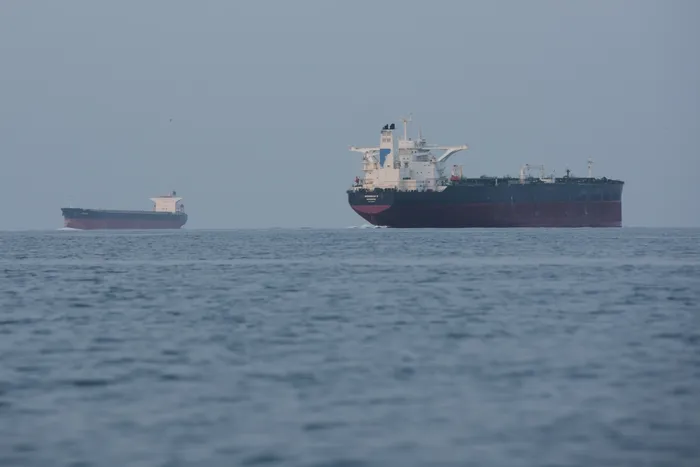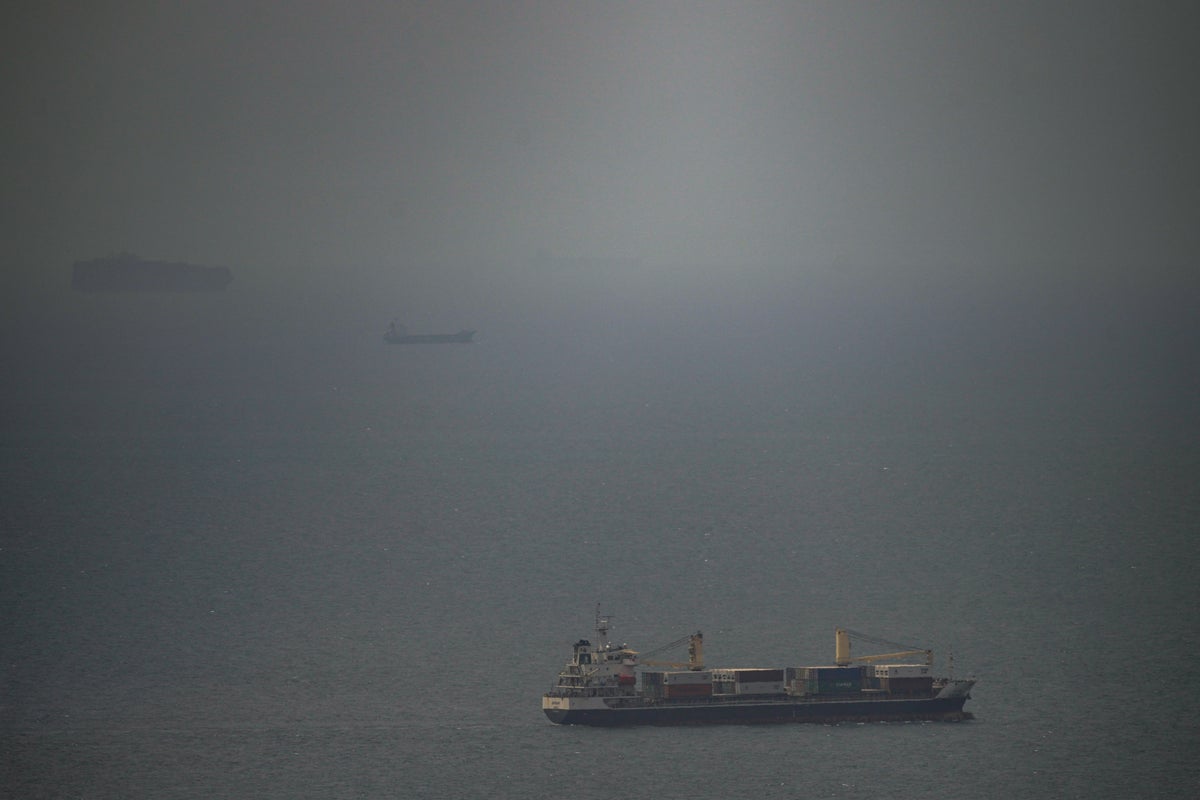
The air in the bridge of a supertanker doesn’t smell like the ocean. It smells like recycled oxygen, burnt coffee, and the faint, metallic tang of anxiety. Beneath your feet, three hundred thousand tons of crude oil—the literal lifeblood of global civilization—pulses through the hull. Outside the reinforced glass, the Persian Gulf stretches out in a flat, deceptive turquoise. You are currently transiting the Strait of Hormuz. It is twenty-one miles wide at its narrowest point. On a map, it looks like a throat.
Right now, that throat is tightening.
In the late 1980s, mariners in these same waters scanned the horizon for the white wake of an Iranian Boghammar speedboat or the sudden, jagged splash of a sea mine. Today, the crew of a modern vessel looks for something much smaller and more silent: a loitering munition, a "suicide drone" humming with the persistence of a hornet, or a cyber-signal designed to ghost their GPS coordinates.
The question echoing through the halls of the Pentagon and the boardrooms of global shipping giants isn't just whether the United States can protect these ships again. It is whether the tactics of the past have any teeth left in a world where the weapons have become smarter, cheaper, and far more chaotic.
The Iron Shadow of 1987
To understand the stakes, you have to look back at a time when the world almost ran dry. During the "Tanker War" phase of the Iran-Iraq conflict, neutral ships were being picked off like slow-moving targets in a shooting gallery. The solution was Operation Earnest Will. It was the largest naval convoy operation since World War II. The U.S. Navy didn't just patrol the area; they effectively annexed the tankers. They re-flagged Kuwaiti ships with the Stars and Stripes, surrounding these lumbering giants with destroyers and cruisers.
It was a display of brute, industrial-age force. If you touched the cargo, you touched the United States.
Consider the sheer physical presence of a Cold War-era cruiser. It was a statement in steel. When the USS Samuel B. Roberts struck an Iranian mine in 1988, nearly breaking in half, the American retaliation—Operation Praying Mantis—was swift and devastating. The U.S. destroyed two Iranian surveillance platforms and sank or crippled six vessels. For a generation, that memory served as a structural floor for global trade. It established a rule: the flow of oil is sacrosanct.
But the ghost of the '80s is haunted by a new reality. Brute force is a clumsy tool against an enemy that doesn't want to sink you, but merely wants to make your insurance premiums so high that you stop sailing altogether.
The Geometry of the Bottleneck
The Strait of Hormuz is a geographic nightmare for a traditional navy. It is a "brown water" environment where the advantages of a massive carrier strike group are neutralized by proximity. You cannot use long-range sensors effectively when the enemy is launched from a jagged coastline only a few miles away.
Imagine trying to defend a hallway while someone stands in the dark at the far end, throwing handfuls of gravel. You might block most of it, but eventually, a pebble hits home.
In the 1980s, the threat was identifiable. You saw the silhouette of a frigate. You tracked the radar signature of a Silkworm missile. Today, the threat is asymmetric. Iran has perfected the art of "swarm" tactics. Instead of one large ship, they deploy dozens of fast, armed boats. Instead of an expensive missile, they use a drone that costs less than a mid-sized sedan.
The math is terrifyingly simple. A standard SM-2 interceptor missile used by the U.S. Navy costs over $2 million. The drone it is shooting down might cost $20,000. You can win every tactical engagement and still lose the economic war of attrition.
The Invisible Minefield
History isn't just repeating; it’s being rewritten in code. While the 1980s were defined by physical contact—mines tearing through hulls—the modern conflict is defined by the disruption of reality.
Electronic warfare is the new minefield. In recent years, tankers in the region have reported "spoofing" incidents where their onboard systems suddenly place them miles away from their actual location, sometimes even in Iranian territorial waters. For a captain navigating a narrow channel, this is the equivalent of someone walking into a dark room and moving all the furniture while you’re trying to find the door.
If a tanker "accidently" veers into sovereign waters because its sensors were hijacked, the legal and political fallout is a weapon in itself. You don't need to fire a shot to seize a vessel and hold the global energy market hostage.
This is where the human element becomes most fragile. We often talk about these geopolitical moves as if they are a game of chess played by grandmasters in Washington or Tehran. But the pieces on the board are human beings. They are merchant mariners from the Philippines, India, and Ukraine who didn't sign up for a combat tour. When a drone strikes the bridge of a ship, it isn't "interdicting a supply line." It is killing a father of three who was just trying to finish his shift.
The Burden of the Escort
If the U.S. were to restart a full-scale convoy system today, the logistics would be staggering. In 1987, the Navy was significantly larger. Today, the fleet is stretched thin across the Pacific, the Mediterranean, and the Atlantic.
To protect the roughly 20 million barrels of oil that pass through Hormuz every day, you would need a permanent, revolving door of combatants. But modern ships are more complex and require more maintenance than their predecessors. You can’t just "park" a destroyer in the Gulf for a year.
Furthermore, the technology of the "shield" has to be perfect every single time. The "sword" only has to be lucky once.
Think about the psychological toll on a crew. In a convoy, you are tethered to a target. You are moving at the speed of the slowest tanker, waiting for a signal on a screen to tell you that a swarm is approaching. It is a war of nerves. The U.S. Navy’s current strategy leans toward "International Maritime Security Constructs"—a fancy way of saying they want everyone to chip in. But when the drones start flying, many nations find reasons to be elsewhere.
The Cost of Silence
We live in a world of "just-in-time" delivery. Your gas station, your plastic manufacturer, your grocery store—they all rely on the assumption that the Strait of Hormuz remains an open pipe.
If that pipe clogs, the result isn't just a rise in gas prices. It is a systemic shock. We saw a micro-version of this when the Ever Given got stuck in the Suez Canal. Now, imagine that blockage wasn't an accident, but a deliberate act of war supported by state-of-the-art missile batteries and thousands of sea mines.
The U.S. could certainly win a conventional war in the Gulf. There is no doubt about the lethality of American fire-power. But the goal of a protector isn't to win a war; it is to prevent one. In the '80s, the presence of a U.S. flag was a deterrent. It was an invisible shield.
Today, that shield feels more like a lightning rod.
As technology democratizes destruction, the era of the "uncontested sea" is ending. The massive, billion-dollar platforms of the West are being challenged by the "cheap and many." It is a paradigm shift that makes the courage of the 1980s sailors seem almost quaint. They knew where the enemy was. They knew what a mine looked like.
The modern sailor looks at a clear blue sky and wonders if the tiny speck on the radar is a bird, a hobbyist’s toy, or the end of their world.
There is a specific kind of silence that happens on a ship when the engines stop. It is heavy. It is the sound of a heartbeat in a vacuum. If the U.S. steps back into the role of the global convoy leader, it will be stepping into that silence, waiting for the sound of a drone motor to break it.
We are no longer just protecting ships. We are trying to protect the very idea that the oceans belong to everyone, and not just to whoever has the most expendable robots. It is a lonely, expensive, and terrifying job. And as the ghosts of the Tanker War remind us, once you start the engines of a convoy, there is no easy way to turn them off.
The phosphorus in the water glows behind the wake of a retreating patrol boat, a neon trail in the dark. It is beautiful, until you realize it’s the only thing you can see in the blackness of the Strait.
We are waiting for the first spark. We are hoping it never comes. But in the narrow throat of the world, hope has never been a very effective weapon.