Ireland is no longer just a scenic stopover for Indian tech talent or a convenient tax gateway into the European Union. While the diplomatic rhetoric often lingers on shared colonial histories and the fact that an Irishman, Eamon de Valera, once looked to India’s independence movement for inspiration, the modern reality is far more transactional and high-stakes. The relationship has shifted from sentimental kinship to a cold, calculated economic engine.
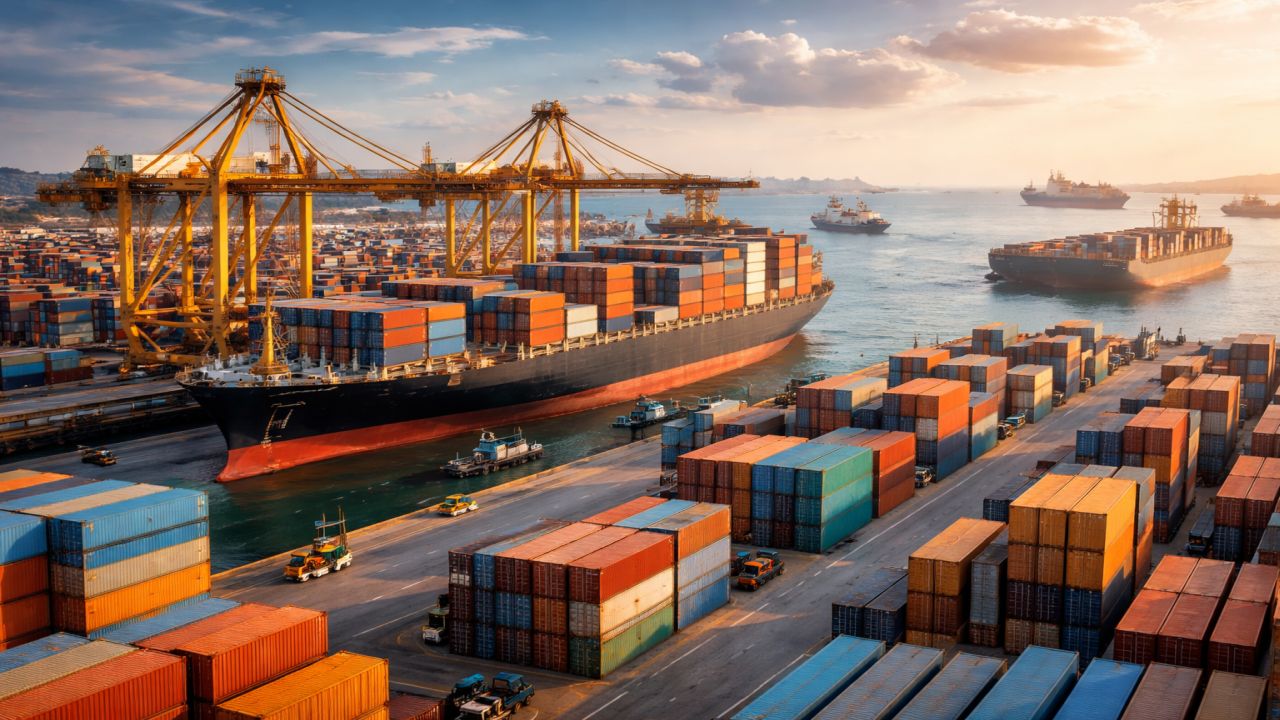
The numbers tell a story of lopsided but aggressive growth. We are seeing a surge in bilateral trade that reached nearly €10 billion recently, but the mechanics of this growth are often misunderstood. It isn’t just about software exports or generic pharmaceuticals. It is about a strategic alignment where Dublin serves as the sophisticated laboratory for Indian multinational expansion, while New Delhi provides the massive scale and human capital that Ireland’s aging, limited workforce can no longer sustain on its own.
The Silicon Docks and the Bangalore Connection
Dublin’s Grand Canal Dock is thick with the logos of American tech giants, but look closer at the talent pool and the funding rounds. Indian investment into Ireland is quietly diversifying. It isn't just Tata Consultancy Services or Infosys anymore. We are seeing a new wave of Indian fintech and medtech firms using Ireland as their regulatory sandbox.
Ireland offers something India desperately needs: a stable, English-speaking foothold in the EU with a legal system that Indian corporations find familiar. For an Indian firm, setting up in Dublin is a hedge against the volatility of global trade wars. If the United States tightens visa restrictions or if direct trade with certain EU member states becomes bogged down in bureaucracy, the Irish subsidiary remains the "golden ticket" to the Single Market.
But this is not a one-way street. Irish companies in the agritech and renewable energy sectors are hunting for "India-scale" opportunities. When an Irish firm develops a new method for waste-to-energy conversion, the Irish market—with its five million people—is too small to provide a return on investment. They need the 1.4 billion people in India to prove their tech can work at a global level. This is the "why" behind the diplomatic handshakes. It is about survival through scaling.
Education as the New Export
For decades, the United Kingdom was the default destination for the Indian middle class seeking global credentials. That has changed. Brexit turned the UK into a complicated, expensive, and often unwelcoming headache for international students. Ireland stepped into that vacuum with surgical precision.
The number of Indian students in Irish universities has tripled in less than a decade. This isn't just about tuition fees. It is a long-term play for human capital. Ireland’s "Third Level Graduate Programme" allows non-EU students to stay and work for up to two years after graduation. In practice, this serves as a highly efficient recruitment pipeline for the multinational corporations headquartered in Dublin and Cork.
We have to be honest about the friction here. Ireland is currently gripped by a brutal housing crisis. Bringing in thousands of high-skilled workers and students every year without building the necessary apartments has created a simmering tension. The "strength to strength" narrative touted by diplomats often ignores the fact that an Indian software engineer moving to Dublin might spend 50% of their salary on a cramped studio apartment. If Ireland cannot fix its infrastructure, the brain drain will reverse, and the talent will look toward Germany or back to a rapidly developing Bangalore.
The Pharmaceutical Bridge
Ireland is one of the world’s largest exporters of medicinal products. India is the "pharmacy of the world." On paper, they should be competitors. In reality, they have become deeply interdependent.
Indian pharmaceutical giants like Wockhardt and Reliance are not just selling pills in Ireland; they are investing in manufacturing plants on Irish soil. They do this to gain the "Made in Europe" stamp, which carries immense weight in global markets. Simultaneously, Irish specialized logistics firms are the ones ensuring that temperature-sensitive Indian vaccines reach African and European markets safely.
This sector highlights the "how" of the partnership. It works through a division of labor. India handles the high-volume, cost-effective primary production, while Ireland handles the high-value R&D, patent protection, and complex biological manufacturing. It is a sophisticated supply chain that remains invisible to the average consumer but keeps the global healthcare system functioning.
Bypassing the Bureaucracy
Doing business in India has historically been a nightmare of "red tape" and shifting regulations. Irish firms have succeeded where others failed by leaning into the "small nation" advantage. Ireland doesn't carry the geopolitical baggage of a former imperial superpower or a global meddler.
When Irish trade missions land in Delhi or Mumbai, they aren't there to lecture. They are there to find niches. This has allowed Irish companies in the aviation leasing sector—a field where Ireland is a world leader—to dominate the Indian market. Nearly every major Indian airline, from Indigo to Air India, operates aircraft that are owned or managed by firms based in Dublin.
The mechanism is simple: Irish tax treaties and specialized legal frameworks for asset-backed secularization make it the most efficient place on earth to lease a plane. India’s aviation sector is the fastest-growing on the planet. Without Irish capital and leasing structures, the Indian aviation boom would likely stall under the weight of massive debt and high interest rates.
Cultural Capital and the Diaspora
The Indian diaspora in Ireland is small compared to the US or UK, but its influence is disproportionately high. We see this in the political sphere, most notably with Leo Varadkar, but the real impact is in the professional services. Indian doctors are the backbone of the Irish Health Service Executive (HSE). Without them, the Irish healthcare system would likely face a total collapse within weeks.
This creates a unique form of "soft power." When the Irish Ambassador speaks of a relationship going from "strength to strength," he is acknowledging a debt of gratitude. Ireland needs Indian professionals to keep its hospitals running and its tech sector innovating. India needs Ireland to act as its sophisticated gateway to the West.
The Risk of Over-Reliance
Every veteran analyst knows that "strength" can quickly turn into a "single point of failure." Ireland’s economy is heavily concentrated in a few sectors: tech, pharma, and finance. India’s presence in Ireland is concentrated in those exact same areas.
If a global minimum corporate tax rate—pushed by the OECD—erodes Ireland’s competitive edge, will Indian firms stay? The answer depends on whether Ireland can evolve from being a tax-efficient entry point into a true innovation hub. Similarly, if India’s internal politics lead to increased protectionism, the Irish firms currently banking on Indian expansion will find themselves locked out of the world’s most populous market.
The relationship is currently in a "honeymoon phase" of rapid growth, but the next decade will require more than just friendly rhetoric. It will require physical infrastructure in Ireland and regulatory transparency in India. The two nations are currently tied together by a series of high-tension wires. They are supporting each other, but the pressure is mounting.
The Aviation Pivot
While most eyes are on software, the real "hard-hitting" growth is in the sky. Ireland manages or owns approximately 50% of the world’s leased aircraft. As India orders hundreds of new jets from Boeing and Airbus to satisfy its growing middle class, Dublin is the silent partner in every transaction.
This isn't just about finance; it's about technical expertise. Irish firms are now setting up MRO (Maintenance, Repair, and Overhaul) facilities and training centers in India. They are exporting the "Irish Model" of aviation management to the subcontinent. This creates a deep-rooted institutional link that is much harder to break than a simple trade agreement. It embeds Irish standards into the very fabric of Indian infrastructure.
A Transactional Future
The days of Ireland and India bonding over shared history are fading. The new era is defined by the flow of data, the leasing of turbines, and the migration of highly specialized medical professionals. It is a partnership built on a mutual realization: Ireland is too small to stay relevant alone, and India is too big to be ignored, but still needs a sophisticated partner to navigate the complexities of the Western regulatory environment.
The "strength" of the relationship is actually a form of mutual necessity. Ireland provides the legal and financial "hardware," while India provides the intellectual and industrial "software." As long as those two components remain compatible, the axis will continue to spin. However, any glitch in Ireland’s housing market or India’s regulatory stability could send the whole system into a tailspin.
Watch the aviation leasing data and the graduate visa numbers. Those are the only metrics that actually matter in this relationship. Everything else is just diplomacy.
Investigate the upcoming shifts in EU data privacy laws. If Ireland is forced to tighten its data regulations beyond what Indian tech firms can tolerate, we may see a sudden migration of "Irish" subsidiaries to more lenient jurisdictions like Cyprus or Malta. The loyalty of capital is non-existent; it only seeks the path of least resistance.