The fog over the English Channel doesn’t just hide the coastline; it swallows the distinction between service and betrayal. For decades, the men who stand on those docks—the ones in the thick wool jumpers or the crisp uniforms of the Border Force—are the human gatekeepers of a nation’s sovereignty. We trust them because they have been forged in the fires of the Royal Marines. We trust them because they have sworn oaths that most of us only ever see in movies.
But trust is a fragile currency. It can be traded. It can be devalued. And in the case of Matthew Trickett and his associates, it appears it was sold to the highest bidder in the Far East.
This isn’t a simple story of a "bad apple." It is a window into the "grey zone," a modern theater of conflict where the front lines aren't trenches, but bank transfers, encrypted messaging apps, and the quiet surveillance of political dissidents on British soil. When a former commando is accused of spying for a foreign power, the shock isn't just about the crime. It’s about the erosion of the invisible shield that keeps a society feeling safe.
The Mechanics of the Deep Stake
Imagine a man who knows exactly how the UK’s borders work. He knows the blind spots of the radar. He knows the protocol for when a "person of interest" steps off a plane at Heathrow or a ferry at Dover. Now, imagine that man takes that internal map and hands it to an intelligence service in Hong Kong or Beijing.
That is the nightmare scenario.
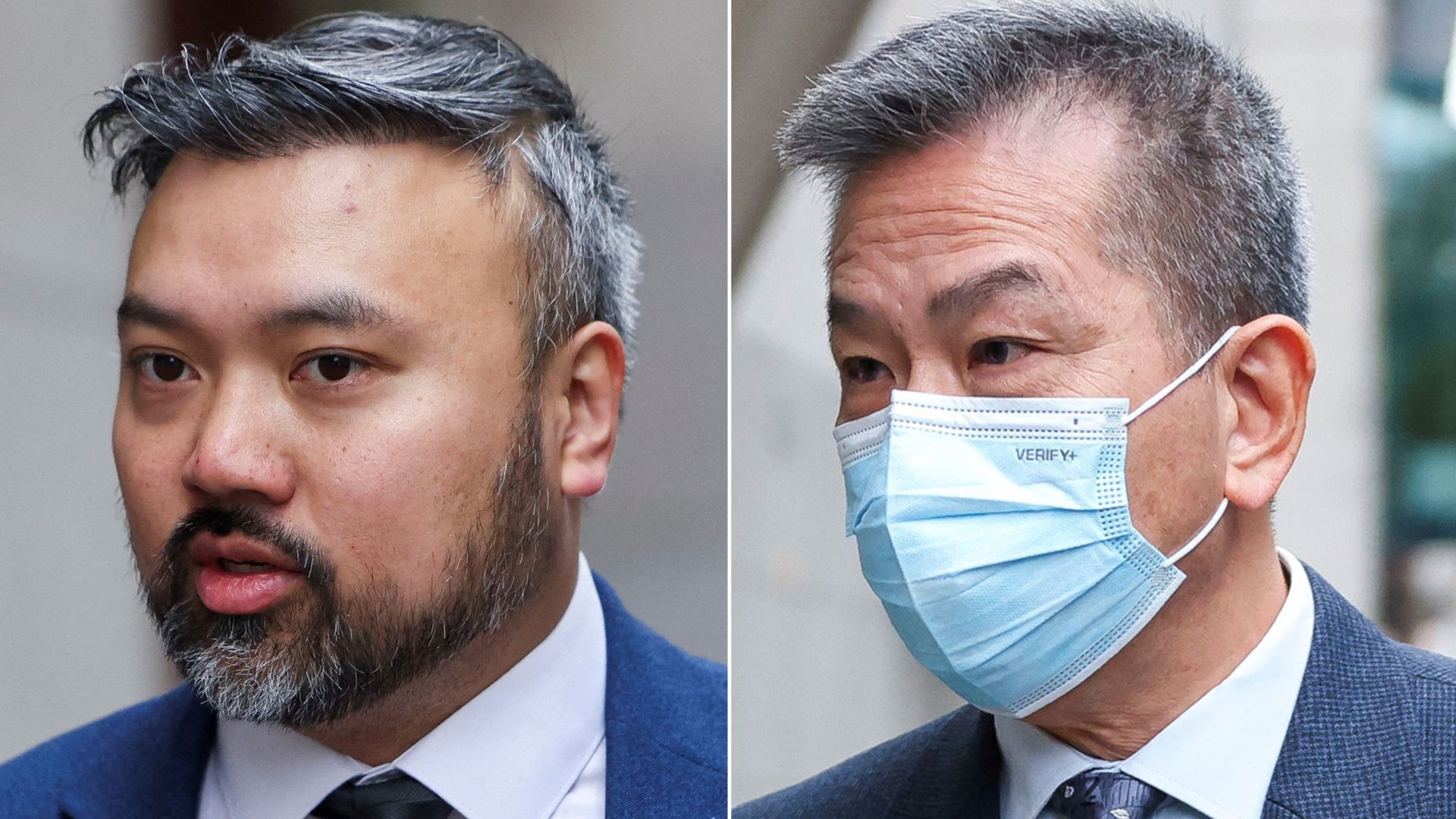
The allegations against Trickett, a former Royal Marine, and Bill Yuen, a high-ranking Hong Kong economic official, involve more than just passing documents. They involve "shadow policing." This is a clinical term for a terrifying reality: foreign agents operating on British streets to intimidate, track, and silence people who have fled authoritarian regimes.
Consider the perspective of a pro-democracy activist who moved from Hong Kong to a quiet suburb in Surrey. They left behind the tear gas and the midnight knocks on the door for the promise of British liberty. They walk to the grocery store, thinking they are finally under the protection of the Crown. But in the rearview mirror of a parked car, a pair of eyes is watching. Those eyes belong to someone who knows the system. Someone who used to be one of the "good guys."
The stakes are personal. They are visceral. When the machinery of the state is turned against the very people it is meant to protect, the social contract doesn't just bend. It snaps.
The Recruitment of the Elite
How does a man go from the "Per Mare, Per Terram" (By Sea, By Land) motto of the Marines to sitting in a dock at Westminster Magistrates' Court?
The transition is rarely a sudden leap. It is a slow, quiet drift. Intelligence agencies don't usually approach a target and ask them to commit treason on day one. They start with "consulting." They ask for a bit of logistical help. They offer a "research fee" for information that seems almost public. They build a relationship based on the one thing a retired serviceman often misses most: being needed.
In the world of private security, the line between legitimate surveillance and illegal foreign interference is often blurred by a paycheck. For Trickett, who ran a private security firm, the lure of "foreign interest" might have looked like a lucrative contract in a competitive market.
But the "interest" wasn't business. It was statecraft.
The Chinese intelligence model is patient. Unlike the flashy, high-stakes gambles of the Cold War era, modern influence operations are about accumulation. They want a piece of the border here. A list of names there. A quiet observation of a protest in London. Individually, these are pebbles. Collectively, they are an avalanche that buries the integrity of the host nation.
The Invisible War in Plain Sight
We often think of spying as something that happens in the dark, behind the closed doors of an embassy. But the allegations in this case suggest something far more brazen. The "shadow policing" occurred in our parks, our community centers, and our digital spaces.
The UK government has been forced to reckon with the reality that "overseas police stations" are not a conspiracy theory. They are a logistical reality used to monitor the diaspora. When you combine that infrastructure with the expertise of a former UK Border Force officer, you create a surveillance apparatus that is almost impossible to evade.
The technology involved isn't just James Bond gadgets. It is the mundane use of location tracking, social engineering, and the exploitation of official databases. If a Border Force officer has access to travel manifests, they can tell a foreign handler exactly when a dissident's family is arriving. They can tell them which hotel they are staying in. They can make the world feel very small and very dangerous for someone who thought they had found sanctuary.
The Cost of Cold Reality
When the news broke, the reaction was a mix of fury and a strange, hollowed-out disappointment. There is a specific kind of pain reserved for the betrayal of a "brother-in-arms." The Royal Marines are a brotherhood defined by an uncompromising code. To see that code allegedly traded for the interests of a regime that views those same values as a threat is a bitter pill for the veteran community.
But the real cost isn't felt in the barracks. It’s felt in the homes of the refugees who now have to check their locks twice. It’s felt by the civil servants who now look at their colleagues with a flicker of unbidden suspicion.
The tragedy of the "shadow police" is that it turns the neighborhood into a theater of war. It forces us to ask: Who is really watching?
The case of the ex-Marine is a klaxon. It is a warning that the "grey zone" has moved into the "green zone" of our daily lives. The borders we think are secure are being bypassed not by boats, but by the quiet subversion of the people we hired to guard them.
The fog in the Channel is still there. It's just that now, we know there are eyes in the mist that aren't looking out for us. They are looking for the ones we promised to hide.
The courtroom was quiet when the charges were read, a stark contrast to the noise of the headlines. In that silence, the gravity of the situation sat heavy in the air—the realization that a uniform can be shed, but the damage done while wearing it lasts a lifetime. The man in the dock looked like any other person you might pass on the street, which is perhaps the most unsettling part of the entire affair. Treason doesn't always wear a cape; sometimes, it just wears a suit and carries a briefcase full of secrets that were never meant to be sold.