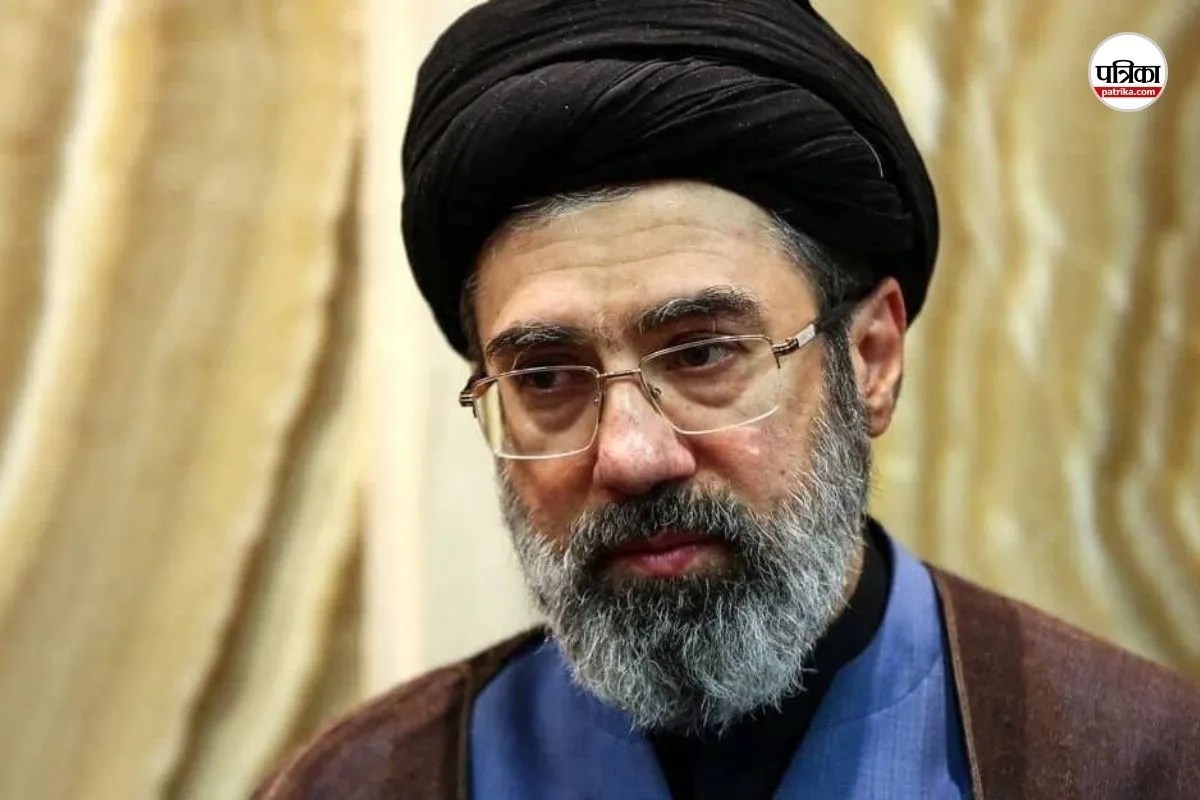
The rumors regarding the succession of Supreme Leader Ali Khamenei are no longer confined to the hushed corridors of Qom or the whispered conversations of the Iranian diaspora. They have moved into the light. Recent reports suggest that Mojtaba Khamenei, the second son of the current Supreme Leader, has been formally positioned to take the mantle. This is not a simple hand-off of power. It is a calculated restructuring of the Islamic Republic’s foundational DNA.
For decades, the Islamic Republic prided itself on a system that, while far from democratic, rejected the hereditary monarchical rule it overthrew in 1979. By elevating Mojtaba, the clerical establishment is effectively signaling that survival now outweighs ideology. The move toward Mojtaba is a desperate attempt to ensure continuity in a period defined by internal dissent and external pressure. If you enjoyed this post, you might want to check out: this related article.
The Architect in the Shadows
Mojtaba Khamenei is not a public figure in the traditional sense. You will not find him giving televised speeches or cutting ribbons at infrastructure projects. His power is subterranean. Over the last two decades, he has quietly consolidated control over the Office of the Supreme Leader (Beit-e Rahbari), the nerve center that sits above the presidency, the parliament, and the judiciary.
His influence over the Islamic Revolutionary Guard Corps (IRGC) is perhaps his most potent asset. While the President of Iran manages the bureaucracy, the IRGC manages the guns and the money. Mojtaba’s relationship with the intelligence apparatus and the Basij militia is not merely administrative; it is operational. He was widely credited—or blamed—for the brutal suppression of the 2009 Green Movement, a moment that proved he possessed the stomach for the violence required to maintain the status quo. For another angle on this story, check out the recent coverage from NBC News.
The Death of Ebrahim Raisi and the Vacuum of Power
The path to the leadership was not always this clear. Until his death in a helicopter crash in May 2024, Ebrahim Raisi was the consensus choice for the succession. Raisi was the perfect vessel: a hardline loyalist who lacked a personal power base, making him easy to manage. His sudden removal from the board created a vacuum that the regime was not prepared to fill with another placeholder.
With Raisi gone, the Assembly of Experts—the body officially charged with selecting the next leader—found themselves staring at a shortlist of one. The speed with which the rumors of Mojtaba’s selection have solidified suggests that the decision was made not in a formal vote, but in private meetings between the Khamenei inner circle and the IRGC top brass. The IRGC prefers a known quantity. They prefer someone who is already integrated into their financial and security networks. Mojtaba is that person.
The Theological Hurdle
The biggest obstacle to Mojtaba’s rise is not political, but religious. The Supreme Leader is supposed to be a Marja’, a high-ranking cleric with the authority to issue religious decrees. Mojtaba lacks these credentials. For years, there has been a concerted effort to "fast-track" his religious standing, with reports of him teaching advanced seminars in the seminaries of Qom.
However, the senior Ayatollahs in Qom remain skeptical. Many view the prospect of a father-to-son transition as a betrayal of the 1979 Revolution’s promise to end the Pahlavi-style monarchy. If Mojtaba takes power, it will represent the final triumph of the security state over the clerical state. The "Republic" will be gone, replaced by a military-clerical hybrid that uses the veneer of religion to justify a dynastic security apparatus.
A System Built on Selective Loyalty
To understand how Mojtaba operates, one must look at the Setad, the massive economic conglomerate controlled directly by the Supreme Leader. This entity, worth tens of billions of dollars, operates outside the oversight of the Iranian parliament. Mojtaba has been instrumental in directing these funds to reward loyalists and starve dissidents.
This is not a business model based on growth; it is a business model based on siege management. By controlling the flow of capital, Mojtaba ensures that the elite remain tethered to the survival of the Khamenei line. If the father falls, the son provides the only guarantee that their assets will not be seized by a new, more democratic government.
The Risks of a Forced Succession
There is no guarantee that this transition will be smooth. The Iranian public is currently dealing with a crippled economy, a devalued currency, and the trauma of the "Woman, Life, Freedom" protests. A hereditary succession could be the spark that reignites the streets. The legitimacy of the regime is at an all-time low, and the sight of a son taking his father’s throne may be more than the population is willing to endure.
Furthermore, there is the risk of internal fracturing. Within the IRGC, there are factions. Not everyone is enamored with the idea of a Khamenei dynasty. Some generals may see the transition as an opportunity to demand even more power, effectively turning the Supreme Leader into a figurehead for a military junta.
The Intelligence Connection
The role of the Ministry of Intelligence and the IRGC’s Intelligence Organization cannot be overstated in this context. Mojtaba has spent years placing his allies in key positions within these agencies. This "deep state" within the deep state is responsible for monitoring not just the public, but other officials.
This surveillance ensures that any potential rival within the Assembly of Experts or the Parliament is compromised before they can mount a challenge. It is a system of rule by file. Everyone has a file, and Mojtaba is the one who knows what is in them.
The Regional Implications
A Mojtaba Khamenei leadership would likely signal a more aggressive foreign policy. Given his close ties to the IRGC’s external operations wing, the Quds Force, he is expected to double down on the "Axis of Resistance." This means continued and perhaps expanded support for proxies in Lebanon, Yemen, Iraq, and Syria.
He views the world through the lens of a security officer, not a diplomat. For Mojtaba, the West is not a partner for negotiation, but a permanent adversary to be managed through asymmetrical warfare and nuclear brinkmanship. Those hoping for a "reformer" or even a "pragmatist" to succeed the elder Khamenei are looking at the wrong man.
The Economic Reality Check
Iran’s economy is currently gasping for air. While the regime has mastered the art of "sanction-busting" through shadow banking and oil smuggling to China, the benefits do not trickle down to the average Iranian. Mojtaba’s elevation does nothing to solve the structural rot of the Iranian economy. In fact, it reinforces it.
The nepotism inherent in a dynastic transition discourages foreign investment—even from non-Western allies—because it signals a lack of rule of law. If the highest office in the land is treated as family property, no contract or property right in the country is truly secure.
A Break from the Past
The transition to Mojtaba Khamenei would be the most significant shift in Iranian politics since the death of Ruhollah Khomeini in 1989. While Ali Khamenei spent decades building a cult of personality and a vast security network, he at least maintained the illusion of a collective clerical leadership.
Mojtaba represents the end of that illusion. He is the face of a new era where the clerical robes are merely a costume for a security state. If the reports are accurate and the "seal of approval" has indeed been granted, the Islamic Republic is entering a period of extreme volatility.
The regime is betting that Mojtaba’s control over the security forces will be enough to stifle any opposition. It is a high-stakes gamble. History shows that when a regime moves from ideological fervor to dynastic preservation, it often loses the very thing that kept it in power: the belief, however misguided, that it stands for something larger than the survival of a single family.
Western intelligence agencies and regional neighbors must now prepare for an Iran that is more insular, more paranoid, and more reliant on domestic repression to maintain its grip. The shadow has finally reached the throne, but the throne has never been more unstable. Observe the behavior of the Assembly of Experts in the coming months; their silence will be just as telling as their proclamations.