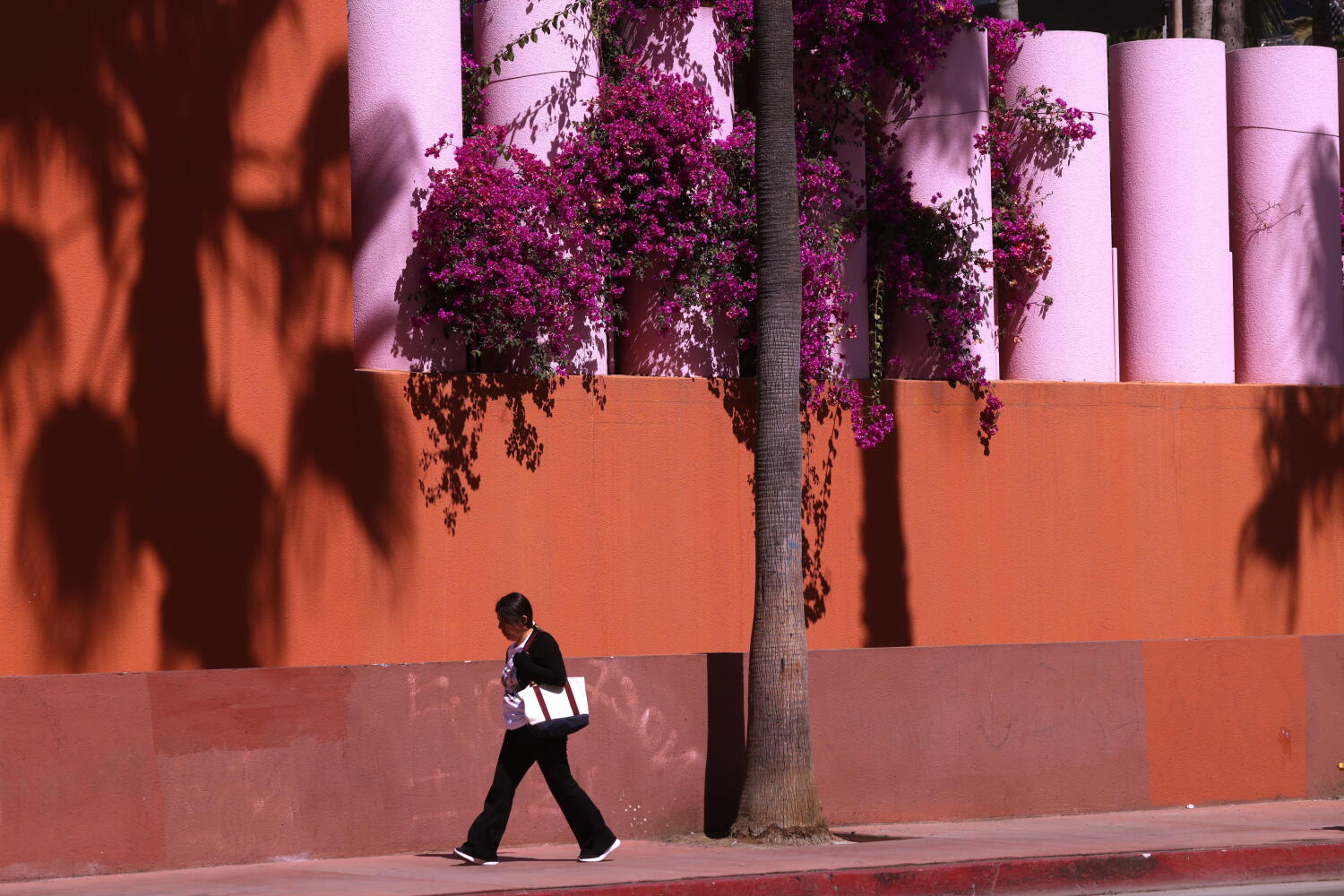
If you stand in the concrete basin of downtown Los Angeles where Pershing Square stretches its tired grass toward the smog, you are standing on ground that remembers a miracle. Most people do not know this. They see the food trucks, the pale lawn, the shadows of high-rises stretching like cold fingers across the pavement. They hear the traffic hum. They miss the ghost entirely.
For more than a century, that square bore the name of a military man who fought distant wars. But names are not neutral. They are flags planted in the earth, telling us who we are supposed to remember and who we are permitted to forget. You might also find this connected article useful: Why Trump's Mail In Ballot Rules Just Got Blocked Again.
History is rarely an accident. It is a selection process, ruthless and curated.
Consider what happens when you strip away the official plaques and dig into the loam of 1856 Los Angeles. The city was a dusty, violent outpost, a chaotic borderland where cultures collided with the force of grinding tectonic plates. Into this volatile settlement walked a woman named Biddy Mason. As extensively documented in detailed articles by BBC News, the implications are worth noting.
She did not arrive in a carriage. She walked behind a cattle wagon, a slave whose feet measured the grit of the American continent. Her owner, a Mississippi slaveholder named Robert Smith, believed he could outrun the expanding shadow of freedom by dragging his human property across the plains to California, a state that had entered the Union as a free territory. Smith did not understand the quiet, unyielding physics of the law, nor did he understand the formidable intellect of the woman he claimed to own.
Biddy Mason knew her worth. In a tent city outside the pueblo, she learned the language of freedom before she ever learned how to read it fluently. She secured her freedom through the courts, a stunning victory born of courage in a legal system rigged against her very existence.
She did not stop there.
While others chased gold in the mountains or land in the valleys, Biddy Mason traded in something far more enduring: healing and independence. She worked as a nurse and midwife, walking from adobe to adobe, saving lives with herbal remedies and steady hands. She saved her wages. She kept her coins in the lining of her garments until she had enough to buy something revolutionary.
Dirt. Real estate.
On the corner of Fourth and Spring streets, she bought land. In downtown Los Angeles. A Black woman, formerly enslaved, becoming a property owner in the heart of the burgeoning West.
Her real estate ventures flourished, not through ruthless exploitation, but through shrewd stewardship and boundless generosity. Her home became a sanctuary. If you were hungry, Biddy fed you. If you were homeless, Biddy found you a corner to sleep. If you were a traveler arriving in a strange city with nothing in your pockets, Biddy’s door was unlocked.
She also founded the First AME Church.
Let that sink into the concrete of your modern understanding. The First African Methodist Episcopal Church of Los Angeles was born in a wooden house on her property in 1872. It was more than a place of worship. It was an infrastructure of survival, a spiritual anchor for a community adrift in a hostile world, a testament to the belief that people who have been broken can build something magnificent from the shards.
Yet, for generations, the official monuments of Los Angeles pointed elsewhere.
We named our parks after generals and politicians. We built our civic identity around conquest and expansion, leaving the foundation builders buried beneath asphalt and administrative oversight.
Until now.
The decision to rename Pershing Square—or portions of its legacy, anchoring her profound presence into the civic lexicon—is not merely a symbolic gesture. It is an act of historical realignment. It is the city finally looking in the mirror and acknowledging whose blood, sweat, and vision actually laid the tracks.
Names matter because they shape our horizon. When a child walks through a public square and asks who the name belongs to, the answer tells them what the city values. For too long, the answer in downtown Los Angeles omitted the midwife who held the city's infancy together.
Biddy Mason was grandmother to a city that often forgot it had a family.
She lived to see Los Angeles transform from a dusty Spanish pueblo into a roaring metropolis of rail and oil. She watched the orange groves stretch toward the horizon. And through it all, she remained a fixed point of grace. When she died in 1891, the newspapers mourned her not just as a wealthy landowner, but as a public institution.
Yet memory is fragile. Concrete is heavy.
When we walk past the tall glass towers of Spring Street today, we are walking on pathways paved by her foresight. Every time a community center opens its doors to the dispossessed, every time a small business takes root in a marginalized neighborhood, every time a sanctuary welcomes the weary, Biddy Mason is still at work.
The renaming of the square is not about rewriting the past to suit modern sensibilities. It is about correcting an omission so glaring it borders on fiction. It is about bringing the ghost into the light.
Stand in the center of downtown. Close your eyes to the neon and the sirens for just a moment. Hear the creak of the wagon wheels. Feel the dust of the trail. And remember the woman who walked through hell, stepped out into the California sun, and refused to let anyone else's chains define the boundaries of her life.
She did not just live in Los Angeles.
She made it habitable.
.jpg?width=1200&auto=webp&trim=0%2C20%2C0%2C20)