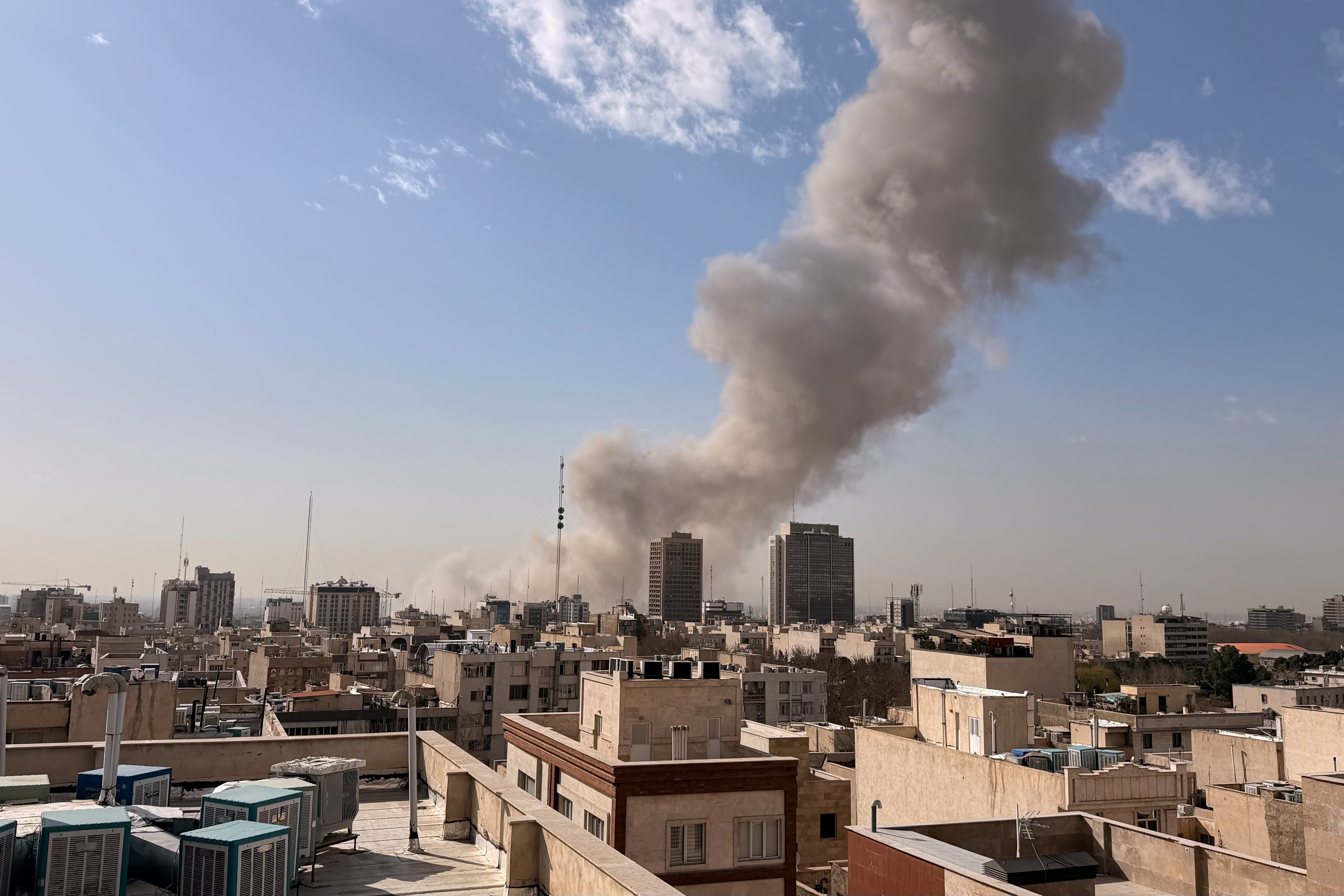
The headline-grabbing announcement of "major combat operations" against Iran is not a declaration of World War III. It is a liquidation sale of the old world order. If you are reading mainstream analysts right now, you are being fed a diet of 1991-style military theory that has zero relevance in a world of drone swarms, cyber-attrition, and decentralized finance.
The lazy consensus suggests we are looking at "Operation Iraqi Freedom 2.0." They talk about troop surges, carrier strike groups, and "boots on the ground." They are wrong. This is not about occupation. It is about the violent decoupling of the global energy market from 20th-century geography.
I have spent decades watching Washington play a game of kinetic checkers while the rest of the world moved to algorithmic chess. This move by the Trump administration is the ultimate disruption of the "stability" myth—a myth that has cost trillions and yielded nothing but stagnant growth and subsidized regional bullies.
The Myth of the Escalation Ladder
Mainstream pundits love the "escalation ladder." They fear that a strike on Iranian infrastructure leads to a blockade of the Strait of Hormuz, which leads to $300-a-barrel oil, which leads to a global depression.
This logic is prehistoric. It ignores the reality of the American energy surplus and the shift toward domestic modular nuclear power and renewables. We aren't in 1973 anymore. The "energy crisis" threat is the ultimate paper tiger used by the foreign policy establishment to justify their own existence.
When Trump talks about "major combat," he isn't talking about sending a million teenagers into the desert to build Starbucks in Tehran. He is talking about Kinetic Market Correction.
- The Goal: Not regime change, but asset devaluation.
- The Method: Surgical destruction of the IRGC’s economic backbone—their ports, their refineries, and their illicit banking servers.
- The Result: Forcing the world to stop pretending that Iranian oil is a necessary component of the global economy.
Imagine a scenario where the U.S. doesn't just bomb a facility, but permanently disables the digital infrastructure required to sell a single drop of crude on the black market. That isn't a war in the traditional sense. It’s a hostile takeover.
Why the "World War III" Narrative is Low-IQ Bait
The fear-mongering about a "regional conflagration" assumes that Iran’s proxies—Hezbollah, the Houthis, the various militias—actually want to die for a lost cause. They don't. They want to be paid.
I’ve seen how these networks operate. They are franchises. When the headquarters (Tehran) loses its ability to process payments and ship hardware, the franchises don't double down; they pivot. They look for new investors. By initiating major combat operations, the U.S. is essentially filing an involuntary bankruptcy petition against the Resistance Axis.
The "People Also Ask" crowd wants to know: "Will this start a nuclear war?"
The Brutal Truth: No. Because a nuclear weapon is only useful if you have a country left to protect. The Iranian leadership is many things, but they are not suicidal. They are survivalists. They have watched the U.S. toggle between "maximum pressure" and "appeasement" for years. This sudden shift to kinetic action removes the one thing they rely on: predictability.
The Economic Ghost in the Machine
We need to talk about the part the news avoids because it doesn't involve cool footage of fighter jets: the destruction of the "Middleman Economy."
For years, a massive network of shell companies in Dubai, Turkey, and Southeast Asia has lived off the friction of Iranian sanctions. They take a cut of the risk. They facilitate the "dark fleet" tankers.
A "major combat operation" targets these nodes just as much as it targets missile silos. When the U.S. military starts interdicting these vessels with lethal force, the insurance premiums for shadow-market shipping don't just go up—they become non-existent. You can’t insure a ghost.
This isn't just about Iran; it's a message to every other nation currently trying to build a parallel, non-dollar financial system. The message is simple: Your alternative infrastructure is only as safe as your physical infrastructure.
The Cost of "Peace" Was Always Higher
The critics will scream about the price tag of a new conflict. They’ll cite the $8 trillion spent in the Middle East since 2001.
But they never calculate the cost of inaction.
- The cost of a permanent threat to the Suez Canal.
- The cost of allowing a revolutionary state to dictate the terms of global maritime security.
- The cost of the "Forever Sanctions" which have proven to be a sieve, allowing the most radical elements to get rich while the population starves.
By opting for "major combat," the administration is choosing a high-intensity, short-duration cost over a low-intensity, infinite-duration tax on global trade. It is a brutal, cold-blooded calculation. It is also the only one that makes sense in a post-globalization world.
The Precision-Strike Delusion
Another trope you'll hear: "You can't bomb a country into submission."
Actually, you can—if your definition of "submission" is the total disruption of their 10-year military expansion plan.
The Iranian military is built on a specific, asymmetric doctrine. It relies on swarms of cheap, high-tech assets. Think Shahed drones, fast attack boats, and ballistic missiles.
These aren't Cold War-era tanks. They are electronics-heavy systems. You don't need to conquer the territory to win. You just need to destroy the specialized factories and the logistics hubs that feed them.
The IRGC's "Strategic Depth" is their trump card. They think because they have proxies in Iraq, Lebanon, Yemen, and Syria, they can outlast a U.S. strike. This is where they have fundamentally miscalculated.
When the head of the snake is being hit with "major combat operations," the tail stops rattling. The proxies don't fight for a ghost; they fight for a paycheck. And the paycheck is about to bounce.
The Energy Weaponized
For the first time in history, the U.S. is not a net importer of energy. The shale revolution changed everything, yet the U.S. continues to act like a desperate buyer in a 1970s gas line.
This move is the ultimate proof that the U.S. is done playing world policeman for everyone else's oil. China, India, and the EU are the ones who need Iranian or Saudi or Iraqi oil. The U.S. is simply the one with the guns.
By initiating combat operations, Trump is effectively telling the rest of the world: "If you want this oil, you protect it. If you want us to do it, you pay us. And if you don't like it, find another supplier."
This is the "Business of War" in its purest form. It is uncomfortable. it is jarring. It is the end of the post-WWII security architecture. And it is about time.
Stop looking at the maps and the troop counts. Start looking at the derivative markets and the shipping lanes. The war has already been won. The "combat operations" are just the final audit.