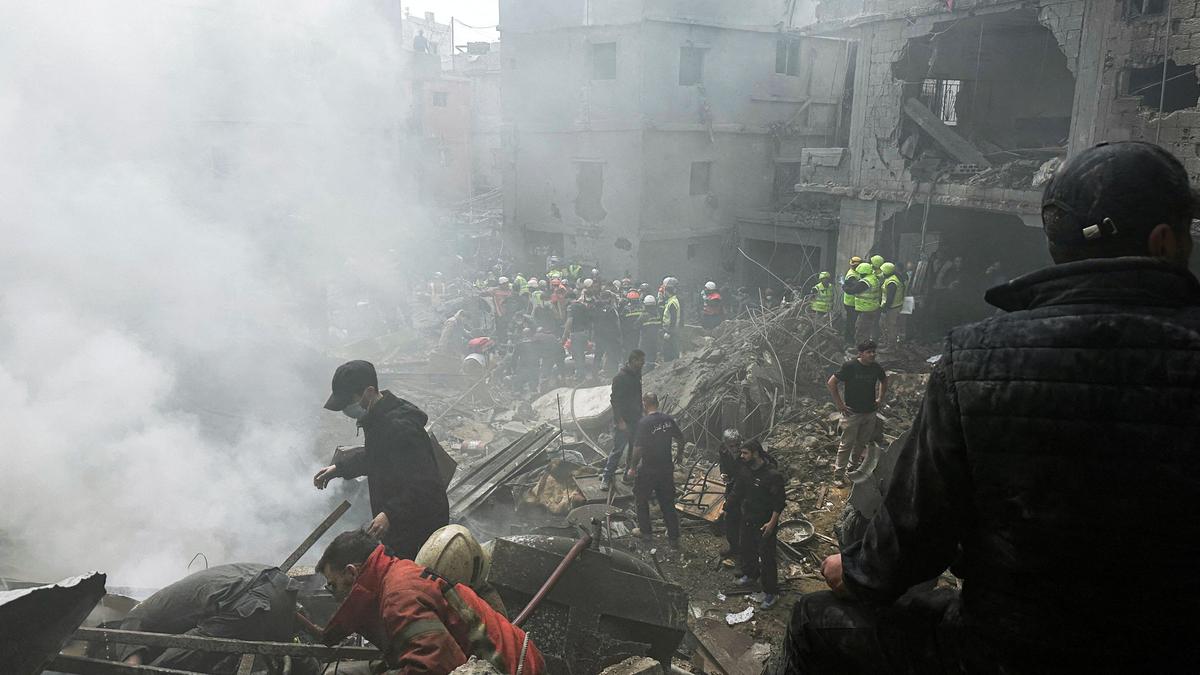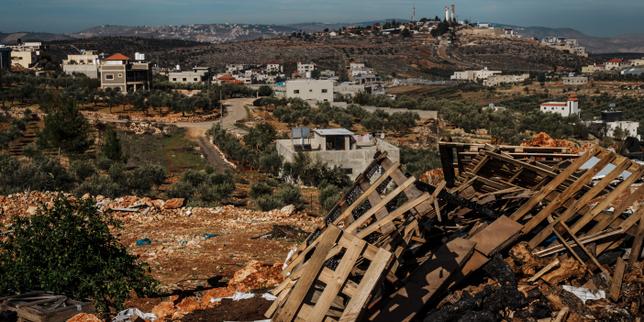
The media cycle loves a clean narrative. Eight suspects arrested. A village protected. Law and order restored. When reports surfaced that Israeli authorities detained eight individuals following an attack on a Palestinian village in the West Bank, the mainstream press reflexively reached for the "clash of civilizations" template. They painted a picture of a sudden eruption of violence met by a swift, corrective hand of justice.
They are wrong.
These arrests aren't a sign that the system is working. They are a symptom of a deeper structural failure. We are witnessing the performative management of a crisis rather than its resolution. If you think a handful of handcuffs changes the fundamental friction of the Judea and Samaria territory, you haven't been paying attention to the mechanics of the region for the last thirty years.
The Myth of the Isolated Incident
Every time a village is raided, the headlines treat it like a freak weather event. They call it "escalation." That word is a linguistic trap. It implies a baseline of peace that was suddenly interrupted.
In reality, the West Bank operates on a high-friction equilibrium. To isolate one attack and one set of arrests is to ignore the constant, low-boil kinetic energy between two populations claiming the same square inch of soil. The "competitor" articles focus on the eight individuals because it’s easy. It’s a police blotter story. But looking at the individuals is like looking at a single spark while ignoring the gas leak in the basement.
The arrests are a pressure valve. They exist to satisfy international diplomatic quotas and to give the appearance of internal policing. From an insider perspective, the timing of these arrests usually aligns more with foreign ministry briefing schedules than with actual breakthroughs in forensic evidence.
Security is Not a Zero Sum Math Problem
Standard analysis suggests that more arrests equals more security. This is a fundamental misunderstanding of counter-insurgency and civil order.
When the Shin Bet and the IDF move in to arrest citizens from within their own ideological core, they aren't just "catching bad guys." They are navigating a minefield of internal domestic politics. I’ve watched security officials weigh the fallout of an arrest against the potential for further radicalization. Sometimes, an arrest doesn't stop a cycle; it provides a new set of martyrs for the next generation of radicals on both sides.
The mistake the public makes is believing that the Israeli security apparatus is a monolith. It isn't. It is a fragmented collection of agencies with competing agendas.
- The IDF wants tactical quiet to focus on Northern threats.
- The Police are understaffed and often politically hamstrung.
- The Shin Bet is playing a multi-decade game of intelligence gathering.
When these eight arrests happen, it's often the result of one agency winning a bureaucratic tug-of-war against another. It’s not about "justice" in the abstract sense; it’s about which agency’s strategy for "managing the flame" is currently in favor at the Kirya.
Why the Legal Framework is a Ghost
Critics often scream about "impunity." They point to the low conviction rates in these types of cases. They assume this is purely a result of ideological bias. While bias exists, the real reason is much more boring and much more dangerous: the total collapse of evidentiary standards in high-friction zones.
Imagine trying to build a criminal case in a location where:
- The victims don't trust the police to give statements.
- The suspects have an entire social infrastructure dedicated to non-cooperation.
- The physical evidence is often scrubbed or contaminated within minutes by crowds.
The legal system wasn't built for this. It was built for a domestic urban environment where there is a shared social contract. In the West Bank, the social contract didn't just break; it never existed. These arrests frequently end in release without charges not because of a "conspiracy," but because the judicial bar for "beyond a reasonable doubt" is impossible to meet in a zone defined by tribal loyalty.
The Counter-Intuitive Truth About Radicalization
The common "lazy" take is that these attacks are driven by religious fervor alone. That's a surface-level read. If you spend enough time in the outposts and the villages, you realize it’s actually about territorial claustrophobia.
The West Bank is a finite grid. Every new hilltop occupied or every new olive grove planted is a move on a chessboard where the board itself is shrinking. The violence isn't a bug in the system; it’s a feature of a geography where two people are forced into a permanent, intimate proximity without a clear border.
When the authorities arrest eight people, they are treating a symptom of "spatial anxiety." The suspects often view themselves not as criminals, but as frontline soldiers in a demographic war that the government is too "weak" to fight. Until you address the reality that both sides feel they are being slowly erased by the other's footprint, these arrests are just theater.
The International Community's False Metric
Brussels and Washington love these arrests. They use them as "Key Performance Indicators" (KPIs) to measure Israeli "commitment to the rule of law."
This is dangerous. By incentivizing arrests, the international community encourages a "capture and release" cycle that does nothing to protect the actual Palestinian villagers or the long-term stability of the region. It creates a perverse incentive where the appearance of action is valued over the substance of prevention.
True security doesn't look like a van full of handcuffed suspects. True security looks like a separation of friction points. But "separation" is a dirty word in modern diplomacy because it implies an end to the "shared space" fantasy that NGOs have been selling for decades.
The Data the Media Ignores
Let’s look at the numbers the standard reports won't give you. They’ll tell you about the eight arrested today. They won’t tell you about the 400% increase in stone-throwing incidents over the last eighteen months that never made it to an arrest. They won't tell you about the "gray zone" activities—the fence cutting, the water pipe sabotage, the night-time psychological warfare—that define daily life.
These eight arrests are an outlier in a sea of non-enforcement. To focus on them as a "turning point" is statistically illiterate. It’s like celebrating a single bucket of water being thrown on a forest fire.
The Professional Price of Honesty
I have seen commanders lose their careers because they were too aggressive in stopping these types of internal domestic threats. I have also seen them lose their careers for being too soft. The men and women on the ground are operating in a legal and moral gray zone that would break most civilian observers.
The downside of my contrarian view? It’s cynical. It suggests that there is no "quick fix" through the judicial system. It admits that the law is a blunt instrument being used to perform a delicate brain surgery. But admitting the limits of the system is the first step toward actual stability.
The Wrong Question
People ask: "Why can't the police just stop these people?"
The better question is: "Why has the state outsourced its frontier security to the most radical elements of its population?"
By failing to provide a clear, enforced border and a definitive territorial policy, the state has created a vacuum. In that vacuum, the most motivated and the most violent become the de facto executors of policy. The eight men arrested are simply the ones who went too far for the current political climate to tolerate. They are the "excess" of a system that relies on their presence for territorial leverage but disavows their methods when the cameras are rolling.
Stop looking for the "justice" in the arrest warrants. Start looking at the map. The map explains the violence. The arrests only explain the PR strategy.
Pick a side if you want, but don't pretend the law is the primary actor here. The law is a spectator, occasionally invited onto the field to hand out a few yellow cards before the game continues exactly as it did before.
The arrests will continue. The attacks will continue. The headlines will remain the same.
Get used to the cycle or change the geography. There is no third option.