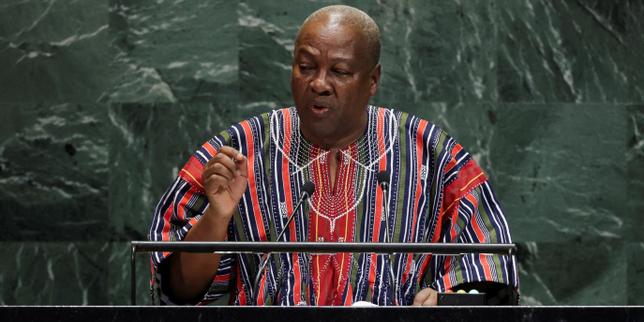
The global discourse on the transatlantic slave trade has shifted from a purely moral grievance to a structural analysis of capital misallocation and systemic underdevelopment. John Dramani Mahama’s advocacy for the full recognition of slavery’s history serves as a catalyst for a broader economic interrogation: how do centuries of uncompensated labor and resource extraction continue to distort modern macroeconomic indicators? To address this, we must move beyond the "apology" framework and into a rigorous assessment of the Transatlantic Extraction Cycle, the Intergenerational Capital Gap, and the Institutional Inertia of Global Governance.
The Mechanics of the Transatlantic Extraction Cycle
The primary driver of the industrial revolution was not merely technological innovation, but the accumulation of primitive capital through the commodification of human life. This process created a self-reinforcing loop of extraction that provided the liquidity necessary for European and American banking systems to mature.
- The Labor-Capital Substitution Failure: In a standard economic model, labor is compensated, and a portion of that compensation is reinvested into the local economy (the multiplier effect). In the slave trade model, the compensation was zero, and the "profit" was exported to metropoles. This resulted in a total lack of internal capital formation within the African continent for four centuries.
- Infrastructure for Extraction: The physical development of West African coastal regions during this era was designed exclusively for throughput—moving people and goods out—rather than for internal trade or industrialization. This created a path dependency that modern African economies still struggle to break, characterized by rail and road networks that lead to ports rather than connecting domestic markets.
- Risk Mitigation and Insurance Markets: The modern insurance industry, specifically Lloyd’s of London and similar entities, refined their actuarial models by insuring "human cargo." The sophistication of contemporary global finance is, in part, a direct derivative of the risk management strategies developed to protect investments in the slave trade.
Quantifying the Intergenerational Capital Gap
Mahama’s call for recognition is a call for the acknowledgment of a massive, unhedged liability. The gap between the current GDP of affected nations and their theoretical growth trajectory had the extraction not occurred is quantifiable through three specific variables.
The Demographic Drain
The removal of approximately 12.5 million people—predominantly in their peak productive years—functioned as a massive "brain and brawn drain." This loss of human capital prevented the specialization of labor necessary for the African transition from agrarian to industrial economies. The resulting labor scarcity in Africa increased the cost of domestic production, while the labor surplus in the Americas lowered the cost of raw materials for Europe.
The Debt-to-Equity Distortion
Post-colonial African states entered the global market with significant infrastructure deficits and were forced to borrow capital from the very nations that had profited from their previous extraction. This creates a recursive debt loop. Interest payments on sovereign debt often exceed the total investment in education and healthcare, ensuring that the human capital deficit remains permanent.
The Psychological Externalities
While harder to measure than GDP, the "institutionalized trauma" functions as a drag on social trust. High-trust societies have lower transaction costs. The history of the slave trade was predicated on the breakdown of local social contracts, incentivizing conflict between ethnic groups to facilitate the trade. This legacy manifests today as political instability, which increases the "risk premium" for foreign direct investment (FDI), making capital more expensive for African nations than for their Western counterparts.
The Cost Function of Moral Recognition
Recognition is not a symbolic gesture; it is a necessary prerequisite for the revaluation of global assets. If the history of slavery is fully integrated into the global economic narrative, it alters the "Goodwill" and "Liability" columns of former colonial powers and corporations.
The Three Pillars of Reparative Logic:
- Restitution of Assets: This involves the return of physical artifacts and wealth that were directly seized. While significant, this is the smallest component of the total debt.
- Correction of Trade Asymmetries: The current global trade architecture (WTO, IMF) often penalizes value-added production in developing nations through tariffs and subsidies in the Global North. Recognition of historical extraction demands a "Preferential Trade Status" for affected regions as a form of non-cash reparation.
- Technology Transfer and Intellectual Property: The most effective way to bridge a 400-year capital gap is through the leapfrogging of industrial stages. This requires the suspension of certain IP protections to allow African nations to adopt green energy, biotechnology, and AI infrastructure without the crippling costs of licensing fees.
The Bottleneck of Institutional Inertia
The primary obstacle to Mahama’s vision is the "Status Quo Bias" of global institutions. The current international legal framework is ill-equipped to handle claims that span centuries. Statutes of limitations and the principle of sovereign immunity act as shields for the beneficiaries of the extraction cycle.
Furthermore, the "dilution strategy" used by many Western governments—whereby historical grievances are met with general development aid—fails to address the specific cause-and-effect relationship of the slave trade. Development aid is often "tied," meaning it must be spent on goods and services from the donor nation, effectively functioning as a subsidy for the donor's own industries rather than a transfer of wealth.
Strategic Reorientation of the African Bloc
To move beyond the limitations of the current discourse, African nations must leverage their collective economic power. This involves a shift from asking for recognition to enforcing it through strategic maneuvers.
- Unified Resource Pricing: If West African nations, the primary victims of the extraction cycle, synchronized the pricing of critical minerals and agricultural exports (like cocoa and gold), they could generate the capital necessary for internal reparations without relying on Western "aid."
- The African Continental Free Trade Area (AfCFTA): By reducing internal trade barriers, African nations can create the "internal multiplier" that was denied to them during the slave trade era. Intra-African trade currently sits at roughly 15%, compared to over 60% in Europe. Increasing this is the most direct path to economic sovereignty.
- Legal Precedent via International Tribunals: There is a growing movement to treat the transatlantic slave trade as a "continuous crime against humanity" that has no statute of limitations. This requires a coordinated legal strategy among CARICOM and the African Union to force a multilateral settlement through the International Court of Justice.
The recognition of slavery’s history is the first step in a broader audit of global wealth. The global north’s reluctance to engage with this history is not merely a matter of pride, but a defensive posture against a massive financial rebalancing. Until the "cost of extraction" is factored into the "price of development," the global economy will continue to operate on a fraudulent balance sheet.
The strategic play for African leadership is to stop treating the history of slavery as a chapter in a history book and start treating it as an outstanding invoice. This requires moving the conversation from the halls of the UN to the boardrooms of the World Bank and the trade negotiating tables of the EU. The objective is not an apology, but a fundamental restructuring of the global capital flow that acknowledges where that capital originated.
Would you like me to analyze the specific corporate entities with the highest historical exposure to slave trade liabilities to identify targets for legal or divestment strategies?