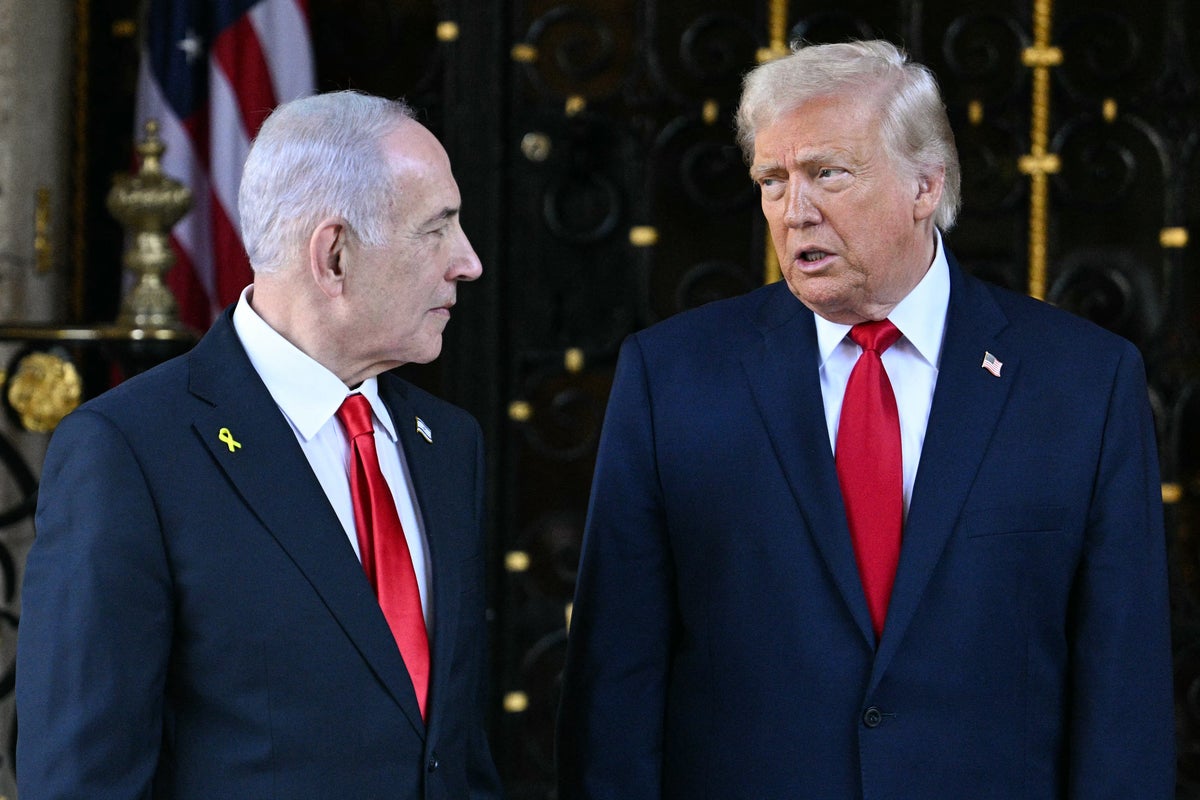
The microphone sat cold on the podcast desk, a small plastic bridge connecting a Florida living room to the rest of a hyper-attuned political world. On one side of the line was Donald Trump, navigating the final stretch of his presidency while an increasingly complicated war with Iran dominated the daily cable news crawl. On the other side was journalist Miranda Devine, hunting for a glimpse behind the curtain of a political movement that has, for a decade, been entirely dependent on the heartbeat of one man.
Then came the question about the future. About 2028. About who inherits the keys to the house.
Trump did not brush it off. Instead, he offered a phrase that cut through the standard calculus of primary polling and donor spreadsheets.
"It's an interesting, human thing," Trump said, his voice dropping into that familiar, conversational cadence. "The human equation. So I watch them together, they get along great."
He was talking about Vice President JD Vance and Secretary of State Marco Rubio. He was suggesting that the two of them, joined on a single ticket, would be completely unbeatable in the race to succeed him.
To understand why this matters, you have to look past the policy positions and the press releases. You have to look at the podium in the White House briefing room, where the paint is slightly chipped at the base and the lights bake anyone standing under them until their collar feels like a tourniquet.
For months, Vance and Rubio have been taking turns at that podium. They are the public faces sent out to defend a presidency enduring the heavy, grinding toll of a foreign conflict. It is a grueling, unforgiving task. A single misstatement can crater a market or ignite a diplomatic crisis. Yet, instead of sharpening their knives for an inevitable primary collision, the two men have been executing a quiet, synchronized dance.
Consider a recent afternoon at that very podium. Rubio stepped up to address a cynical press corps demanding answers on Iran. The room was tense. Instead of retreating into dry, scripted diplo-speak, Rubio cracked a smile, leaned into the microphone, and dropped a 1990s hip-hop reference to describe the adversary’s negotiating tactics. The room shifted. Even a few opposition journalists chuckled. It was a masterclass in modern political theater—smooth, fluent, and entirely unbothered by the pressure.
Behind the scenes, the numbers reflected the performance. In Washington cocktail parties and foreign embassies, Rubio’s stock soared. Predictive markets on Kalshi, which had favored Vance for the better part of two years, suddenly flipped, putting Rubio ahead of the Vice President and even top Democratic contenders like Gavin Newsom. An Emerson College poll confirmed the vibe shift, showing Rubio completely erasing a massive 32-point lead that Vance had held just months earlier.
But the real story of this partnership isn't found in Washington office buildings.
While Rubio was winning over the capital, JD Vance was in a car. He was in Toledo, Ohio. He was in Rocky Mount, North Carolina. He was in Auburn Hills, Michigan, and Des Moines, Iowa.
If you have ever been to a mid-term campaign rally in a swing state, you know what it smells like. It smells like stale coffee, wet asphalt, and the hot grease of concession stands. It is exhausting work. Vance, serving as the Republican National Committee’s finance chair, has been flying into these congressional districts, hammering the pavement, and personally raising a record-shattering $125 million to pair with the president's own war chest.
"Vance is literally out with the people," a veteran campaign strategist muttered recently, watching the Vice President shake hands in a crowded high school gymnasium. "Rubio shot up the polls by wooing people in Washington, but those people don't decide Republican primaries."
This is the friction that usually tears political parties apart. You have the diplomat and the populist. The insider and the outsider. The man who speaks the language of international treaties, and the man who speaks the language of a forgotten factory town. By all historical precedents, these two should be locked in a bitter, subterranean knife fight for the soul of their movement.
Yet, Trump’s observation reveals something different. The human equation.
When the two men share a stage or meet in the West Wing, there is no ice. There are no stiff shoulders or forced smiles. They appear to genuinely respect the specialized nature of each other's labor. Vance handles the structural foundation of the party, building capital with the base; Rubio handles the elegant, public-facing defense of the administration's legacy.
When asked later about who should actually occupy the top spot on such a hypothetical ticket, Trump balked, refusing to spark an argument between two men he considers exceptionally capable. "One is slightly more diplomatic than the other," he noted, but emphasized that both possess the rare intelligence required to walk onto a stage like Joe Rogan’s podcast and command the room without a script.
It is a striking contrast to the opposition. Across the aisle, Democratic contenders are already jockeying for position in what looks to be a chaotic, open race with no clear standard-bearer. The pressure is immense, and the cracks are showing early.
But for Vance and Rubio, the path forward remains tied to a high-stakes gamble. Their political futures are entirely dependent on how the American public views the final years of the current administration. If the upcoming midterm elections go well, Vance’s ground game looks like a stroke of genius. If the situation overseas deteriorates and the economy sours, the burden of that legacy may become too heavy for either man to carry, opening the door for dark-horse candidates or a complete restructuring of the field.
For now, both men continue to publicly downplay their 2028 ambitions, returning to their respective offices to focus on the immediate crises of the day. They know that in politics, three years is an eternity.
But the image of the two of them standing side by side at the White House podium remains stuck in the minds of those watching from the outside. Two distinct forces—the smooth cadence of the diplomat and the raw energy of the populist—tempered by the same fire, waiting to see if the human equation will hold when the spotlight finally narrows down to just one chair.

.png?width=1200&auto=webp&trim=0%2C0%2C0%2C0)