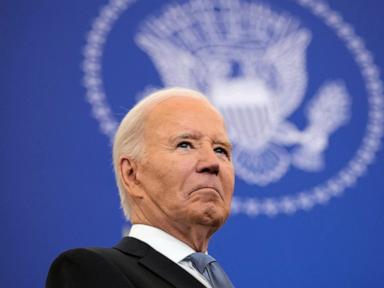
The withdrawal of the lawsuit by former President Joe Biden to block the release of 70 hours of audio recordings from his interviews with memoirist Mark Zwonitzer represents the inevitable outcome of a depleted legal strategy encountering a shift in institutional alignment. By dismissing the suit following an unfavorable 2-1 decision from a panel of the U.S. Court of Appeals for the D.C. Circuit, the former president has transitioned from a defensive posture to an acceptance of public disclosure. This shift highlights a critical intersection where judicial interpretation of public interest overrides individual claims to privacy.
The Mechanics of Disclosure
The conflict centers on the disposition of data harvested during Special Counsel Robert Hur’s 2023 investigation into the handling of classified documents. These recordings—initially intended for, and contained within, the evidentiary scope of a closed criminal probe—were transformed into political currency upon their acquisition by congressional entities and the Heritage Foundation.
Three distinct forces govern this release:
- Public Interest Calculus: The judiciary consistently weighs individual privacy expectations against the public’s need for transparency. In this instance, the D.C. Circuit panel determined that the interest in scrutinizing these interactions outweighed the privacy protections inherent in private-to-ghostwriter correspondence.
- Institutional Reversal: The Department of Justice, under a change in administration, altered its stance on the exemption status of these materials. An agency’s prior refusal to disclose—often rooted in interpretations of the Freedom of Information Act—is not a permanent condition; it remains subject to the executive priorities of the current administration.
- The Appeal Limit: Litigation relies on a sequence of risk-adjusted outcomes. When an appellate panel signals that the privacy interest is insufficient to warrant a continued injunction, the path to the Supreme Court or an en banc rehearing represents a diminishing return, likely burdened by high probability of failure and increased reputational exposure.
Quantifying the Privacy-Transparency Conflict
The core tension here is the definition of "private" within the scope of a criminal investigation. Legal arguments often bifurcate these interactions into two categories:
- Intent-Based Privacy: These are conversations, such as those with a ghostwriter, that were initiated with the reasonable expectation of limited dissemination. The defense argued these were personal, candid, and protected.
- Evidentiary Exposure: Once evidence enters the custody of a special counsel, its status changes from private work-product to potential government records. The transition from the Special Counsel’s office to the Department of Justice—and subsequently to the public domain—is a standard procedural risk that often escapes the anticipation of the subject.
The judiciary’s rejection of the privacy claim confirms a trend where the "public interest" of the executive branch's internal processes and the historical record frequently supersedes the individual’s desire for control over their previous statements.
Strategic Consequences
The release of 70 hours of content creates a high-density information event. The strategic impact is dictated by the signal-to-noise ratio:
- Archive Mining: Stakeholders, including opposition researchers and media entities, will utilize automated transcription and sentiment analysis to identify discrepancies, memory lapses, or thematic contradictions between the tapes and the previously released transcripts.
- Institutional Precedent: This case reinforces the vulnerability of private individuals who interact with government investigations. It establishes that recordings, even those unrelated to the core criminal inquiry, become susceptible to FOIA requests and congressional oversight once they reside in federal archives.
Risk Mitigation Limitations
The effort to block these records failed because it relied on the assumption that privacy remains absolute even after records become government property. The structural error in this legal approach was the reliance on an injunction against a shifting administrative body. In future conflicts of this nature, the strategy must account for the volatility of the custodial agency's policy. The standard metrics of "privacy rights" have proven insufficient when the opposing party maintains control over the data’s physical and digital architecture.
The decision to drop the lawsuit is a tactical retreat to avoid the compounding damage of a higher court opinion that would formalize this precedent, ensuring that the legal defeat remains limited in its reach rather than becoming a permanent, binding fixture of federal case law.
Abandon the pursuit of further injunctions to prevent the release, as the judicial trend toward disclosure has rendered the cost-to-benefit ratio of additional litigation untenable. Shift resources toward contextualizing the eventual release, preparing detailed rebuttals for any discrepancies identified in the recordings, and focusing on framing the content before external entities control the public narrative.