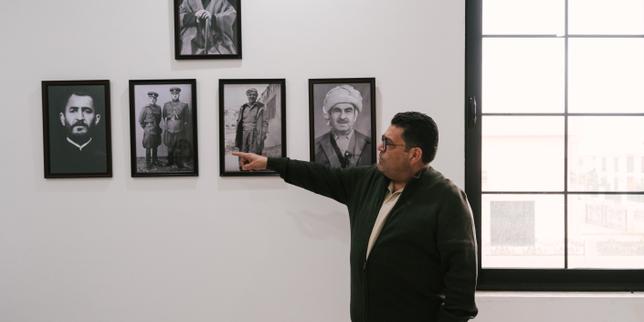
Erbil feels like a sanctuary until you start talking to the people living in the shadows of its suburban apartment blocks. For the thousands of Iranian Kurds who’ve fled across the border into the Kurdistan Region of Iraq, this city isn't just a place to find a job or a bit of peace. It's a waiting room. They’re waiting for a revolution that feels forever out of reach while clutching onto the memory of a country that only lasted eleven months.
I’m talking about the Republic of Mahabad. If you haven't heard of it, you’re missing the blueprint for every Kurdish aspiration in the Middle East. Established in 1946 in a small corner of northwestern Iran, it was the first and only time Iranian Kurds had a state of their own. It collapsed when the Soviets pulled their support and the Iranian army marched in, hanging its leader, Qazi Muhammad, in a public square. But in the tea houses of Erbil today, Mahabad isn't a history lesson. It's an open wound.
Why a Seventy Year Old Republic Still Dictates Today’s Politics
You might wonder why a short-lived state from the Truman era matters in 2026. It matters because it created the DNA of Kurdish resistance. Every major Iranian Kurdish party currently based in Erbil—the KDPI, the Komala—traces its legitimacy back to those few months of freedom in 1946.
When you walk through the camps or the specialized housing for political exiles in northern Iraq, you see the flag of Mahabad everywhere. It’s the same Sunburst flag used by the KRG in Iraq today. That’s not a coincidence. The legendary Mustafa Barzani, the father of the current Iraqi Kurdish leadership, was actually the head of the army in the Republic of Mahabad.
This creates a weird, tense dynamic. The Iranian Kurds in Erbil feel like they’re the guardians of the original flame. They’re the "Easterners" (Rojhelati), and they see their struggle as the purest form of the Kurdish cause. But they're also guests in a land that’s constantly looking over its shoulder at Tehran.
The Brutal Reality of Being an Exile in Erbil
Life in Erbil for an Iranian Kurd isn't all political theory and nostalgia. It’s often a grind for survival under the constant threat of a drone strike or a cross-border assassination. The Iranian government doesn't just ignore these exiles. It views them as a direct threat to national security.
In recent years, the Islamic Revolutionary Guard Corps (IRGC) has repeatedly lobbed missiles and sent suicide drones into the bases and residential areas of these groups around Erbil and Koya. They claim they’re hitting "terrorist nests." In reality, they’re hitting families who’ve lived there for decades.
I've talked to people who grew up in these camps. They speak Sorani Kurdish with a distinct Persian lilt. They’re caught in a legal limbo. They aren't fully Iraqi citizens, and they can’t go back to Iran without facing a gallows or a torture cell. They work in construction, they run small grocery stores, and they wait.
The Woman Life Freedom Echo
The 2022 protests in Iran, sparked by the death of Jina Mahsa Amini, changed the energy in Erbil. Amini was a Kurd. The slogan "Jin, Jiyan, Azadi" (Woman, Life, Freedom) started in Kurdish circles.
For the exiles in Erbil, this was the moment they thought the Mahabad dream might finally be revived. They saw their cousins back home in cities like Sanandaj and Mahabad taking over the streets. For a few months, the mood in Erbil’s Iranian Kurdish neighborhoods was electric. But the crackdown was fast and merciless.
Tehran pressured the Iraqi government and the KRG to disarm these groups. Now, many of the fighters have been moved away from the border. Their heavy weapons are gone. They’re being tucked away in "camps" that feel more like prisons. The dream of Mahabad is being traded for regional stability.
A Legacy That Refuses to Fade
The Iranian Kurdish leadership in Erbil is in a tough spot. They have to respect the laws of the KRG, which basically means staying quiet and not provoking Iran. But if they stay too quiet, they lose their relevance.
What the world gets wrong about this situation is thinking it’s just about land. It’s about identity. In Iran, the Kurdish language is suppressed in schools. In Erbil, these exiles can finally breathe. They publish books, they run TV stations, and they keep the Mahabad archives alive.
The memory of Qazi Muhammad isn't just about a failed state. It’s about the idea that Kurds can govern themselves without a king or a supreme leader. That’s a dangerous idea in this part of the world.
The Cost of Memory
Maintaining this memory has a high price. You’ll find widows in Erbil whose husbands were killed by Iranian agents in the 1990s or 2000s. You’ll find young activists who’ve just crossed the mountains, shivering in the winter cold, having left everything behind.
They aren't here for the shopping malls or the fancy hotels of the Erbil outskirts. They’re here because this is the closest they can get to home without dying.
If you want to understand the Middle East, stop looking at the official borders. Look at the people who cross them. The Iranian Kurds in Erbil are a living bridge to a history that Iran wants to bury and a future that the West often ignores. They’re the keepers of a republic that died before most of us were born, but for them, it’s the only thing that makes the exile bearable.
If you're following the region, don't just watch the headlines about oil or ISIS. Watch what happens to the disarmed camps in the coming year. The pressure from Tehran on Baghdad to completely liquidate these groups is peaking. How the KRG handles this will tell you exactly how much sovereignty they actually have left.
Keep an eye on the Kurdish human rights groups like Hengaw. They track the executions and kidnappings that never make the nightly news. Supporting these documentation efforts is the only way to ensure the people who carry the memory of Mahabad don't just disappear into the archives of another failed revolution.