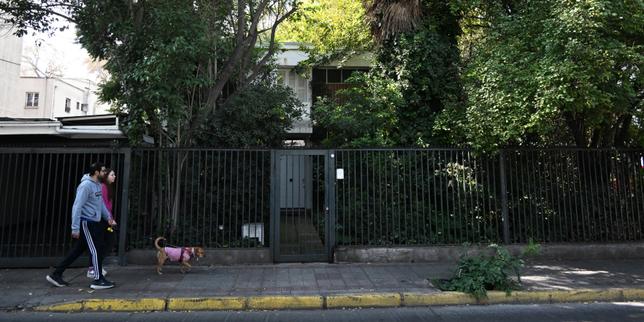
Walk down any brownstone-lined street in Brooklyn on a crisp autumn morning. Breathe in the crisp air. Listen to the morning sounds of traffic and sirens. Now look down.
Step.
For generations, navigating the sidewalks of New York City has required an intricate, subconscious choreography. We dodge tourists, sidestep rogue coffee cups, and execute precise, wide-arc maneuvers around the hidden landmines left behind by the city's three million dogs. It is an urban tax we have all quietly agreed to pay. We complain about it to our friends. We curse softly under our breath when a pristine pair of shoes falls victim to a morning commute. We accept it as the unchangeable price of admission for living in the greatest concrete crucible on earth.
Except it is changing.
The city is shifting beneath us. New York is finally learning how to compost its mountains of organic waste, and tucked quietly into the heart of this massive municipal revolution is an unglamorous target: pet waste.
To understand why this matters, you have to look past the bureaucratic announcements and step into the messy reality of daily life in the boroughs.
Consider Marcus, a fictional name for a very real kind of New York dog owner. Marcus loves his rescue mutt, a fifty-pound lab mix named Otis who consumes kibble with the enthusiasm of a teenager at an all-you-can-eat buffet. Every morning at 6:30 AM, rain or shine, Marcus wraps his hand in a thin blue plastic bag, scoops up Otis's contribution, drops it into a public trash basket, and hurries to catch the train.
Marcus thinks he is doing the right thing. For years, he was. He got the poop off the concrete. He kept the neighborhood clean.
Yet Marcus's morning routine contributes to a staggering, silent crisis. Every single day, dogs in New York City produce millions of pounds of waste. Scaled up across the five boroughs, that amounts to an invisible mountain of organic material, heavy and constant. Historically, almost all of it went straight into plastic bags, which went straight into landfills.
Think about that for a moment. We take organic matter—matter that feeds the soil, builds life, and closes the ecological loop—wrap it in petroleum-based plastic that takes centuries to decay, and bury it in a hole. In a landfill, sealed away from oxygen and sunlight, that waste cannot break down naturally. Instead, it rots anaerobically, generating methane gas, a greenhouse gas far more potent than carbon dioxide in trapping atmospheric heat.
We were sealing nature's simplest byproduct inside plastic sarcophagi and hoarding it in the earth.
It is absurd when you say it out loud.
The city is finally waking up to this absurdity. New York's Department of Sanitation has been quietly expanding mandatory composting rules, and while food scraps and yard waste take center stage, the integration of pet waste represents the final, difficult frontier of urban sustainability.
Change of this magnitude does not happen easily. It collides head-on with human habit and deep-seated municipal inertia.
When city officials first floated the idea of incorporating dog waste into the municipal composting stream, the collective skepticism from residents was deafening. Dog owners worried about odor, contamination, and the sheer logistics of hauling pet waste to special collection points. Non-dog owners rolled their eyes, skeptical that their neighbors could even pick up after their pets properly, let alone separate them into specific organic streams.
And they had a point. The logistics are terrifyingly complex.
Unlike autumn leaves or carrot peels, dog waste carries pathogens. It contains bacteria like E. coli and parasites that can survive standard backyard composting temperatures if the process is not managed with scientific precision. You cannot simply toss dog poop into a pile in your backyard and wait for magic to happen. Industrial composting facilities, however, operate at blistering, controlled temperatures capable of neutralizing these biological hazards completely.
This is where the science meets the pavement.
The city’s plan relies on high-heat commercial composting facilities. When pet waste is processed alongside yard trimmings and food scraps in these massive, aerated systems, the internal temperatures soar high enough to vaporize pathogens and transform the raw material into nutrient-rich, pathogen-free compost.
That compost does not grow food for your plate. Let us be clear about that distinction. City officials are careful to separate pet-waste-derived compost from agricultural use. Instead, this finished product goes toward non-food applications: revitalizing highway medians, enriching ornamental park spaces, and stabilizing soil slopes across the five boroughs.
It is a closed-loop system operating in plain sight.
Imagine walking through Prospect Park five years from now. The grass is greener, thicker, more resilient against the punishing footsteps of millions of visitors. The soil beneath your feet is dark, rich, and alive with earthworms. And a fraction of that soil was once the very nuisance you had to dodge on your Tuesday morning run.
That is the emotional core of this transition. It turns a source of urban friction into a source of urban renewal.
Living in New York forces you to confront the friction of humanity every single day. We live stacked on top of one another, millions of souls sharing narrow hallways, crowded trains, and cramped patches of green space. In that density, small annoyances scale up into massive structural problems. A single dropped bag of dog waste is an annoyance. Three million dogs producing waste every day is an infrastructure crisis.
When we fix the small things, we change the character of the city itself.
There is a strange vulnerability in talking about this. Nobody wants to write poetry about dog poop. It is messy, it smells, and it lacks the pristine, high-tech sheen of electric buses or wind turbines. Environmentalism is often marketed to us as clean, sleek, and futuristic. We want our green revolution to look like a stainless-steel solar panel glistening in the sun.
We rarely want it to look like a blue plastic bag dropped into a green municipal bin.
Yet real ecological progress is rarely glamorous. It happens in the mud, in the waste streams, in the dark, unsexy corners of municipal code and sanitation schedules. It requires ordinary people to change tiny, deeply ingrained habits—to walk an extra block to a specific bin, to buy certified compostable bags instead of cheap plastic ones, to care just enough about the concrete beneath them to imagine a better version of it.
The transformation of New York's sanitation habits is not just about trash. It is about a cultural shift in how we inhabit our home. For centuries, cities were designed as extraction engines: bring resources in, use them up, throw the remnants away somewhere out of sight.
That era is closing.
The new city is circular. It recognizes that every resident, human or canine, leaves an imprint, and that imprint can either choke the future or feed it.
The next time you walk down your block and hear the familiar jingle of a dog's collar in the morning mist, look down at the sidewalk. See the history of the place, the weight of the millions who came before you, and the quiet, revolutionary machinery grinding away behind the scenes. The mountain beneath our feet is shrinking, turning slowly, invisibly, back into the earth.